How Much Creatine Per Day? What the Studies Used and Why Body Weight Matters
 Gabriel SánchezPublished
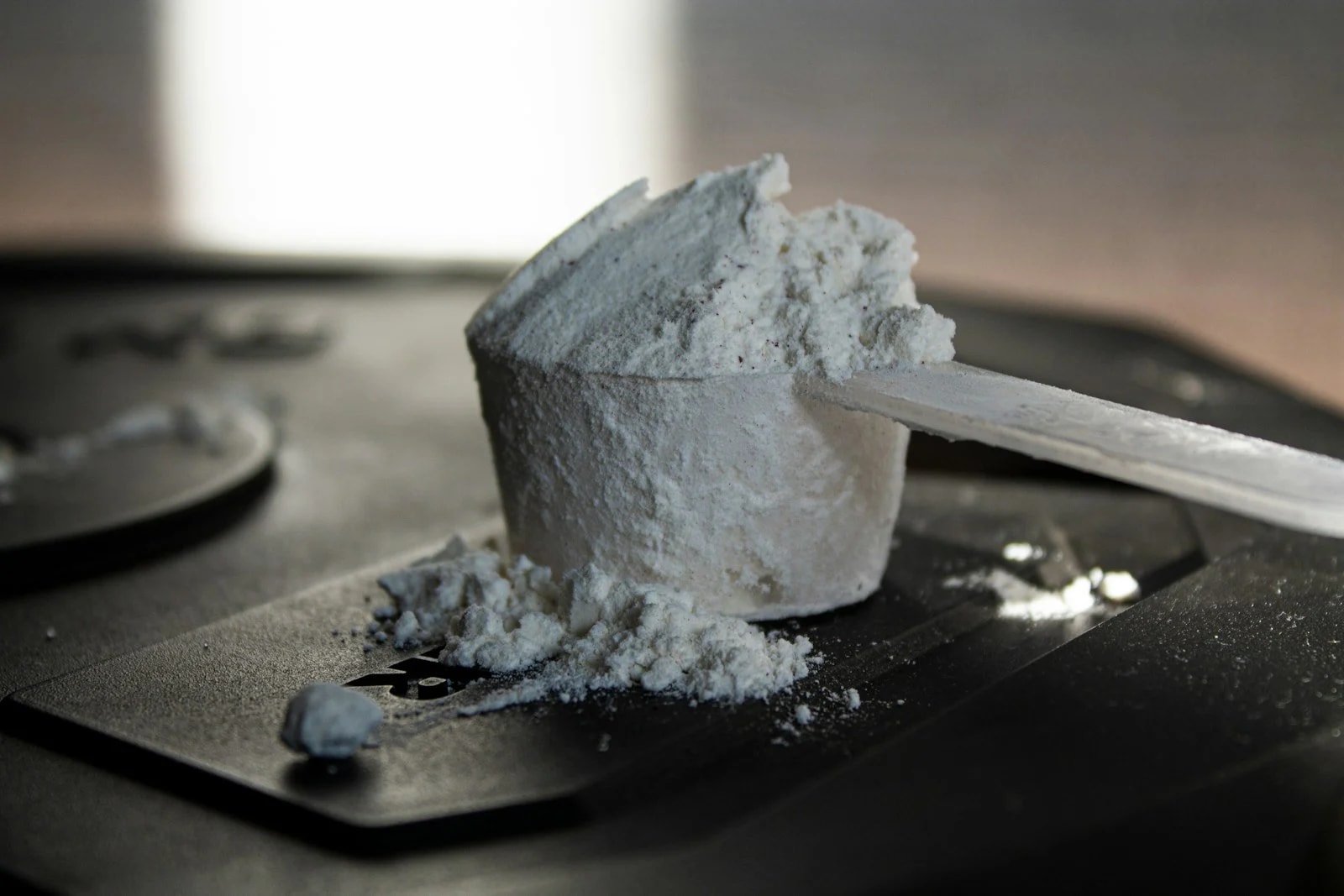

Most creatine studies gave adults 3 to 5 g a day, sometimes after a loading week of about 20 g a day split into four servings. Some studies scaled the amount to body weight instead, so a heavier person got more. That is what researchers used, not a number for you: the right daily amount depends on your weight and your health, and Creatinely can suggest one from your body weight.
What the studies used
The International Society of Sports Nutrition (ISSN) position stand is the document most reviews cite on creatine amounts. It describes two routes (Kreider et al., 2017):
- A loading phase of 5 g four times a day, or about 0.3 g per kg of body weight a day, for 5 to 7 days, followed by 3 to 5 g a day.
- No loading: 3 g a day for 28 days, which fills muscle more gradually.
The same document says some studies found that larger athletes in hard training needed as much as 5 to 10 g a day to keep their stores full.
A 2021 follow-up review by several of the same authors describes 3 to 5 g a day, or 0.1 g per kg of body weight a day, as amounts that worked in studies, and says a loading phase is not required (Antonio et al., 2021).
Loading or not: how long saturation takes
Your muscles already hold creatine. On a normal diet that includes 1 to 2 g of creatine a day, they are about 60 to 80% full, and supplements raise muscle creatine by roughly 20 to 40% (Kreider et al., 2017).
The study behind "loading is optional" is from 1996. Men who took 20 g a day for six days raised their muscle creatine by about 20%. Another group took 3 g a day and reached a similar 20% rise after 28 days. When the high-dose group stopped, their levels drifted back to the starting point over about 30 days (Hultman et al., 1996).
So the end point was about the same. Loading changes how fast you get there: about a week instead of about a month. The 2021 review notes that loading can sometimes bring weight gain, which is one reason some people skip it (Antonio et al., 2021). There is more on that in does creatine make you gain weight, and on the timeline in how long creatine takes to work.
Study protocols at a glance
Study | Amount used | Duration | Who took part |
|---|---|---|---|
Harris et al., 1992 | 5 g, four or six times a day | 2 days or more | 17 healthy adults with muscle biopsies |
Hultman et al., 1996 | 20 g/day, then 2 g/day | 6 days, then 30 days | Men (31 across all groups) |
Hultman et al., 1996 | 3 g/day | 28 days | Men (same study) |
Burke et al., 2003 | 0.25 g/kg lean mass/day, then 0.0625 g/kg lean mass/day | 7 days, then 49 days | Vegetarian and non-vegetarian adults aged 19 to 55 |
Ostojic & Ahmetovic, 2008 | 10 g/day, as one 10 g serving or two 5 g servings | 28 days | 59 male soccer players |
These are research protocols in mostly healthy, active adults. None of them is a dose for a specific person.
What changes with body weight
Most of your creatine sits in skeletal muscle, about 95% of it. A small part breaks down every day, so the body has to replace roughly 1 to 3 g a day, and how much depends on muscle mass (Kreider et al., 2017). That is why some researchers stopped giving everyone the same amount and scaled it instead.
Per-kg protocols show how the number moves. The 2021 review gives 0.3 g per kg a day for loading as about 21 g for a 70 kg person (Antonio et al., 2021). At 0.1 g per kg a day, the arithmetic gives 6 g at 60 kg and 9 g at 90 kg. A 2003 study went further and scaled the amount to lean mass rather than total weight (Burke et al., 2003).
That arithmetic shows how a study's formula scales. It is not a target. Body weight is only one input: health conditions, medication, kidney function and diet matter too.
Why more is not better
Muscle can only hold so much. The ISSN describes an upper limit of about 160 mmol per kg of dry muscle in most people (Kreider et al., 2017). Once you are near it, extra creatine has nowhere to go.
The early loading study shows this. Uptake into muscle was greatest in the first two days. In three people taking six 5 g servings a day, the kidneys excreted 40%, 61% and 68% of the creatine over the first three days (Harris et al., 1992). The 2021 review puts it simply: about 99% of creatine monohydrate is either taken up by tissue or passed in urine (Antonio et al., 2021).
Large single servings also upset the stomach more. In a 28-day trial with soccer players, diarrhea was reported by 55.6% of the group taking 10 g at once, against 28.6% of the group taking the same 10 g as two 5 g servings and 35.0% of the placebo group (Ostojic & Ahmetovic, 2008).
Your starting point matters too. Vegetarians, who get little creatine from food, started with lower muscle creatine and had larger increases than meat eaters on the same protocol (Burke et al., 2003). Someone whose stores are already high has less room to fill.
How much creatine you get from food
Creatine is in meat and fish, and the body also makes some of its own. The ISSN position stand says a pound (about 450 g) of uncooked beef or salmon provides about 1 to 2 g of creatine, and that a normal diet with these foods supplies 1 to 2 g a day (Kreider et al., 2017).
Put next to the study amounts, that shows why food alone rarely moves muscle stores much: by that estimate, the 3 to 5 g a day used in studies would take roughly 1.5 to 5 pounds of raw beef or salmon a day. It also explains why vegetarians start lower. The same document reports lower muscle creatine stores in vegetarians, and that is the group that saw the biggest rises in the Burke study above.
Does the time of day matter?
Less than taking it consistently. A 2021 review of the timing studies found emerging evidence of slightly greater benefits when creatine was taken after exercise compared with before, but concluded that methodological limitations prevent solid conclusions, and that the mechanism behind any timing effect hasn't been shown (Ribeiro et al., 2021).
What is clearer is that the studies above gave creatine every day, training or not. On rest days there is no "after training", so most people pick a fixed point in the day, such as breakfast, and keep it there. The reasoning for rest days is in creatine on rest days.
Who should check with a doctor first
The research on creatine amounts comes mostly from healthy adults who exercise. Ask your doctor or a dietitian before starting if any of these apply:
- You have kidney disease or reduced kidney function. The ISSN notes that people with existing kidney disease should talk to their physician (Kreider et al., 2017). The details are in creatine and kidneys.
- You are pregnant or breastfeeding. The position stand presents possible benefits in pregnancy as a hypothesis, not an established use.
- You take regular medication.
- You are under 18. The 2021 review calls the evidence in children and teenagers limited.
Creatine can also raise creatinine on a blood test, so mention it before any checkup.


Don't know your amount?
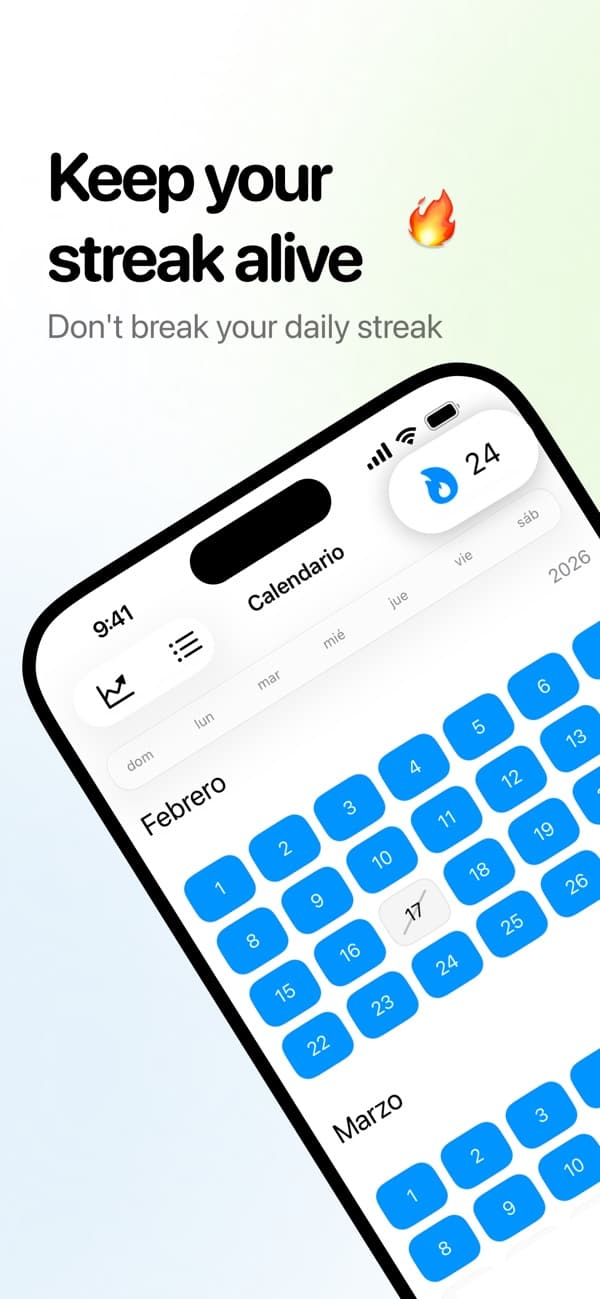
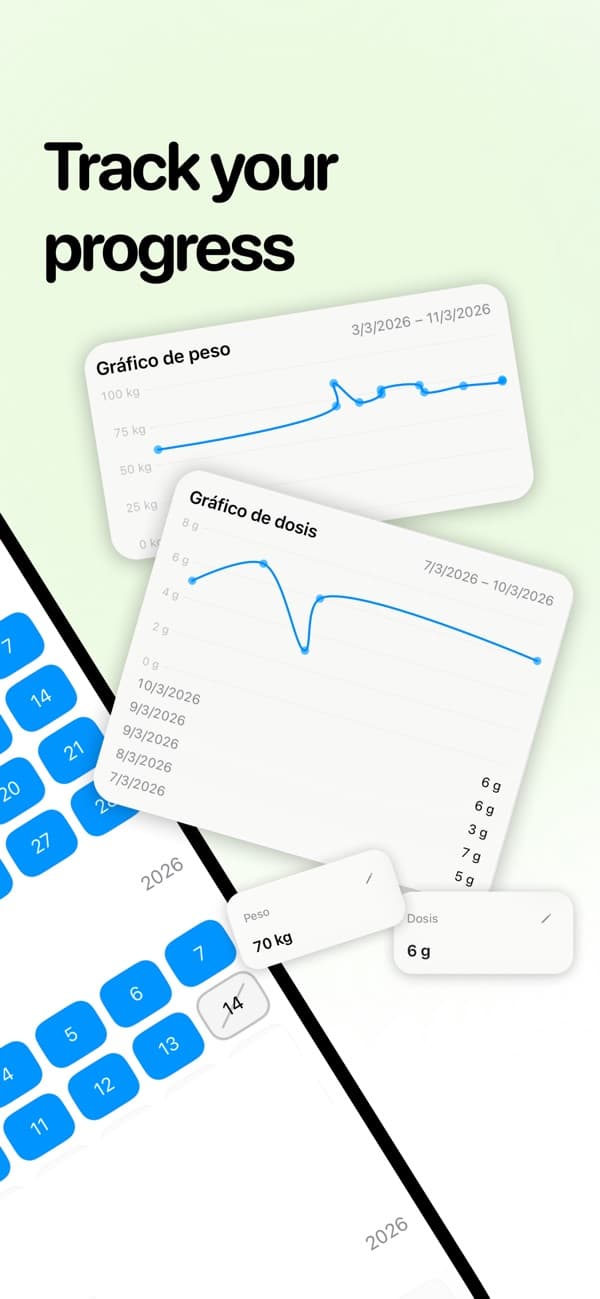
Creatinely suggests a daily amount based on your body weight and reminds you to take it. Check that amount with your doctor, especially if you have a health condition.
Once you have a number, the hard part is every day
Every protocol in the table above was taken daily. The studies say nothing about an amount you take three days out of seven, which is why what happens if you miss a day of creatine and how to remember to take creatine are useful next reads.
With an amount agreed, the creatine tub calculator tells you how long a tub lasts and when to order the next one. Women looking for the research in women specifically will find it in how much creatine should a woman take, and the basics of the supplement itself are in creatine monohydrate.
Frequently asked questions
Is 5 grams of creatine a day enough?
5 g a day sits inside the 3 to 5 g range that the ISSN position stand describes for keeping muscle stores topped up once they are full. The same document says some larger athletes in studies needed 5 to 10 g. Whether 5 g fits you depends on your body weight and situation, which is a question for your doctor or dietitian.
Is 10 grams of creatine a day too much?
Studies have given healthy adults 10 g a day and more without finding harm, but more is not stored once muscles are full, and the extra leaves in urine. In one 28-day trial, diarrhea was reported by about 56% of players taking 10 g in a single serving, against about 29% when the same 10 g was split into two 5 g servings and 35% on placebo.
Do you need a loading phase for creatine?
No. In a 1996 study, 3 g a day for 28 days raised muscle creatine by about the same 20% as 20 g a day for six days. Loading got there faster. The 2021 ISSN review of common questions says a loading phase is not required.
How much creatine should I take for my body weight?
Studies that scaled the amount to weight used about 0.3 g per kg a day for a 5 to 7 day loading phase, and amounts such as 0.03 to 0.1 g per kg a day without loading. Those are research protocols, not a prescription. Creatinely suggests a daily amount from your body weight, and a doctor or dietitian can confirm it for you.
Do you have to take creatine every day?
In nearly every protocol researchers used, people took it daily, including rest days. Muscle stores fall slowly when you stop: in one study they took about 30 days to return to their starting level.
Does it matter what time of day you take creatine?
Probably not much. A 2021 review found some evidence of slightly greater benefits when creatine was taken after exercise rather than before, but said methodological limits prevent solid conclusions. Taking it at the same time every day is easier to remember.

Sources
- Kreider RB et al. (2017). ISSN position stand: safety and efficacy of creatine supplementation in exercise, sport, and medicine. Journal of the International Society of Sports Nutrition 14:18.
- Antonio J et al. (2021). Common questions and misconceptions about creatine supplementation: what does the scientific evidence really show? Journal of the International Society of Sports Nutrition 18:13.
- Hultman E, Söderlund K, Timmons JA, Cederblad G, Greenhaff PL (1996). Muscle creatine loading in men. Journal of Applied Physiology 81(1):232–237.
- Harris RC, Söderlund K, Hultman E (1992). Elevation of creatine in resting and exercised muscle of normal subjects by creatine supplementation. Clinical Science 83(3):367–374.
- Burke DG et al. (2003). Effect of creatine and weight training on muscle creatine and performance in vegetarians. Medicine & Science in Sports & Exercise 35(11):1946–1955.
- Ostojic SM, Ahmetovic Z (2008). Gastrointestinal distress after creatine supplementation in athletes: are side effects dose dependent? Research in Sports Medicine 16(1):15–22.
- Ribeiro F et al. (2021). Timing of creatine supplementation around exercise: a real concern? Nutrients 13(8):2844.

About the author
22, software developer and founder based in Madrid.
I'm Gabriel, I'm 22 and I live in Madrid. I write software, build my own products and I'm into maths, sport and fashion. Among other things I make three iPhone apps, Creatinely, LockTy and RepZet, and here I write about training, creatine and the small daily habits that add up. I also build apps and software for B2B clients as an independent developer. If you want to work together, write to me.
This is general information, not medical advice. Talk to a professional about your own situation.
Keep reading

How Much Creatine Should a Woman Take? What the Studies Used
There is no separate female dose in the research. The daily amounts and loading protocols studies in women used, and what the ISSN position stand describes.
Creatine Loading Phase: What the Studies Did and What Skipping It Changes
What a creatine loading phase is, the protocols studies used, how long saturation took with and without it, the side effects reported and what comes after.

How to Take Creatine: Form, Mixing, Timing and Why Every Day Counts
Choose creatine monohydrate, stir it into a drink you already have and take it at a time you can repeat, rest days included. Mixing, missed days and storage.

Should You Take Creatine If You Don't Work Out? What Studies Found Without Training
Without exercise, most studies found creatine does little for muscle, and the brain research is early and mixed. What that means if you're not a gym person.

Does Creatine Make You Gain Weight or Feel Bloated? What Is Water and What Isn't
Creatine can add some water weight, mostly during a high-dose loading week. It is not fat. Here is what studies found, and why bloating is often about the dose.

Creatine for Women Over 40: What the Menopause Research Shows
Most studies in women over 40 paired creatine with strength training. What they found for muscle, bone and brain fog, and where the evidence is still thin.