How Much Creatine Should a Woman Take? What the Studies Used
 Gabriel SánchezPublished
Research on creatine has no separate amount for women: studies in women used the same protocols as studies in men, most often a daily amount of 3 to 5 g, sometimes after a short loading week of about 20 g a day. Some studies scaled the amount to body weight instead, which gives smaller people a smaller number.
Why there is no "women's dose"
Most of the early creatine research was done in young men, and women were added later. When researchers did study women, they mostly kept the same protocols. A 2021 review of creatine across women's lives lists the same options seen in the wider research: a loading phase, a daily amount of 3 to 5 g, or a daily 5 g that takes about three to four weeks to fill muscle stores (Smith-Ryan et al., 2021).

The same review notes that women tend to have about 10% higher creatine levels in resting muscle than men, which could in theory make them respond a little less to supplementation. It also notes that women usually get less creatine from their diet. Neither point has led researchers to a separate female protocol.
Products marketed "for women" are usually creatine monohydrate too, so the price per gram is the useful thing to compare. You can do that with the creatine cost calculator.
What the ISSN position stand describes
The International Society of Sports Nutrition position stand is the document most often cited on creatine dosing. It describes these protocols (Kreider et al., 2017):
- Loading: 5 g (or about 0.3 g per kg of body weight) four times a day for 5 to 7 days, described as the quickest way to raise muscle creatine.
- Maintenance: 3 to 5 g a day once stores are full.
- An alternative without loading: 3 g a day for 28 days, which raises stores more gradually.
- Larger athletes: some may need 5 to 10 g a day to keep stores up.
The 2021 follow-up review of common creatine questions describes 3 to 5 g a day for at least four weeks as an option, says loading is not required, and gives 0.1 g per kg of body weight a day as a body-weight version (Antonio et al., 2021).
These are descriptions of what researchers used and found effective in studies, mostly in healthy adults who exercise. They are not a prescription for any one person.
Loading or no loading
A 1996 study is the reason so many reviews say loading is optional. Men who took 20 g a day for six days raised their muscle creatine by about 20%. Men who took 3 g a day reached a similar level after 28 days (Hultman et al., 1996). The end point was much the same. The difference was speed.
For many women, the slower route has two practical upsides. Loading is linked to most of the quick water weight people notice in the first week, which is covered in does creatine make you gain weight. And large single servings are linked to stomach upset: in one study, a single 10 g serving caused diarrhoea more often than two 5 g servings (Ostojic & Ahmetovic, 2008). The 2021 review also notes that single servings above 10 g may cause stomach discomfort.
Fixed amounts versus body weight
Some studies give everyone the same amount. Others scale it to body weight, which matters because women are, on average, smaller than the men most early studies used.
A few examples from studies in women:
- In a two-year trial in 237 postmenopausal women, the creatine group took 0.14 g per kg of body weight a day alongside strength training and walking (Chilibeck et al., 2023).
- The 2021 women's health review describes a year-long trial in postmenopausal women that used 0.1 g per kg a day, about 7 g a day for the women in that study, and other year-long trials that used 1 g or 3 g a day. The low-dose trials of creatine alone found no effect on muscle or bone (Smith-Ryan et al., 2021).
A per-kilogram amount is simple arithmetic: 0.1 g per kg works out to 6 g for someone who weighs 60 kg and 8 g for someone who weighs 80 kg. That is how the formula in those studies scales, not a target for you.


Want a number for you?
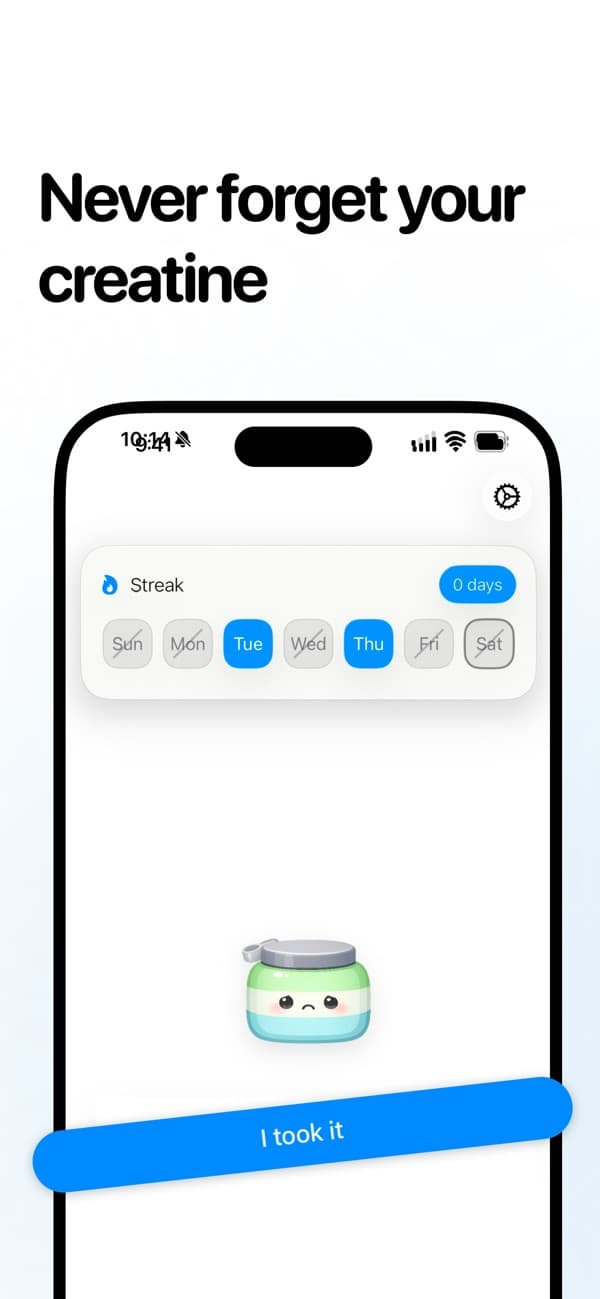
Creatinely suggests a daily amount based on your body weight, and reminds you to take it. Check it with your doctor if you have a health condition. (I make Creatinely.)
When to talk to a doctor or pharmacist
The safety research mostly covers healthy adults. The ISSN position stand describes short and long-term creatine use in those studies as safe and well tolerated (Kreider et al., 2017). Check with your doctor or pharmacist before starting if you have a kidney condition or any other health condition, or if you take regular medication.
It is also worth telling your doctor before any blood test. Creatine can raise creatinine, a marker often used to estimate kidney function, without the kidneys being harmed, according to the 2021 review (Antonio et al., 2021).
Once you have an amount, the hard part is daily
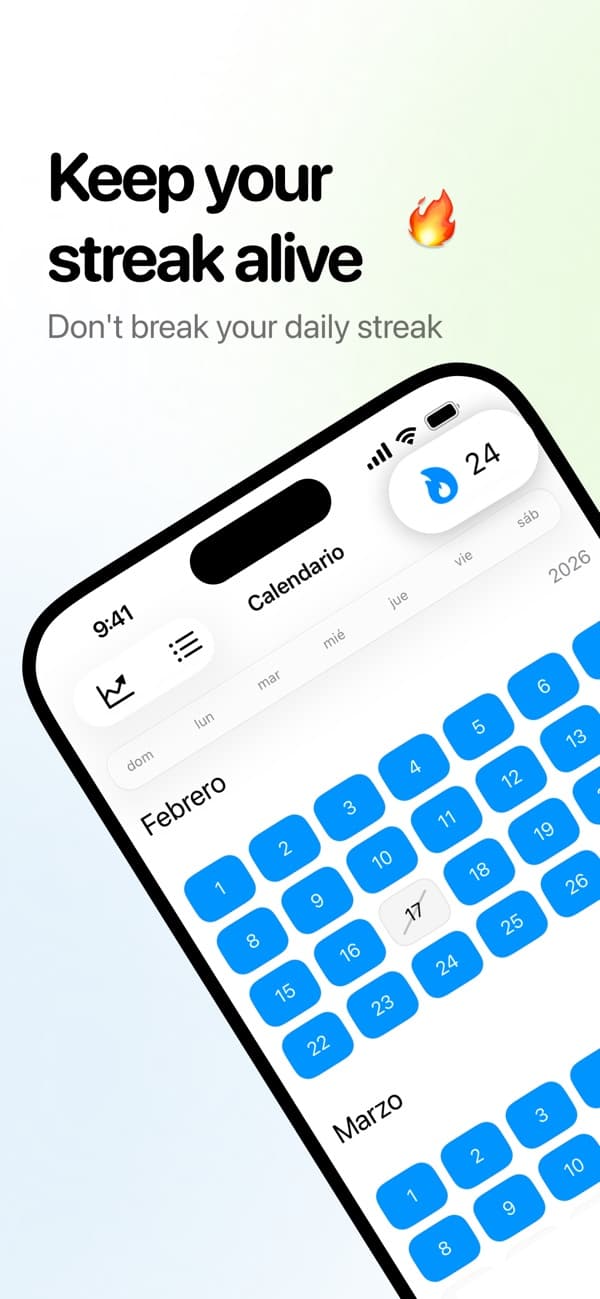
In nearly every protocol above, creatine was taken every day. The amount matters less than people think if it is taken one day and forgotten the next three. If that sounds like you, these tricks for remembering creatine are a good next read, and the creatine tub calculator shows how long a tub lasts at the amount you settle on.
If you are over 40 and wondering how these studies apply to you, creatine for women over 40 goes through the muscle and bone research in more detail.
Whatever number you settle on, the studies above have one thing in common: people took it every day.
Frequently asked questions
Is there a different creatine dose for women?
Not in the research. Studies in women used the same protocols as studies in men: either a short loading phase followed by a smaller daily amount, or a smaller daily amount from the start. Some studies scaled the amount to body weight.
Do women need a loading phase?
The 2021 ISSN review of common questions says loading is not required. In one study, 3 g a day for 28 days raised muscle creatine as much as 20 g a day for six days, just more slowly.
Is it better to take creatine by body weight?
Some studies used amounts per kilogram, such as 0.1 g/kg a day, so a smaller person got less than a larger one. Others used a fixed amount for everyone. Both approaches appear in the research.
Who should check with a doctor before taking creatine?
Anyone with a kidney condition or other health condition, and anyone who takes regular medication. A doctor or pharmacist can tell you whether it fits your situation.
Sources
- Kreider RB et al. (2017). ISSN position stand: safety and efficacy of creatine supplementation in exercise, sport, and medicine. Journal of the International Society of Sports Nutrition 14:18.
- Antonio J et al. (2021). Common questions and misconceptions about creatine supplementation: what does the scientific evidence really show? Journal of the International Society of Sports Nutrition 18:13.
- Smith-Ryan AE, Cabre HE, Eckerson JM, Candow DG (2021). Creatine supplementation in women's health: a lifespan perspective. Nutrients 13(3):877.
- Hultman E et al. (1996). Muscle creatine loading in men. Journal of Applied Physiology 81(1):232–237.
- Chilibeck PD et al. (2023). A 2-yr randomized controlled trial on creatine supplementation during exercise for postmenopausal bone health. Medicine & Science in Sports & Exercise 55(10):1750–1760.
- Ostojic SM, Ahmetovic Z (2008). Gastrointestinal distress after creatine supplementation in athletes: are side effects dose dependent? Research in Sports Medicine 16(1):15–22.
About the author
22, software developer and founder based in Madrid.
I'm Gabriel, I'm 22 and I live in Madrid. I write software, build my own products and I'm into maths, sport and fashion. Among other things I make three iPhone apps, Creatinely, LockTy and RepZet, and here I write about training, creatine and the small daily habits that add up.
This is general information, not medical advice. Talk to a professional about your own situation.
Keep reading

Should You Take Creatine If You Don't Work Out? What Studies Found Without Training
Without exercise, studies found creatine does little for muscle. The brain research is early and mixed. What that means if you are curious but not a gym person.

Does Creatine Make You Gain Weight or Feel Bloated? What Is Water and What Isn't
Creatine can add some water weight, mostly during a high-dose loading week. It is not fat. Here is what studies found, and why bloating is often about the dose.

Creatine for Women Over 40: What the Menopause Research Shows
Most studies in women over 40 paired creatine with strength training. What they found for muscle, bone and brain fog, and where the evidence is still thin.