Should You Take Creatine If You Don't Work Out? What Studies Found Without Training
 Gabriel SánchezPublished
If you don't exercise, creatine is unlikely to do much for your muscles or strength: in studies, most of the muscle benefit showed up only when people also did strength training. There is some early research on memory and thinking, especially in older adults and vegetarians, but it is too small and mixed to treat as a reason on its own.
What creatine does in the body
Your body makes creatine and you also get some from food, mainly meat and fish. The ISSN position stand explains that the body needs to replace around 1 to 3 g a day, depending on muscle mass. About half of that usually comes from food and the rest is made by the body, mainly in the liver and kidneys (Kreider et al., 2017).
Most creatine is stored in muscle, where it helps supply energy for short, hard efforts like lifting something heavy or climbing stairs quickly. A supplement tops up those stores. Whether that matters depends on what you then ask your muscles to do.
Muscle and strength without training
This is the part the research is clearest on.
A meta-analysis of 22 trials in adults with average ages of 57 to 70 found that people who took creatine while doing resistance training gained about 1.37 kg more lean tissue than people on placebo, along with more strength (Chilibeck et al., 2017). The authors did not include studies of creatine alone, and they explain why: without muscle loading, creatine does very little at the cell level.
A 2021 review of common creatine questions says the same for older adults. Creatine on its own is unlikely to produce large gains in strength or everyday function, while creatine combined with resistance training is where most of the benefit appears (Antonio et al., 2021).
In women past menopause, a review describes trials of creatine alone, including two that lasted a year at low daily amounts, that found no effect on muscle or bone (Smith-Ryan et al., 2021).
So if the main hope is to get stronger or keep muscle with age, the supplement was studied as a helper for exercise, not a substitute for it.
What about the brain?
This is the reason many non-gym people are curious, and it is a real area of research. Your brain also uses creatine. The ISSN position stand reports that supplements can raise brain creatine by roughly 5 to 15%, and that some studies found less mental fatigue and better thinking, while others found no effect (Kreider et al., 2017).
A 2018 systematic review looked only at randomized trials of creatine and thinking skills in healthy people (Avgerinos et al., 2018). It found six trials with 281 people in total. Its findings:
- Some evidence for better short-term memory and reasoning.
- Conflicting results for attention, reaction time, long-term memory and several other areas.
- No change in young people.
- Vegetarians did better on memory tasks than meat eaters.
The authors mention a possible benefit for older and stressed people, and call for larger studies. That is a fair summary of where things stand: interesting, not settled.
You will see much stronger claims online, especially in posts that sell creatine gummies or "brain" blends. Six trials is not a lot to build on, so be wary of anyone who promises sharper thinking.
Who might still be curious without training
There are a few groups where the question makes more sense:
People who eat little or no meat. Vegetarians have lower creatine stores in muscle, according to the ISSN position stand, which is why supplementation raises their levels more. The memory finding in the 2018 review fits with that, though it is based on small studies.
People who move but don't call it working out. If you garden, carry children, walk hills or do a weekly class, you are using your muscles. The trials that found benefits in older adults used resistance training two or three days a week for 7 to 52 weeks, which is less than many people imagine.

People planning to start. Some people take creatine as part of a fresh start with strength training. In that case the habit of training is the bigger change.
In any of these cases, if you have a kidney condition, other health conditions or take regular medication, check with your doctor or pharmacist before starting.
What you can expect, honestly
If you take creatine and don't exercise, the most likely changes are small. Some people notice a little water weight, mostly with a high-dose loading phase; there is more on that in does creatine make you gain weight. Many notice nothing at all, which is normal for a supplement that gives no immediate feeling.
The cost is low compared with many supplements, and you can check what it would be for you with the creatine cost calculator. But a low price is not a reason to take something.
If you are over 40 and wondering about muscle and bone in particular, creatine for women over 40 covers that research in more detail.


If you try it, it only helps if you take it daily
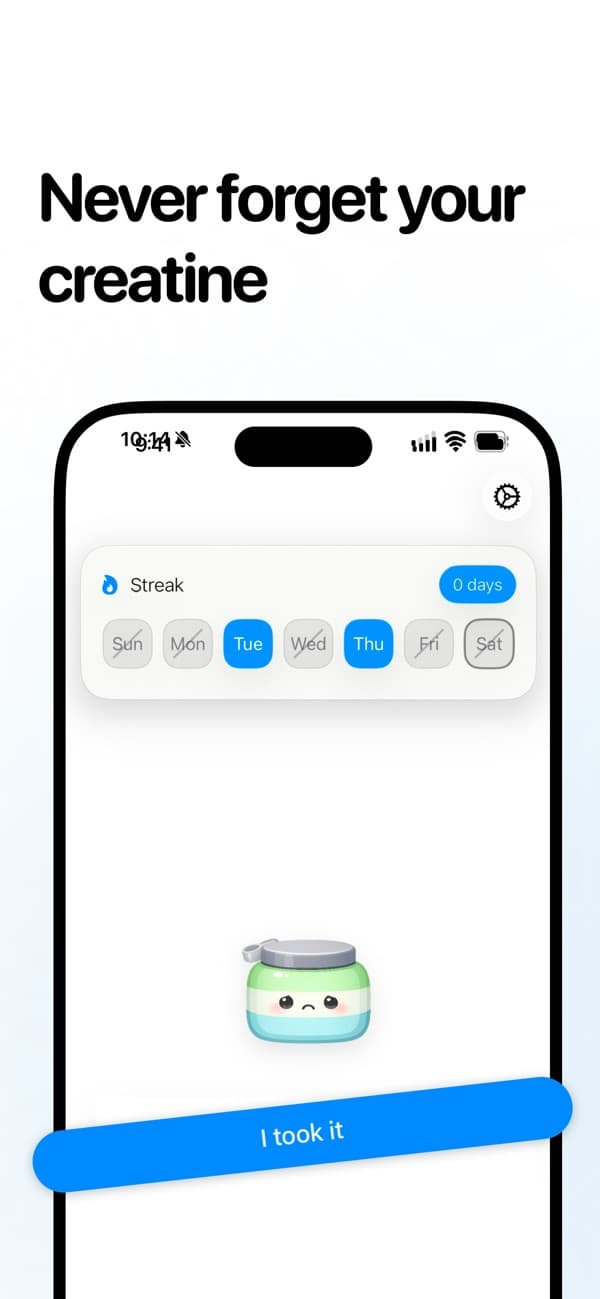
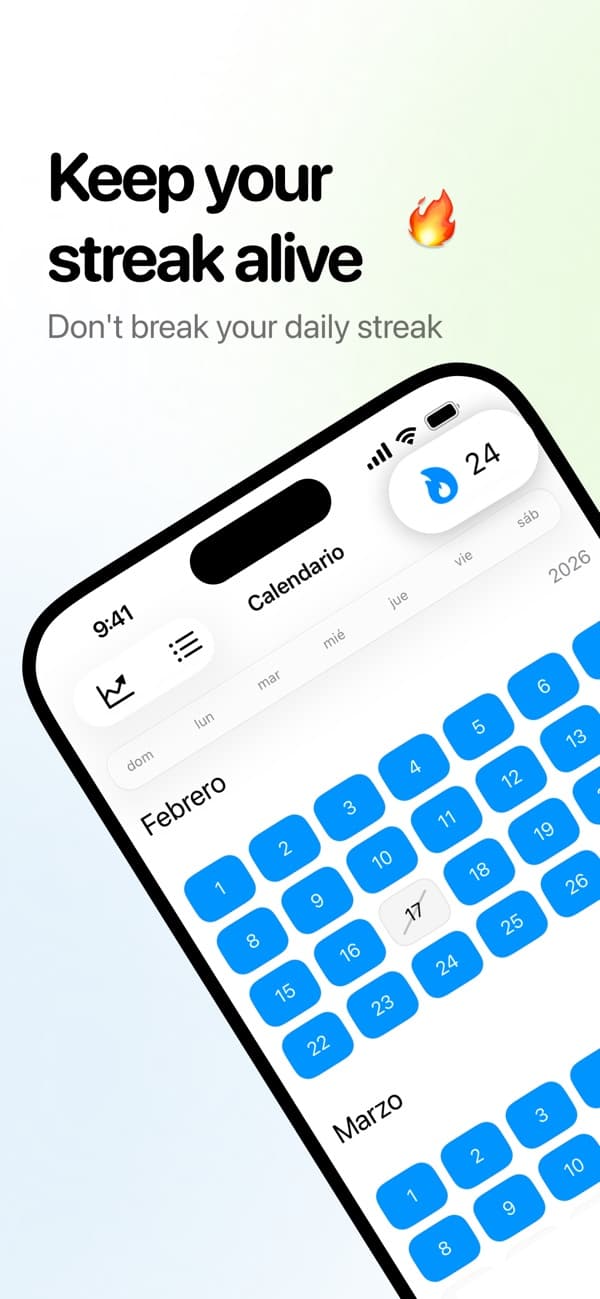
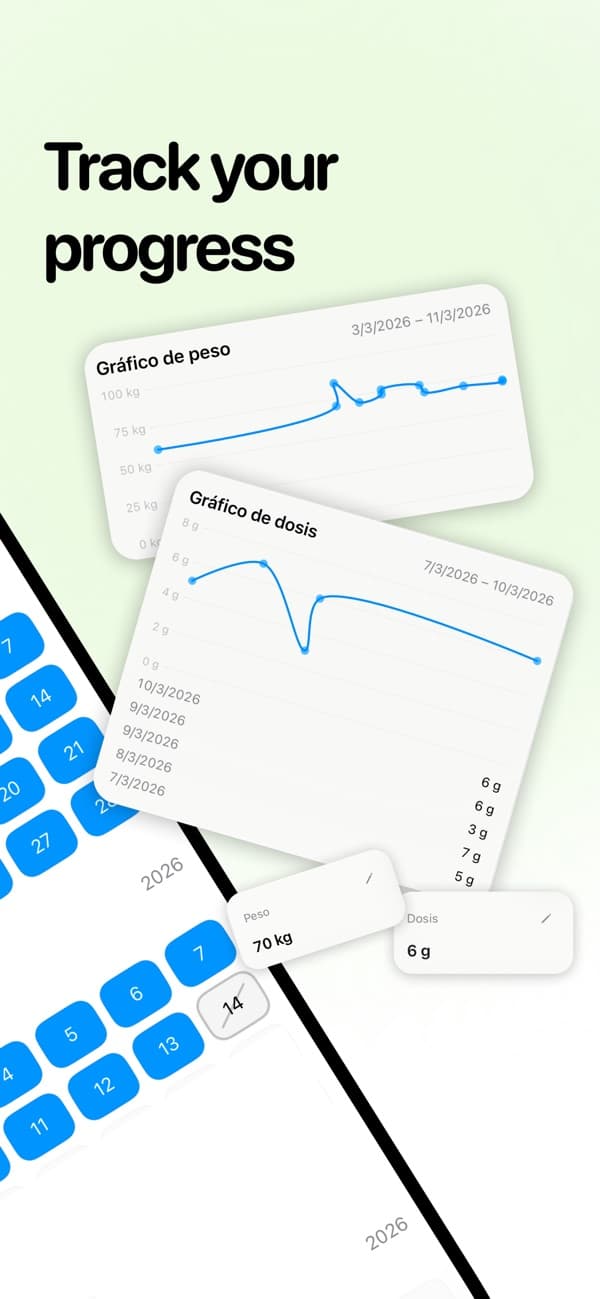
Creatinely reminds you at the time you choose and keeps a streak, with a widget and a Live Activity. (I make Creatinely.)
A simple way to decide
Ask yourself what you are hoping for. If it is strength or keeping muscle as you get older, the research points first at strength training and then at creatine as an addition. If it is sharper thinking, the evidence is early and modest. If you mostly want to try it because everyone is talking about it, that is fine too, as long as you know what the studies actually found.
If two short strength sessions a week feel doable, that is the change the research supports most.
Frequently asked questions
Does creatine do anything if you don't exercise?
For muscle and strength, studies of creatine without training mostly found small or no effects. Some research on memory and thinking found possible benefits, but the studies are few and the results are mixed.
Is it safe to take creatine without working out?
The ISSN position stand describes creatine as safe and well tolerated in healthy people at the amounts studied. If you have a kidney condition, other health conditions or take medication, check with your doctor or pharmacist first.
Will creatine make me gain weight if I don't work out?
Creatine can add some water weight, mostly during a high-dose loading phase. It does not add fat, and without training it is unlikely to add muscle.
Do vegetarians benefit more from creatine?
Vegetarians tend to have lower creatine stores in muscle, according to the ISSN position stand, so supplements raise their levels more. In one review, vegetarians also did better on memory tasks with creatine than meat eaters.
Sources
- Kreider RB et al. (2017). ISSN position stand: safety and efficacy of creatine supplementation in exercise, sport, and medicine. Journal of the International Society of Sports Nutrition 14:18.
- Chilibeck PD, Kaviani M, Candow DG, Zello GA (2017). Effect of creatine supplementation during resistance training on lean tissue mass and muscular strength in older adults: a meta-analysis. Open Access Journal of Sports Medicine 8:213–226.
- Antonio J et al. (2021). Common questions and misconceptions about creatine supplementation: what does the scientific evidence really show? Journal of the International Society of Sports Nutrition 18:13.
- Avgerinos KI, Spyrou N, Bougioukas KI, Kapogiannis D (2018). Effects of creatine supplementation on cognitive function of healthy individuals: a systematic review of randomized controlled trials. Experimental Gerontology 108:166–173.
- Smith-Ryan AE, Cabre HE, Eckerson JM, Candow DG (2021). Creatine supplementation in women's health: a lifespan perspective. Nutrients 13(3):877.
About the author
22, software developer and founder based in Madrid.
I'm Gabriel, I'm 22 and I live in Madrid. I write software, build my own products and I'm into maths, sport and fashion. Among other things I make three iPhone apps, Creatinely, LockTy and RepZet, and here I write about training, creatine and the small daily habits that add up.
This is general information, not medical advice. Talk to a professional about your own situation.
Keep reading

How Much Creatine Should a Woman Take? What the Studies Used
There is no separate female dose in the research. The daily amounts and loading protocols studies in women used, and what the ISSN position stand describes.

Does Creatine Make You Gain Weight or Feel Bloated? What Is Water and What Isn't
Creatine can add some water weight, mostly during a high-dose loading week. It is not fat. Here is what studies found, and why bloating is often about the dose.

Creatine for Women Over 40: What the Menopause Research Shows
Most studies in women over 40 paired creatine with strength training. What they found for muscle, bone and brain fog, and where the evidence is still thin.