Does Creatine Make You Gain Weight or Feel Bloated? What Is Water and What Isn't
 Gabriel SánchezPublished
Creatine can make the number on the scale go up a little, mostly in the first week if you take a high-dose loading phase, and that extra weight is water, not fat. Many people who skip loading notice little or no change, and the stomach bloating some people describe is usually linked to large single servings.
Why the scale can go up
Creatine is stored mostly in your muscles. When muscle creatine rises, the cells hold a bit more water along with it. That water is what shows up on the scale.
The ISSN position stand calls weight gain the only side effect of creatine that is consistently reported. Early studies that used a loading phase found people held about 0.5 to 1 litre of extra fluid in the short term, which roughly matched the weight they gained (Kreider et al., 2017).
A 2021 review of common creatine questions adds an important detail: water retention does not always happen. Several studies, including one that ran for eight weeks with training, found no significant change in total body water (Antonio et al., 2021). The same review puts the gain during a loading phase at around 1 to 3 kg, mostly water.
The loading phase is where most of the jump happens
A loading phase means taking about 20 g a day, usually split into four servings, for five to seven days, then dropping to a smaller daily amount. The ISSN position stand describes it as the quickest way to fill muscle stores. It also describes a slower option: 3 g a day for 28 days (Kreider et al., 2017).
Both routes end up in a similar place. In a classic study, 20 g a day for six days and 3 g a day for 28 days each raised muscle creatine by about 20% (Hultman et al., 1996). The slower route just takes longer to get there. The 2021 review says loading is not required (Antonio et al., 2021).
This matters for how creatine feels in the first weeks. A sudden jump of a kilo or two on the scale is the kind of thing that makes people quit, even when it is only water. If you want to read more about the amounts studies used, there is a separate article on how much creatine women take in studies.
Is it different for women?
This is one of the most common worries in women's fitness forums, often from people who have read that creatine is "bulking."
A review on creatine across women's lives says rapid weight gain is more common in men, and that it reflects more water in the cells. The authors write that fear of weight gain is one reason women avoid creatine, and that this concern is largely unfounded, especially in women (Smith-Ryan et al., 2021). They also point out that taking creatine with a large amount of carbohydrate, a strategy sometimes used to increase uptake, is likely not the best approach for women because of the extra calories.
Creatine is not a hormone or a steroid (Antonio et al., 2021), and it does not build muscle by itself. Studies that found women gaining lean mass over months had them doing strength training at the same time. If you want to see what that research looks like for women past menopause, read creatine for women over 40.
Bloating, puffiness and stomach upset
"Bloated" can mean different things. Some people mean the scale went up. Some mean they look puffier. Others mean their stomach feels full, gassy or upset.
The water creatine pulls into muscle sits inside the muscle cells, which is why studies describe it as cellular hydration. Stomach trouble is a separate issue, and it seems to depend on how much you take at once.
In a study of 59 male football players, those who took 10 g of creatine in one serving had diarrhoea more often (55.6%) than those who split the same 10 g into two 5 g servings (28.6%). The split group did not differ from placebo (Ostojic & Ahmetovic, 2008). The 2021 review also notes that single servings above 10 g may cause stomach discomfort (Antonio et al., 2021).
Practical things that people often find help: avoiding a high-dose loading phase, not taking a large amount in one go, mixing the powder fully in water, and taking it with food. These are common sense, not tested rules.
When the weight is not from creatine
If you started creatine and also changed your diet, started training, or are in perimenopause, several things can move the scale at once. Creatine gets blamed because it is the newest change.
Swelling in the ankles or legs, rapid weight gain you can't explain, or swelling on one side is not a normal creatine effect. See a doctor about it. If you have a kidney or heart condition, or take medication that affects fluid balance, check with your doctor or pharmacist before starting any supplement.


Steady daily use is easier to judge than on-and-off
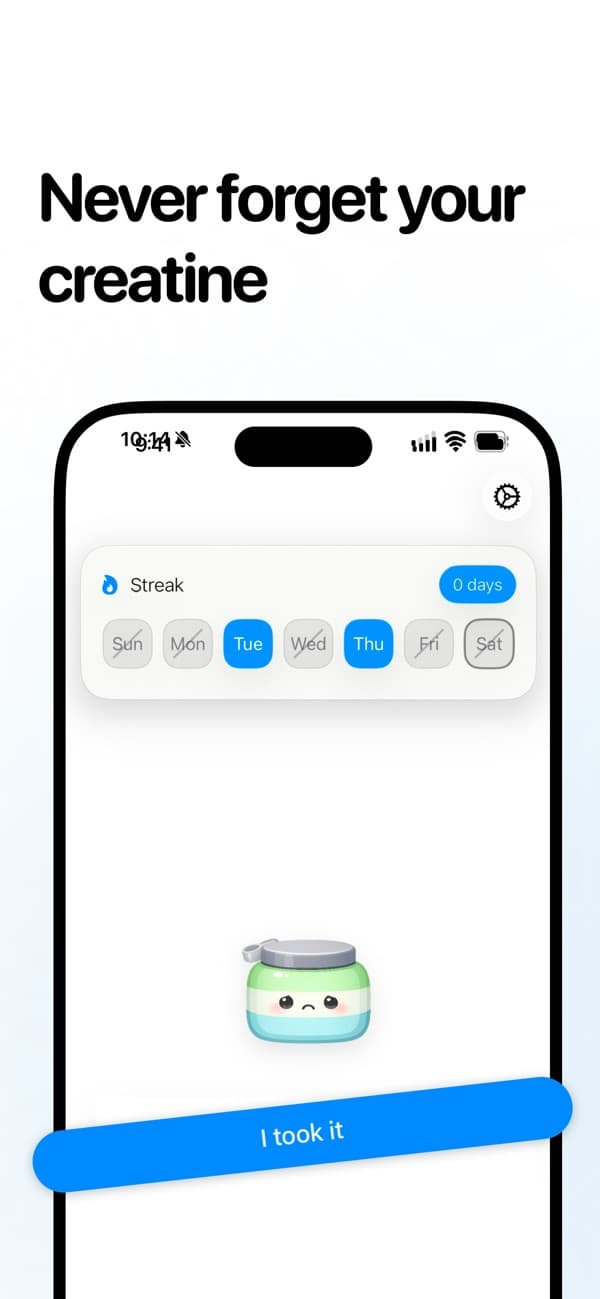
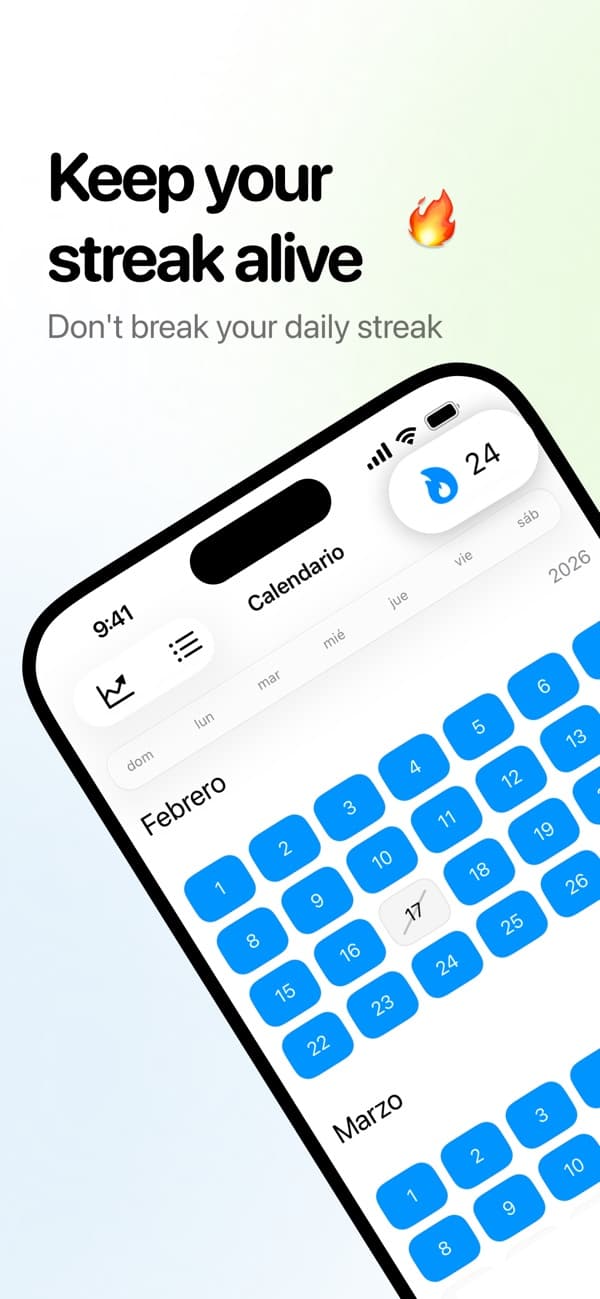
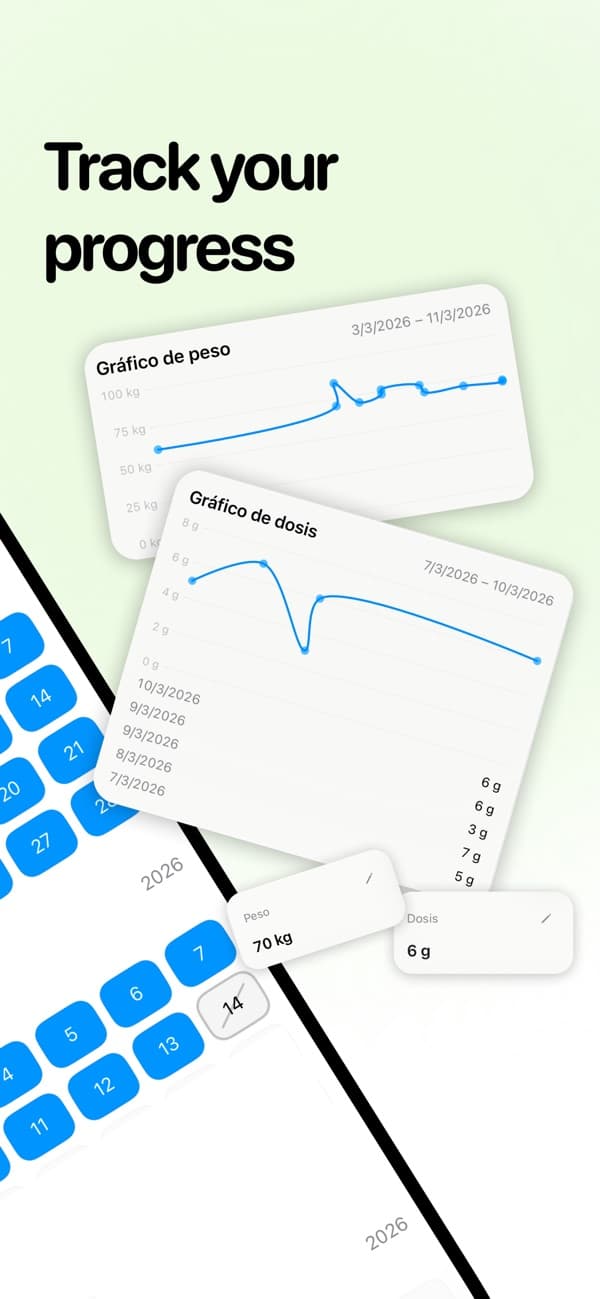
If you decide to try it, Creatinely reminds you at the time you choose and keeps a streak, with a widget and a Live Activity. (I make Creatinely.)
How to read the scale in the first month
If you weigh yourself, a few habits make the numbers easier to read:
- Weigh at the same time of day, ideally in the morning before eating.
- Look at the weekly average instead of single days.
- Take a waist measurement or a photo now and then, since water in muscle does not change your waist the way fat does.
Daily weight already moves up and down with salt, carbohydrates, sleep and your cycle. A small shift in the first weeks of creatine sits inside that normal noise for many people.
The short answer for anyone on the fence: if creatine adds anything to the scale, it is mostly water, and the biggest jumps happen during a loading phase.
Frequently asked questions
How much weight do you gain on creatine?
A 2021 review reports that a loading phase of 20 to 25 g a day can add about 1 to 3 kg, mostly water. Several studies without loading found no significant change in body water.
Is creatine weight gain fat?
No. The early change on the scale is water that creatine draws into cells. In studies where people gained lean mass over months, they were also doing strength training.
Do women gain weight on creatine?
A review on creatine in women says rapid weight gain is more common in men, and that the fear of weight gain in women is largely unfounded. Water retention can still happen, especially with loading.
Why does creatine make my stomach upset?
In a study of 59 athletes, a single 10 g serving caused diarrhoea more often than the same amount split into two 5 g servings. Large single servings are the usual suspect.
Sources
- Kreider RB et al. (2017). ISSN position stand: safety and efficacy of creatine supplementation in exercise, sport, and medicine. Journal of the International Society of Sports Nutrition 14:18.
- Antonio J et al. (2021). Common questions and misconceptions about creatine supplementation: what does the scientific evidence really show? Journal of the International Society of Sports Nutrition 18:13.
- Smith-Ryan AE, Cabre HE, Eckerson JM, Candow DG (2021). Creatine supplementation in women's health: a lifespan perspective. Nutrients 13(3):877.
- Hultman E et al. (1996). Muscle creatine loading in men. Journal of Applied Physiology 81(1):232–237.
- Ostojic SM, Ahmetovic Z (2008). Gastrointestinal distress after creatine supplementation in athletes: are side effects dose dependent? Research in Sports Medicine 16(1):15–22.
About the author
22, software developer and founder based in Madrid.
I'm Gabriel, I'm 22 and I live in Madrid. I write software, build my own products and I'm into maths, sport and fashion. Among other things I make three iPhone apps, Creatinely, LockTy and RepZet, and here I write about training, creatine and the small daily habits that add up.
This is general information, not medical advice. Talk to a professional about your own situation.
Keep reading

How Much Creatine Should a Woman Take? What the Studies Used
There is no separate female dose in the research. The daily amounts and loading protocols studies in women used, and what the ISSN position stand describes.

Should You Take Creatine If You Don't Work Out? What Studies Found Without Training
Without exercise, studies found creatine does little for muscle. The brain research is early and mixed. What that means if you are curious but not a gym person.

Creatine for Women Over 40: What the Menopause Research Shows
Most studies in women over 40 paired creatine with strength training. What they found for muscle, bone and brain fog, and where the evidence is still thin.