How to Remember to Take Creatine Every Day (7 Tricks That Stick)
 Gabriel SánchezPublished
The easiest way to remember creatine is to take it right after something you already do every day, like making your morning coffee, and to keep the tub where you can see it. If that still fails, add a reminder at a fixed time and keep a streak, so a missed day is obvious the next morning.
Why creatine is so easy to forget
Creatine gives you no feedback. You feel nothing when you take it and nothing when you skip it, so there is no signal that something is missing. It also gets tied to training: people remember on gym days and forget on rest days, even though the ISSN position stand describes daily intake, not training-day intake (Kreider et al., 2017).
The fix is to stop relying on memory and make the habit depend on a cue you can't miss.
1. Stack it on a habit you already have
Write the plan as a sentence: "After I make my coffee, I take creatine." Psychologists call this an implementation intention. A meta-analysis of 94 tests found that if-then plans like this one had a medium-to-large effect on whether people followed through (Gollwitzer & Sheeran, 200638002-1)).
Coffee works for a lot of people because it happens at the same time every morning, weekends included. Breakfast and brushing your teeth work too. If you'd rather not stir it into the coffee, take it with a glass of water while the coffee brews.
2. Keep the tub where you'll see it
A tub in the cupboard behind the protein powder is easy to forget. Put it next to the coffee machine or the kettle and leave the scoop on top of the lid. The cue only works if you see it at the moment you do the anchor habit.
3. Pick one time and stop looking for the "best" time
Studies that compared taking creatine right before or right after training found similar results in both groups (Antonio & Ciccone, 2013; Candow et al., 2014). The research on habits is clearer: doing the same thing in the same context every day is what makes it automatic (Lally et al., 2010). The best time is the one you will repeat tomorrow.
4. Count rest days
Creatine builds up over weeks of daily use and also leaves slowly. In one study, creatine levels took about a month to return to baseline after people stopped taking it (Hultman et al., 1996). So one forgotten day is no drama, but a habit that only happens on gym days is a different thing.
If rest days are your weak spot, check that your anchor happens seven days a week. A post-workout shake doesn't.
5. Let your phone nag you
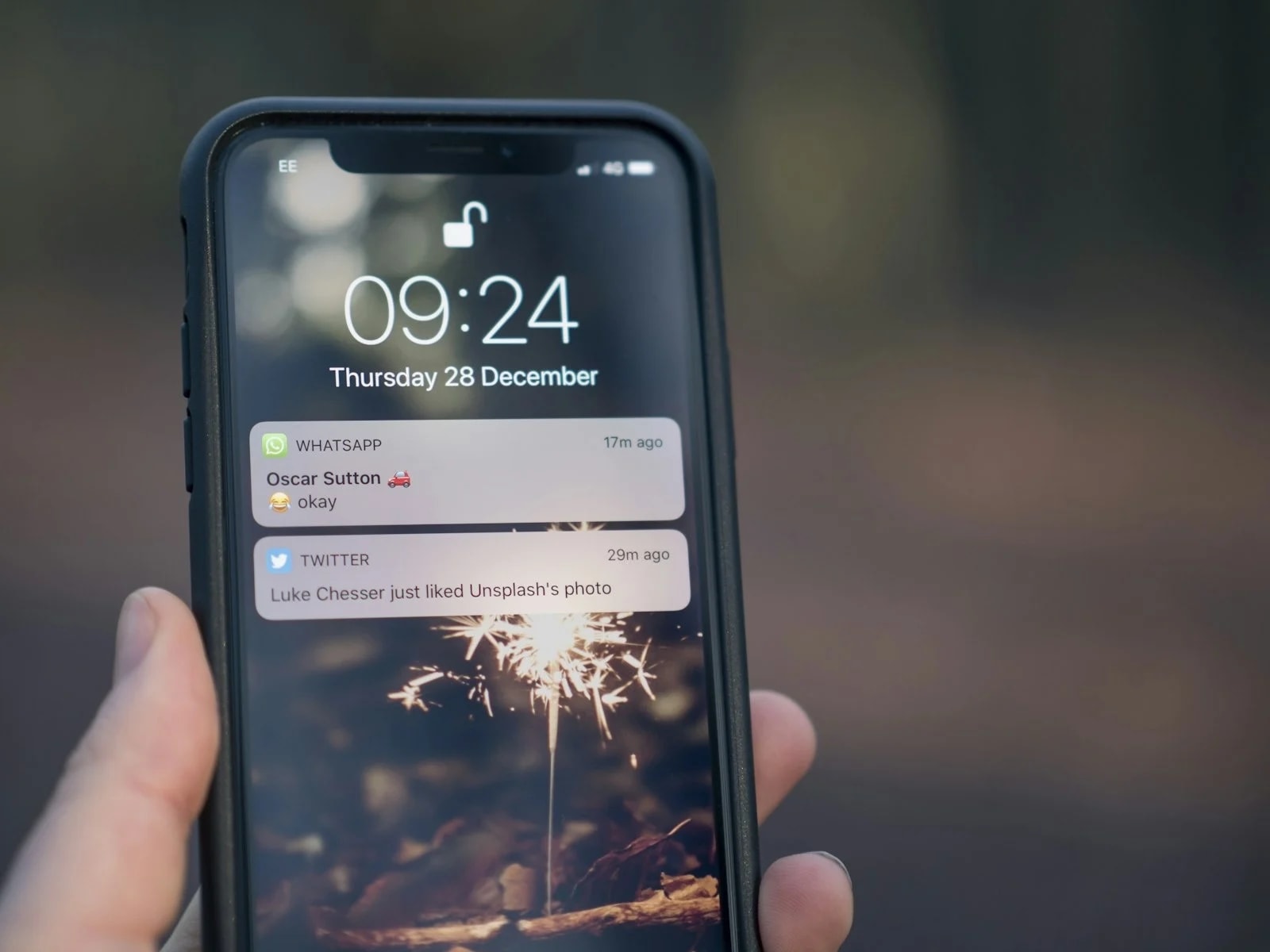
A plain alarm at a fixed time works. Its weak point is that you swipe it away, plan to take creatine in a minute, and forget. A reminder that keeps coming back until you mark the dose as taken closes that gap, and a widget on the home screen shows you every time you unlock the phone whether today is done.


If your problem is remembering, not motivation
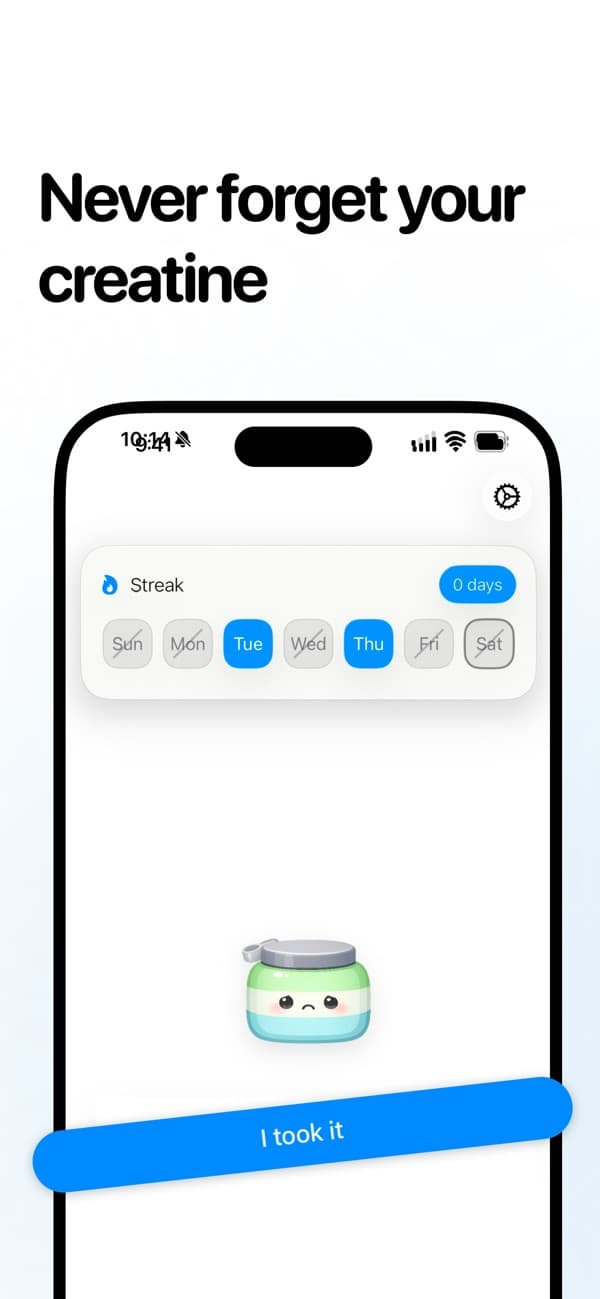
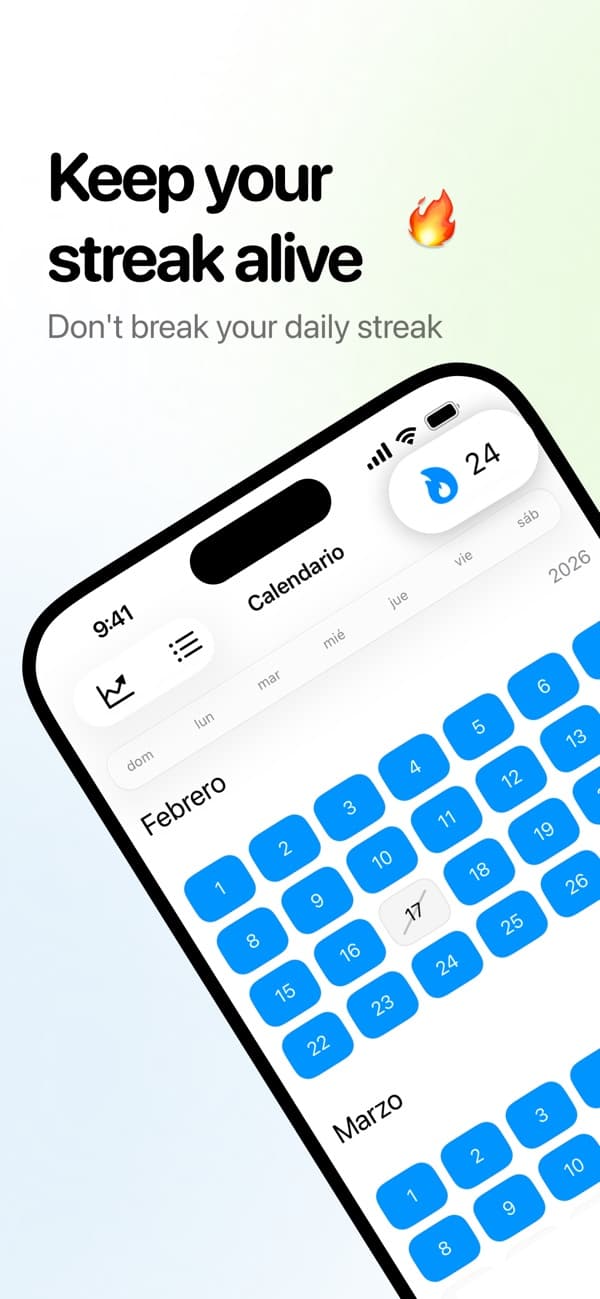
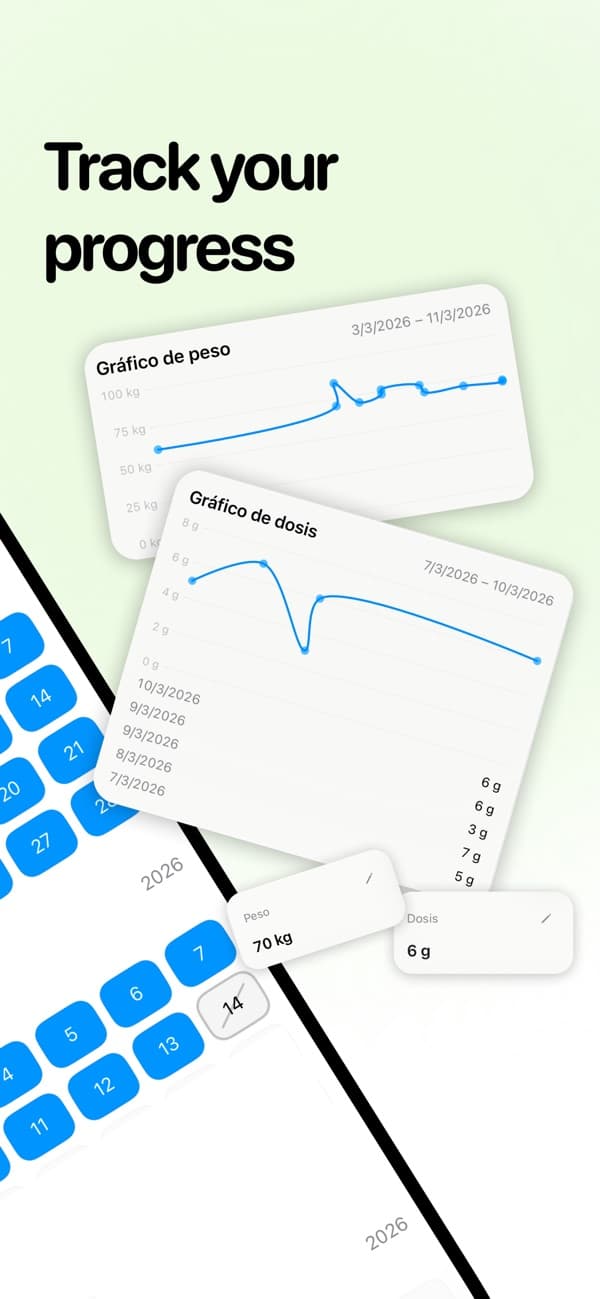
Creatinely reminds you at the time you choose and keeps reminding you until you log it. A widget and a Live Activity show whether today is done and how long your streak is. (I make Creatinely.)
6. Plan for trips and busy days
Streaks tend to break on trips. Put a few servings in a small container or buy single-serve sachets and keep them in your bag. Before you leave, check how much is left with the creatine tub calculator so you don't run out halfway through.
7. Track a streak and forgive a single miss
A number that goes up every day is a small reward for a habit that otherwise has none. When you miss a day, take your usual amount the next day and keep going. In the Lally study, missing one opportunity did not materially affect how the habit formed. Many people follow a simple rule: never miss twice.
Pick your anchor habit tonight and move the tub next to it. Tomorrow morning is day one.
Frequently asked questions
What if I forget to take creatine one day?
Take your usual amount the next day and carry on. Creatine levels drop slowly, so one missed day makes little difference. The risk is that one missed day turns into a missed week.
Should I take creatine on rest days?
The ISSN position stand describes taking creatine every day, so rest days count. They are also the days people forget most, which is why tying it to a daily habit works better than tying it to training.
What time of day is best to take creatine?
Studies comparing before and after training found similar results. Pick the time you can repeat every day, ideally right after something you already do every morning.
How long does it take for a new habit to become automatic?
In a study that followed 96 people building a new daily habit, it took a median of 66 days, with a range from 18 to 254 days (Lally et al., 2010).
Sources
- Kreider RB et al. (2017). ISSN position stand: safety and efficacy of creatine supplementation. Journal of the International Society of Sports Nutrition 14:18.
- Lally P et al. (2010). How are habits formed: Modelling habit formation in the real world. European Journal of Social Psychology 40(6):998–1009.
- Gollwitzer PM, Sheeran P (2006). Implementation intentions and goal achievement: A meta-analysis of effects and processes. Advances in Experimental Social Psychology 38:69–119.
- Antonio J, Ciccone V (2013). The effects of pre versus post workout supplementation of creatine monohydrate on body composition and strength. Journal of the International Society of Sports Nutrition 10:36.
- Candow DG et al. (2014). Comparison of creatine supplementation before versus after supervised resistance training in healthy older adults. Research in Sports Medicine 22(1):61–74.
- Hultman E et al. (1996). Muscle creatine loading in men. Journal of Applied Physiology 81(1):232–237.

About the author
22, software developer and founder based in Madrid.
I'm Gabriel, I'm 22 and I live in Madrid. I write software, build my own products and I'm into maths, sport and fashion. Among other things I make three iPhone apps, Creatinely, LockTy and RepZet, and here I write about training, creatine and the small daily habits that add up. I also build apps and software for B2B clients as an independent developer. If you want to work together, write to me.
This is general information, not medical advice. Talk to a professional about your own situation.
Keep reading

How Much Creatine Should a Woman Take? What the Studies Used
There is no separate female dose in the research. The daily amounts and loading protocols studies in women used, and what the ISSN position stand describes.

Should You Take Creatine If You Don't Work Out? What Studies Found Without Training
Without exercise, studies found creatine does little for muscle. The brain research is early and mixed. What that means if you are curious but not a gym person.

Does Creatine Make You Gain Weight or Feel Bloated? What Is Water and What Isn't
Creatine can add some water weight, mostly during a high-dose loading week. It is not fat. Here is what studies found, and why bloating is often about the dose.