Creatine Loading Phase: What the Studies Did and What Skipping It Changes
 Gabriel SánchezPublished
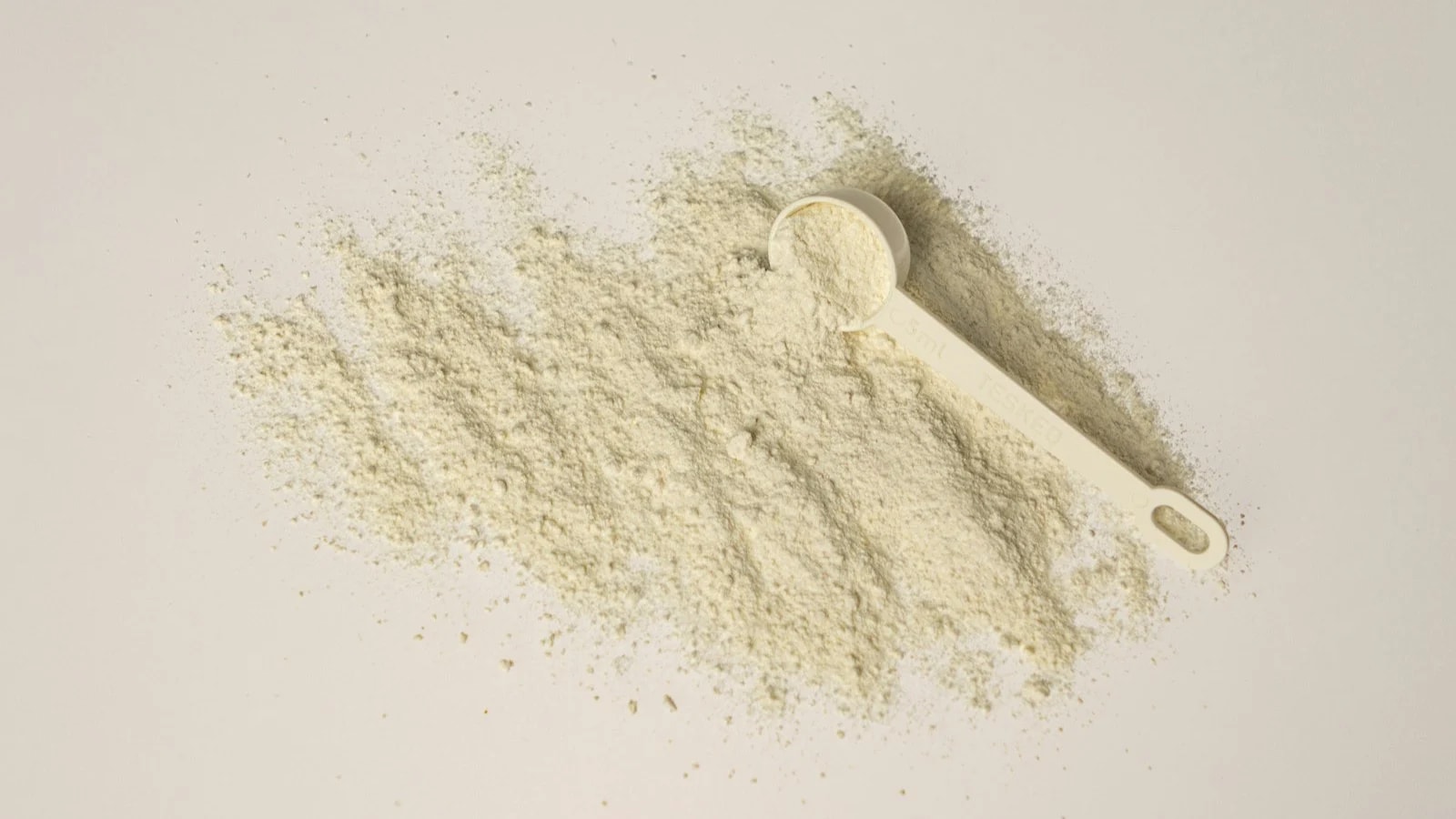

A creatine loading phase is a short stretch, usually 5 to 7 days, in which study participants took a large daily amount of creatine split into several servings to fill their muscle stores quickly, then switched to a smaller daily amount. When researchers compared it with a small daily amount from day one, both routes reached a similar muscle level. Loading got there in about a week and the slower route in about four. These are research protocols, not a dose for you: follow your product's label or ask a doctor or dietitian.
What a loading phase is
Creatine is stored in muscle. On a normal diet those stores are about 60 to 80% full, according to the ISSN position stand (Kreider et al., 2017). Loading is the name for filling the rest quickly. The position stand describes it as 5 g of creatine monohydrate four times a day, or about 0.3 g per kg of body weight a day, for 5 to 7 days, followed by 3 to 5 g a day to keep the stores up.
A 2021 review by several of the same researchers defines it the same way, 20 to 25 g a day for 5 to 7 days in smaller servings, and works through the body-weight version: 0.3 g per kg comes to about 21 g a day for a 70 kg person (Antonio et al., 2021). The lower daily amount that follows is usually called the maintenance phase.
The idea traces back to a 1992 study that took muscle biopsies from 17 adults given 5 g servings four or six times a day. Uptake into muscle was highest in the first two days, and the people who started with the lowest levels gained the most (Harris et al., 1992).
Why studies split the day into servings
Loading protocols never gave 20 g in one go. One reason is what the body does with a large amount at once. In the 1992 study, three people taking six 5 g servings a day passed 40%, 61% and 68% of that creatine in their urine over the first three days (Harris et al., 1992). Muscle took up less as it filled, and the rest left the body.
The other is the stomach. In a 28-day trial with 59 soccer players, diarrhea was reported by 55.6% of the group taking 10 g in a single serving, against 28.6% of the group taking the same 10 g as two 5 g servings and 35.0% of the placebo group (Ostojic & Ahmetovic, 2008). Citing that trial, the authors of the 2021 review write that people doing a loading phase should favour servings of 10 g or less spread through the day (Antonio et al., 2021).
Loading vs no loading: time to saturation
The study most reviews cite on this question is from 1996. Researchers gave 31 men creatine in different amounts and measured muscle creatine with biopsies (Hultman et al., 1996):
- 20 g a day for 6 days raised muscle creatine by about 20%.
- A follow-up of 2 g a day kept it there for another 30 days.
- Without that follow-up, levels drifted back to where they started within 30 days.
- 3 g a day with no loading produced a similar 20% rise, more gradually, over 28 days.
The authors concluded that 3 g a day is, in the long term, likely to be as effective at raising muscle levels as the larger amount.
Loading route (Hultman 1996) | No-loading route (Hultman 1996) | |
|---|---|---|
Amount used | 20 g/day for 6 days, then 2 g/day | 3 g/day |
Rise in muscle creatine | About 20% | About 20% |
Time to reach it | 6 days | 28 days |
Creatine used over the first 28 days* | 164 g | 84 g |
*Arithmetic from the study protocols (6 × 20 g + 22 × 2 g, and 28 × 3 g), shown to compare the routes. It is not a plan to follow.
The ISSN position stand calls loading the quickest method and lists 3 g a day for 28 days as the alternative (Kreider et al., 2017). The 2021 review concludes that a loading phase is not required, and describes it as an option for someone who wants full stores in under 30 days (Antonio et al., 2021). What that means for training is covered in how long creatine takes to work.
How do you know your muscles are saturated?
You can't check at home. The studies above measured creatine in muscle tissue taken with a biopsy needle, usually from the thigh. Nothing you can feel or weigh tells you the store is full.
The scale is a weak clue, because the weight gained during loading is mostly water and varies from person to person. Starting point matters too: the ISSN reports lower muscle creatine in vegetarians, and the 1992 study saw the biggest rises in people who started lowest. Someone who eats a lot of meat and fish has less room to fill.
Side effects reported during loading
The ISSN position stand says the only side effect consistently reported in the creatine literature is weight gain. Early loading studies found short-term fluid retention of about 0.5 to 1 litre, roughly in line with the weight gained (Kreider et al., 2017). The 2021 review puts the typical rise during the initial loading phase at 1 to 3 kg of body mass, mostly water, and notes that several training studies lasting 5 to 10 weeks found no increase in total body water (Antonio et al., 2021). There is more on the scale in does creatine make you gain weight.
On the stomach, the picture depends on serving size. The position stand cites controlled studies that found no higher rate of gastrointestinal upset with creatine. The soccer trial above found more diarrhea with a single 10 g serving, though not with two 5 g servings.
Lab reports can change too. Creatine breaks down into creatinine, which rose in urine in the 1996 study as stored creatine was used up (Hultman et al., 1996). If you have a blood or urine test around a loading phase, tell the doctor; creatine and kidneys explains why.
Does taking it with carbohydrate change anything?
In a separate loading study, 24 men took 5 g of creatine four times a day for 5 days, and half of them also drank 93 g of simple carbohydrate 30 minutes after each serving. Total creatine in muscle rose 60% more in the carbohydrate group, and less creatine was lost in urine. The authors linked the effect to the rise in insulin (Green et al., 1996).
There are two caveats. Four servings of 93 g is 372 g of sugar a day, which is a lot of sugar for most diets. And the ISSN position stand adds that carbohydrate or carbohydrate with protein appears to increase uptake, but the effect on performance may not be greater than creatine alone (Kreider et al., 2017).
Who might skip loading
The slower route comes up most in these situations:
- You plan to take creatine for months. The 2021 review describes the daily route as a viable option for use beyond 30 days, or for avoiding the weight gain that can come with loading.
- A jump of 1 to 3 kg on the scale in a week would be a problem, for example before a weigh-in in a weight-class sport.
- Your stomach reacts to large amounts of powder.
- Four servings a day is hard to fit in. A loading protocol only works as described if every serving is taken.
And some situations call for a conversation before any protocol, loading or not. The ISSN position stand says people with existing kidney disease should talk to their physician first (Kreider et al., 2017). The same applies if you take regular medication, are pregnant or breastfeeding, or are under 18. The research on amounts in general is in how much creatine per day.
After the loading week: the daily habit
Every loading protocol in the studies ends the same way: a smaller amount, every day. In Hultman's study, 2 g a day kept muscle creatine at the loaded level for 30 days. The ISSN position stand describes 3 to 5 g a day for the same job. Which amount applies to you is a question for your product's label or a professional.
Stopping undoes the work slowly. Stores returned to baseline about 30 days after the last serving in that study, and the ISSN puts it at 4 to 6 weeks. A single missed day barely moves them, as explained in what happens if you miss a day of creatine.
This switch is an easy place for the routine to slip. During loading you take creatine four times a day and it is hard to forget. On day 8 it becomes one small serving with no fixed moment, and nothing in your body reminds you. Tie it to something you already do every day, at the same time, training or not. How to remember to take creatine has the methods that tend to stick.
Loading also empties a tub faster. In Hultman's protocol, the six loading days used 120 g, as much as 40 days at 3 g. The creatine tub calculator tells you when your current tub will run out, and creatine cycling covers what happens to the stores during a break.


Loading done, will you remember the daily scoop?
Creatinely reminds you at the time you choose, keeps reminding you until you log it and counts your streak.
Frequently asked questions
Is a creatine loading phase necessary?
The 2021 ISSN review of common creatine questions concludes that it is not required. In a 1996 study, men taking 3 g a day without loading reached the same rise in muscle creatine, about 20%, after 28 days that a loading group reached after 6. Loading changed the speed, not the end point.
How long is a creatine loading phase?
In the protocols the ISSN position stand describes, 5 to 7 days. The classic 1996 study used 6 days. An earlier study found that uptake into muscle was highest in the first two days.
What are the side effects of creatine loading?
The one reported most consistently is a quick rise in body weight, which the 2021 ISSN review puts at about 1 to 3 kg during loading, mostly water. Large single servings were linked to diarrhea in one trial. If you have a kidney condition, take medication or are pregnant, ask your doctor before trying any protocol.
Is it better to load creatine or not?
In studies both routes ended at a similar muscle level, so the difference is time: about a week with loading, about four weeks without. The 2021 review describes loading as an option for people who want full stores in under 30 days and the daily route as an option for those who want to avoid the early weight gain. Follow your product's label or a professional's advice for the amount.
Do you gain weight during a creatine loading phase?
Often, yes. Early studies reported short-term fluid retention of about 0.5 to 1 litre, roughly matching the weight gained, and the 2021 review describes a typical rise of 1 to 3 kg during loading, mostly water.
Should you load creatine again after a break?
Muscle stores take about 30 days to return to baseline after stopping, according to a 1996 study, and 4 to 6 weeks according to the ISSN. After a break, studies suggest a small daily amount refills them more slowly, and a loading phase more quickly. Whether to load is a question of speed; if you have a health condition, decide it with a professional.

Sources
- Kreider RB et al. (2017). ISSN position stand: safety and efficacy of creatine supplementation in exercise, sport, and medicine. Journal of the International Society of Sports Nutrition 14:18.
- Antonio J et al. (2021). Common questions and misconceptions about creatine supplementation: what does the scientific evidence really show? Journal of the International Society of Sports Nutrition 18:13.
- Hultman E, Söderlund K, Timmons JA, Cederblad G, Greenhaff PL (1996). Muscle creatine loading in men. Journal of Applied Physiology 81(1):232–237.
- Harris RC, Söderlund K, Hultman E (1992). Elevation of creatine in resting and exercised muscle of normal subjects by creatine supplementation. Clinical Science 83(3):367–374.
- Green AL, Hultman E, Macdonald IA, Sewell DA, Greenhaff PL (1996). Carbohydrate ingestion augments skeletal muscle creatine accumulation during creatine supplementation in humans. American Journal of Physiology 271(5):E821–E826.
- Ostojic SM, Ahmetovic Z (2008). Gastrointestinal distress after creatine supplementation in athletes: are side effects dose dependent? Research in Sports Medicine 16(1):15–22.

About the author
22, software developer and founder based in Madrid.
I'm Gabriel, I'm 22 and I live in Madrid. I write software, build my own products and I'm into maths, sport and fashion. Among other things I make three iPhone apps, Creatinely, LockTy and RepZet, and here I write about training, creatine and the small daily habits that add up. I also build apps and software for B2B clients as an independent developer. If you want to work together, write to me.
This is general information, not medical advice. Talk to a professional about your own situation.
Keep reading

How to Take Creatine: Form, Mixing, Timing and Why Every Day Counts
Choose creatine monohydrate, stir it into a drink you already have and take it at a time you can repeat, rest days included. Mixing, missed days and storage.

How Much Creatine Should a Woman Take? What the Studies Used
There is no separate female dose in the research. The daily amounts and loading protocols studies in women used, and what the ISSN position stand describes.

Should You Take Creatine If You Don't Work Out? What Studies Found Without Training
Without exercise, most studies found creatine does little for muscle, and the brain research is early and mixed. What that means if you're not a gym person.

Does Creatine Make You Gain Weight or Feel Bloated? What Is Water and What Isn't
Creatine can add some water weight, mostly during a high-dose loading week. It is not fat. Here is what studies found, and why bloating is often about the dose.

Creatine for Women Over 40: What the Menopause Research Shows
Most studies in women over 40 paired creatine with strength training. What they found for muscle, bone and brain fog, and where the evidence is still thin.

Does Creatine Cause Hair Loss? What the Studies Actually Measured
The hair loss worry comes from a 2009 study that never measured hair. A 2025 trial that did measure it found no difference. What we know, and what we don't.