What Happens If You Miss a Day of Creatine? (Less Than You Think)
 Gabriel SánchezPublished
Very little happens if you miss one day of creatine. The creatine stored in your muscles falls slowly once it has been raised, so a single skipped day barely moves it, and you can take your usual amount the next day and carry on.
Why one missed day barely matters
Creatine works through a store. Almost all of the creatine in your body sits in skeletal muscle, and supplementing raises the amount kept there. The ISSN position stand says a normal diet leaves muscle creatine about 60 to 80% saturated and that supplementing raises muscle creatine and phosphocreatine by 20 to 40% (Kreider et al., 2017).
That store drains slowly. The same paper puts the loss at about 1 to 2% of muscle creatine, which is broken down into creatinine and passed in urine, and says the body has to replace it every day. If you skip one day, you lose that day's top-up. The rest of what you built over the past weeks is still there tomorrow morning.
How long creatine stays in your muscles after you stop
The clearest numbers come from a 1996 study of 31 men. After six days of high-dose loading, their muscle creatine had risen by about 20%. The researchers then followed what happened when supplementation stopped: total creatine "gradually declined", and 30 days later it was no different from the starting value (Hultman et al., 1996).

The ISSN position stand summarises several studies the same way: once muscle stores are raised, it generally takes 4 to 6 weeks for them to return to baseline. It adds that no evidence suggests levels fall below baseline after people stop (Kreider et al., 2017).
Compare that to one day. If a full stop takes about a month to undo, a single gap is a small dip in a slow curve.
Should you take more the next day?
This is the most common follow-up question, and I couldn't find a study that tested it. No trial I found compared people who made up a missed dose with people who didn't. Given how slowly stores fall, there is little to make up.
So the simple answer is to take the amount you already take, at your usual time, and move on. If you have a question about the amount itself, that belongs with a doctor or dietitian who knows your situation, not with a blog post.
When missed days start to matter
Missing days matters more in two situations.
The first is the build-up phase. If you started recently and take a smaller daily amount without a loading phase, your stores are still climbing. In the 1996 study, the group on the smaller daily amount reached the same 20% rise, but it took 28 days instead of six. The ISSN paper notes that this slower route may have less effect on training until stores are full. Gaps during those first weeks stretch the wait. There is more on that timeline in how long creatine takes to work.
The second is a run of missed days. One day is a dip. A week here and there, every month, means your stores spend more time below where they could be. A 2025 review by a group of creatine researchers, looking at the timing question, concluded that consistent intake during a training program is likely the most important variable (Antonio et al., 2025).
The real risk: one day turns into a week
For most people the physiology of one missed day is a non-issue. The habit is the weak point. A missed Saturday becomes a missed weekend, then you're away for a few days and the tub stays in the cupboard.
Habit research is reassuring about a single slip. In a study that followed 96 people building a new daily habit, missing one opportunity "did not materially affect the habit formation process" (Lally et al., 2010). The same study found that doing the behaviour in a consistent context is what made it automatic over time.
Two practical points follow. Tie creatine to something you do every day, including weekends, and notice the miss the next morning instead of a week later. Rest days are the classic gap, because people link creatine to the gym; taking creatine on rest days covers why they count. For more ideas, see how to remember to take creatine.
Trips are the other classic gap. A few servings in a small container in your bag cost nothing and cover a long weekend. If you know you'll be away for a week, pack them the night before, together with whatever you never forget, like your phone charger.


If you only notice a missed day a week later
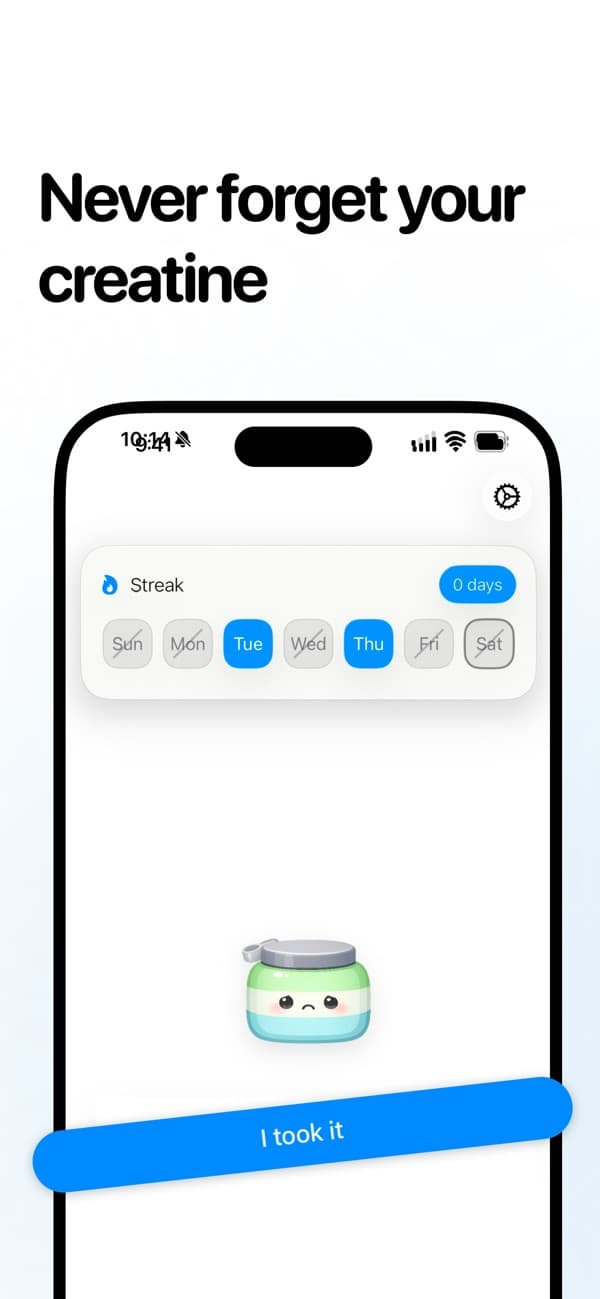
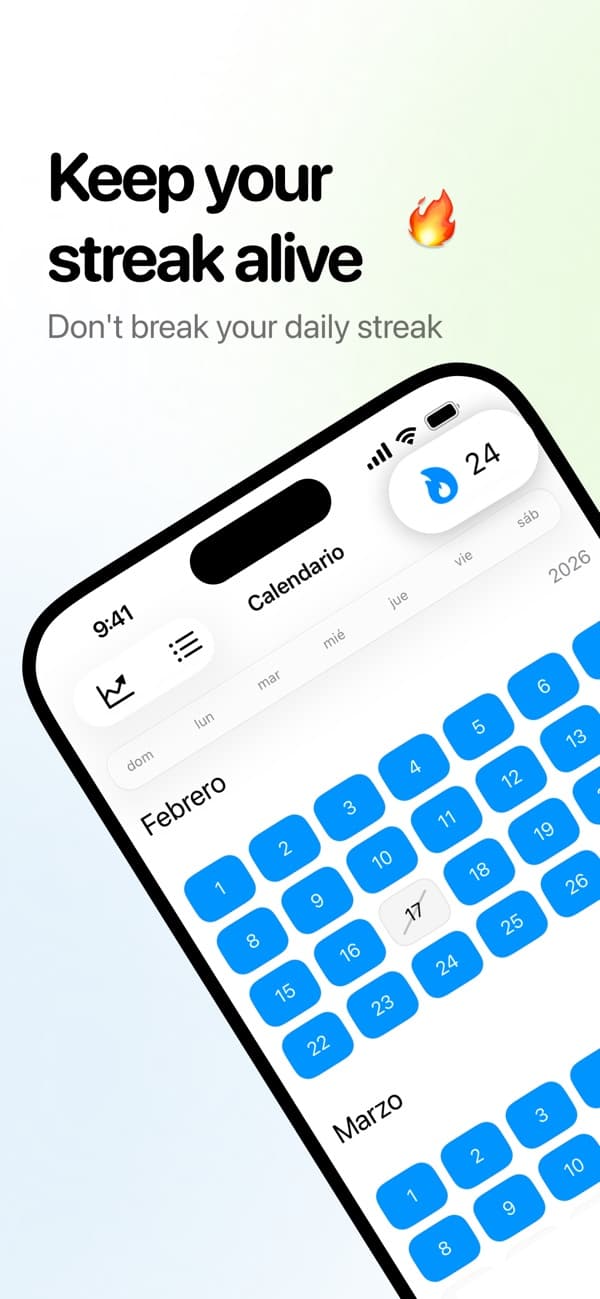
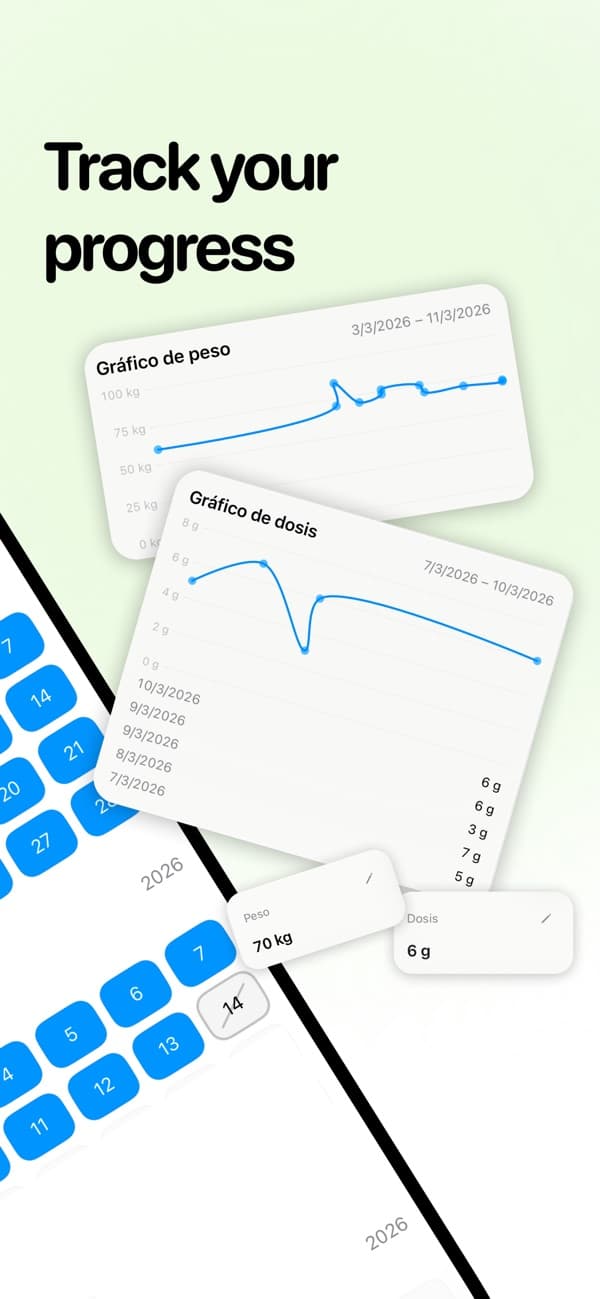
Creatinely reminds you at the time you pick and keeps a streak, so a skipped day shows up the next morning. A widget shows whether today is done. (I make Creatinely.)
If you stopped for weeks
A longer break is different. After a month or more off, your stores are likely close to where they started, based on the 1996 study and the ISSN summary. They will rise again once you restart.
The ISSN position stand describes two ways stores rise: a short loading phase over 5 to 7 days, or a smaller daily amount that raises them over 3 to 4 weeks. Which one suits you is a question for a professional. Either way, before you restart, check how much is left in the tub so the next gap isn't caused by an empty one.
If you forgot yesterday, take today's serving at your usual time and stop thinking about it.
Frequently asked questions
Should I take double creatine the day after I miss one?
I couldn't find a study that tested making up a single missed dose, and stores fall too slowly for one day to matter much. Most people take the amount they already take and carry on. If you have a question about your own dose, ask a professional.
How long does creatine stay in your muscles after you stop?
In a 1996 study, muscle creatine was back to its starting level 30 days after people stopped. The ISSN position stand describes it as generally taking 4 to 6 weeks.
Do I need to load again after missing a few days?
A few days off leaves most of the extra creatine in your muscles, because stores drop gradually. Whether a loading phase makes sense for you after a long break is a question for a professional.
Does missing a day reset my progress?
No. Stores built up over weeks don't disappear in a day, and in a study of habit formation, missing one opportunity did not materially affect how the habit formed.
Sources
- Kreider RB et al. (2017). ISSN position stand: safety and efficacy of creatine supplementation in exercise, sport, and medicine. Journal of the International Society of Sports Nutrition 14:18.
- Hultman E et al. (1996). Muscle creatine loading in men. Journal of Applied Physiology 81(1):232–237.
- Antonio J et al. (2025). Part II. Common questions and misconceptions about creatine supplementation: what does the scientific evidence really show? Journal of the International Society of Sports Nutrition 22(1):2441760.
- Lally P et al. (2010). How are habits formed: Modelling habit formation in the real world. European Journal of Social Psychology 40(6):998–1009.

About the author
22, software developer and founder based in Madrid.
I'm Gabriel, I'm 22 and I live in Madrid. I write software, build my own products and I'm into maths, sport and fashion. Among other things I make three iPhone apps, Creatinely, LockTy and RepZet, and here I write about training, creatine and the small daily habits that add up. I also build apps and software for B2B clients as an independent developer. If you want to work together, write to me.
This is general information, not medical advice. Talk to a professional about your own situation.
Keep reading

How Much Creatine Should a Woman Take? What the Studies Used
There is no separate female dose in the research. The daily amounts and loading protocols studies in women used, and what the ISSN position stand describes.

Should You Take Creatine If You Don't Work Out? What Studies Found Without Training
Without exercise, studies found creatine does little for muscle. The brain research is early and mixed. What that means if you are curious but not a gym person.

Does Creatine Make You Gain Weight or Feel Bloated? What Is Water and What Isn't
Creatine can add some water weight, mostly during a high-dose loading week. It is not fat. Here is what studies found, and why bloating is often about the dose.