How Long Does Creatine Take to Work? Days With Loading, Weeks Without
 Gabriel SánchezPublished
In studies, muscle creatine rose within about a week when people did a loading phase, and over about 3 to 4 weeks when they took a smaller amount every day from the start. Creatine has no effect you can feel on the day you take it, so the timeline that matters is how long it takes your muscle stores to fill.
Why creatine doesn't kick in like caffeine
Caffeine works within the hour. Creatine works by changing how much creatine is stored in your muscles, and that store changes over days to weeks.
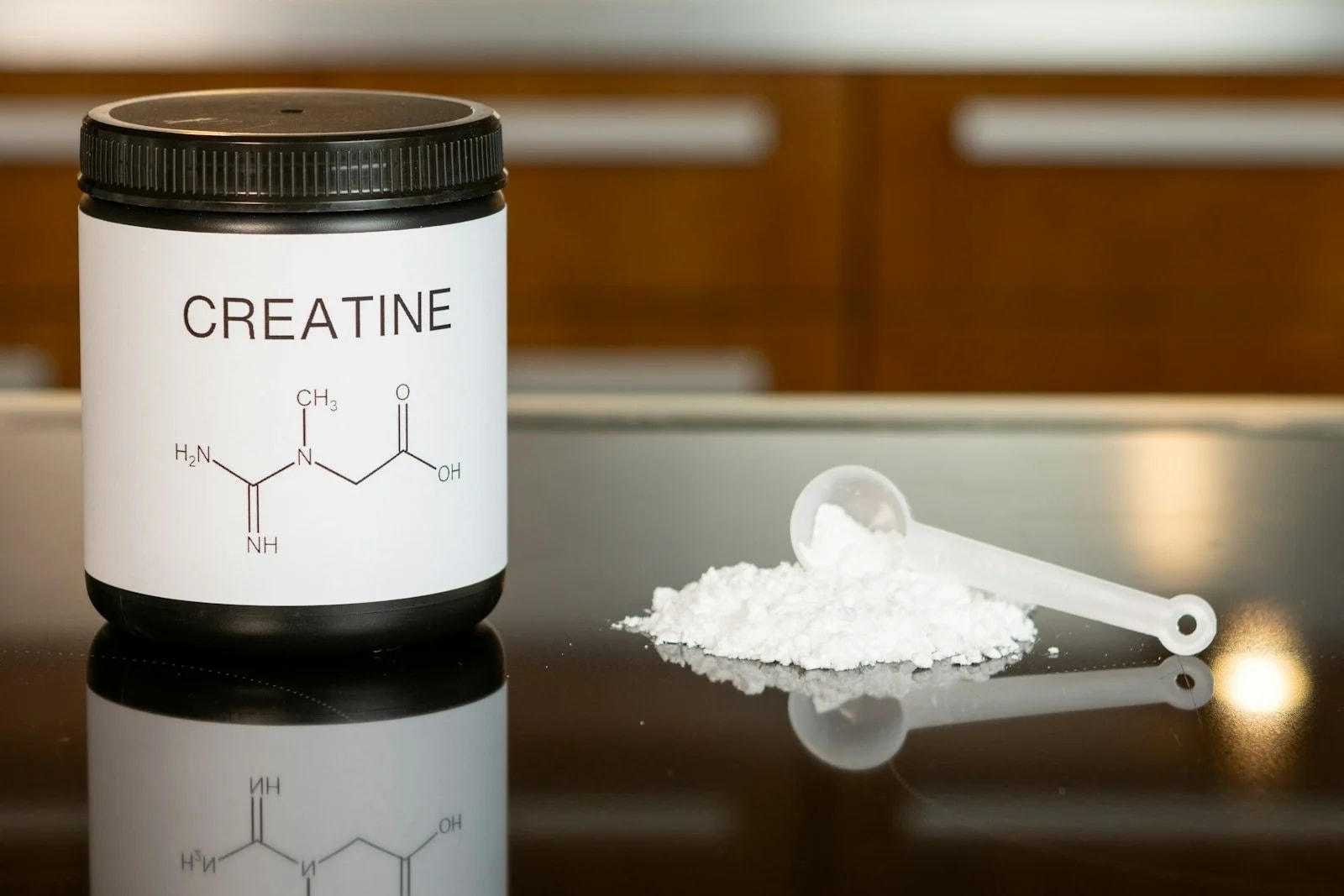
The ISSN position stand describes the starting point: on a normal diet, muscle creatine stores are about 60 to 80% saturated, and supplementing raises muscle creatine and phosphocreatine by 20 to 40% (Kreider et al., 2017). The paper links the raised store to better performance in high-intensity exercise, which is where studies look for changes. So "how long does it take to work" in practice means "how long until the store is full".
The fast route: loading (about a week)
The quickest way studies have raised muscle creatine is a loading phase: a large daily amount, split into several servings, for 5 to 7 days. That is the protocol the ISSN position stand describes as the quickest method, followed by a smaller daily amount to keep stores up.
The classic numbers come from two studies in the 1990s. In 1992, researchers found that several servings a day for 2 or more days significantly raised total creatine in the thigh muscle of 17 people, with the biggest rises in those who started lowest; in some it went up by as much as 50% (Harris et al., 1992). In 1996, a 6-day loading phase raised muscle creatine by about 20% in men (Hultman et al., 1996).
These are the amounts researchers used, not a recommendation. Whether loading suits you is something to check with a doctor or dietitian, especially if you have any medical condition.
The slow route: a smaller daily amount (3 to 4 weeks)
The same 1996 study tested a second group who skipped loading and took a much smaller daily amount. They reached the same 20% rise in muscle creatine, but it took 28 days instead of 6. The authors concluded that the smaller amount is likely as effective in the long term at raising tissue levels.
The ISSN position stand puts the slow route at 3 to 4 weeks. It adds a caveat: because the rise is gradual, this route may have less effect on exercise performance and training adaptations until stores are full, and its early performance effects are less supported by research.
In short, both routes end in roughly the same place. Loading gets there sooner.
Why some people notice little
Not everyone responds the same way. A 2004 study gave 11 young men a 5-day loading phase and took muscle biopsies before and after. The researchers sorted them into three groups by how much their muscle creatine rose. The three "responders" had started with the lowest levels, had the most type II (fast-twitch) fibres, and improved their leg press. The three "nonresponders" started with higher levels and showed no improvement in strength (Syrotuik & Bell, 2004).
A 2025 review by creatine researchers lists the factors that change how much someone responds: starting muscle creatine, age, sex, fibre type, activity and how much creatine is in their diet. People who eat little or no meat or fish tend to start lower, and one study it cites found larger rises in vegetarians (Antonio et al., 2025).
If you already eat a lot of meat and fish, your stores may start closer to full, and the change may be smaller. That is a possibility the research supports, not something you can check at home.
What often changes first: the scale
The first thing many people notice is body weight. The ISSN position stand says early studies found loading caused short-term fluid retention of about 0.5 to 1 litre, roughly in line with the weight gained, and that weight gain is the only side effect consistently reported in the literature (Kreider et al., 2017).
Strength and performance are harder to judge week to week. In research they are measured with tests over several weeks of training, not felt in the first few days.
What slows the timeline down
The weeks above assume a daily routine. Missed days during the build-up phase push the finish line back, and the slow route is where this hurts most, because each skipped day is a day the store doesn't rise. Once stores are full they fall slowly, which is covered in what happens if you miss a day of creatine.
Rest days are the most common gap. People link creatine to training and skip it when they don't train, even though the store needs topping up every day (why rest days count). If you want to see how long a new daily habit tends to take to stick, the habit formation calculator runs the numbers.


If the first weeks are where you usually drop off
Creatinely reminds you every day at the time you choose and counts your streak, so you can see how many days in a row you've taken it. (I make Creatinely.)
If you started this week, the research timeline says to look again in a month, not in three days.
Frequently asked questions
How long does creatine take to work without a loading phase?
In a 1996 study, a smaller daily amount raised muscle creatine by about 20% over 28 days, the same rise a 6-day loading phase produced. The ISSN position stand describes this route as taking 3 to 4 weeks.
How do I know if creatine is working?
You can't feel muscle creatine levels. In studies, the changes showed up as training performance over weeks, and early weight gain during loading was linked to water retention.
Why do I gain weight in the first week of creatine?
The ISSN position stand says early studies found loading caused short-term fluid retention of about 0.5 to 1 litre, roughly in line with the weight gained. Weight gain is the only side effect it describes as consistently reported.
Is a loading phase necessary?
In the 1996 study, both routes ended at a similar level and loading only got there sooner. Whether loading makes sense for you is a question for a doctor or dietitian.

Sources
- Kreider RB et al. (2017). ISSN position stand: safety and efficacy of creatine supplementation in exercise, sport, and medicine. Journal of the International Society of Sports Nutrition 14:18.
- Hultman E et al. (1996). Muscle creatine loading in men. Journal of Applied Physiology 81(1):232–237.
- Harris RC, Söderlund K, Hultman E (1992). Elevation of creatine in resting and exercised muscle of normal subjects by creatine supplementation. Clinical Science 83(3):367–374.
- Syrotuik DG, Bell GJ (2004). Acute creatine monohydrate supplementation: a descriptive physiological profile of responders vs. nonresponders. Journal of Strength and Conditioning Research 18(3):610–617.
- Antonio J et al. (2025). Part II. Common questions and misconceptions about creatine supplementation: what does the scientific evidence really show? Journal of the International Society of Sports Nutrition 22(1):2441760.
About the author
22, software developer and founder based in Madrid.
I'm Gabriel, I'm 22 and I live in Madrid. I write software, build my own products and I'm into maths, sport and fashion. Among other things I make three iPhone apps, Creatinely, LockTy and RepZet, and here I write about training, creatine and the small daily habits that add up.
This is general information, not medical advice. Talk to a professional about your own situation.
Keep reading

How Much Creatine Should a Woman Take? What the Studies Used
There is no separate female dose in the research. The daily amounts and loading protocols studies in women used, and what the ISSN position stand describes.

Should You Take Creatine If You Don't Work Out? What Studies Found Without Training
Without exercise, studies found creatine does little for muscle. The brain research is early and mixed. What that means if you are curious but not a gym person.

Does Creatine Make You Gain Weight or Feel Bloated? What Is Water and What Isn't
Creatine can add some water weight, mostly during a high-dose loading week. It is not fat. Here is what studies found, and why bloating is often about the dose.