Does Creatine Cause Hair Loss? What the Studies Actually Measured
 Gabriel SánchezPublished
No study has shown that creatine causes hair loss. The fear comes from a single 2009 study in which a hormone linked to balding went up, but nobody measured hair, and a 2025 trial that did measure hair found no difference between creatine and placebo.
Where the hair loss worry comes from
Almost every article and forum thread on this topic goes back to one paper. In 2009, researchers in South Africa gave creatine to 20 college-aged rugby players for three weeks: a high-dose loading week followed by two weeks at a lower dose. They measured testosterone and dihydrotestosterone (DHT) in the blood (van der Merwe et al., 2009).
Testosterone did not change. DHT rose by 56% after the loading week and stayed about 40% above the starting level during the lower-dose weeks, according to a later review of the study (Antonio et al., 2021).
DHT matters here because it is the hormone involved in male pattern baldness. So people connected the dots: creatine raises DHT, DHT is linked to balding, therefore creatine causes balding. The problem is the last step. The study did not measure hair, and it did not report on anyone losing hair.
What the 2009 study can and can't tell you
A rise in a blood hormone over three weeks is a reason to ask more questions. It is weak evidence that something visible happens to your hair months later. The study was also small, ran for three weeks, included only young men, and used a loading dose much higher than what most people take every day.
The 2021 review by Antonio and colleagues looked at the bigger picture. The DHT finding has never been repeated. The creatine group in the 2009 study also started with lower DHT than the placebo group, which makes a large percentage jump easier to see. Across 12 other studies that measured testosterone during creatine use, 10 found no change and two found small increases. The review concluded that the evidence does not show creatine raising testosterone, free testosterone or DHT, or causing hair loss.
One thing to know when you read these reviews: many of their authors disclose ties to creatine manufacturers or supplement companies. That does not make the data wrong, but it is fair to know.
The 2025 trial that measured hair directly
For years, the honest answer was "probably not, but nobody checked." That changed in 2025, when a team ran a trial built to answer this exact question (Lak et al., 2025).
They randomly assigned 45 men aged 18 to 40 who already did resistance training to take either 5 g of creatine monohydrate a day or a look-alike placebo for 12 weeks. Neither the participants nor the researchers knew who was taking what. Thirty-eight finished the study.
This time they measured both the hormones and the hair. Hair was checked with two standard methods that count hairs, measure their thickness and estimate how many are in the growing or resting phase. The results:
- No difference between groups in DHT or in the DHT to testosterone ratio.
- No difference in hair count, hair density, hair thickness or growth phase.
- No change in creatinine or eGFR, two blood markers often used to check the kidneys, and no side effects reported.
The authors wrote that their results provide strong evidence against the claim that creatine contributes to hair loss. They also listed the limits: the study only included men, it lasted 12 weeks, it tested one dose, and it did not record family history of hair loss. So it is one good trial, not the final word.
What about women?
This is the question that comes up most on women's fitness forums, and the answer is plain: no study has looked at creatine and hair in women. The 2009 study and the 2025 trial both enrolled only men.
What we have instead is general safety research. The ISSN position stand describes creatine as safe and well tolerated in short and long-term use in healthy people, and lists weight gain as the only side effect that shows up consistently (Kreider et al., 2017). Hair loss is not part of that picture.
If you have noticed thinning hair, it is worth finding out why instead of guessing. The NHS lists temporary causes such as illness, stress, weight loss and iron deficiency, as well as female and male pattern hair loss, and suggests seeing a GP if you are worried (NHS). Many people start creatine at the same time as other changes, like a new diet, a stressful period or weight loss, so the timing alone does not tell you much.
If hair loss runs in your family
Some people are more cautious because pattern baldness runs in their family, and that is a reasonable feeling. The 2025 trial did not record family history, so it can't say much about that group specifically. If this is your situation, two things help:
- Talk to a dermatologist or your doctor before starting, and tell them about every supplement you take.
- If you do start, take photos of your hairline and part in the same light every few weeks. Seasonal shedding and stress make memory unreliable.
If you have a health condition or take regular medication, check with your doctor or pharmacist before adding any supplement, creatine included.


If you decide to try it, make it a daily habit
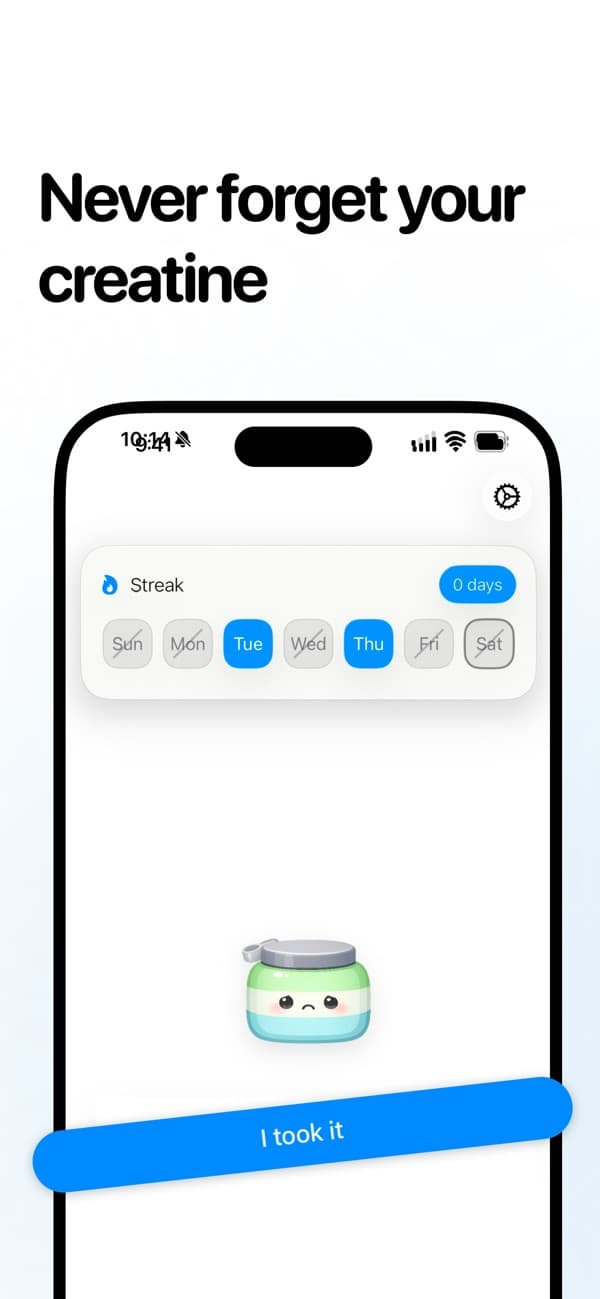
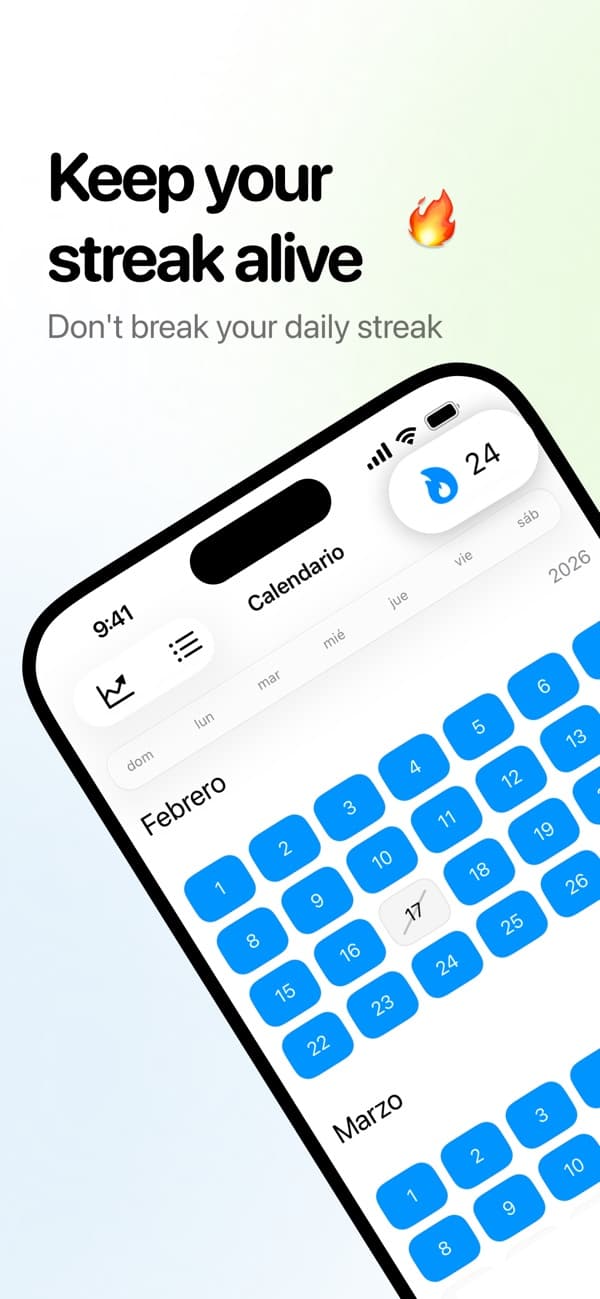
Creatinely reminds you at the time you choose and keeps a streak, with a widget and a Live Activity that show whether today is done. (I make Creatinely.)
The short version
The link between creatine and hair loss rests on one small, unrepeated hormone result from 2009. The one trial that measured hair found no difference after 12 weeks. That is reassuring for men, and the question is still open for women simply because nobody has studied it.
If you are unsure about creatine for other reasons, you might also want to read whether creatine makes you gain weight or what the research says for women over 40. And if you do start, these tricks for remembering it help more than any timing rule.
If your hair is your main worry, book the dermatologist appointment first and decide about creatine after.
Frequently asked questions
Does creatine cause hair loss?
No study has shown that it does. The worry comes from a 2009 study where one hormone, DHT, went up, but hair was never measured. A 2025 trial that measured hair directly found no difference between creatine and placebo after 12 weeks.
Does creatine cause hair loss in women?
There are no studies on creatine and hair in women, so nobody can say for sure either way. The trials so far were done in men. If you are losing hair, a GP can look for the common causes, which include iron deficiency, illness, stress and pattern hair loss.
Does creatine increase DHT?
One small 2009 study in 20 rugby players found DHT rose 56% after a week of high-dose loading. That result has not been repeated, and a 2025 trial using 5 g a day found no change in DHT compared with placebo.
Should I stop creatine if my hair is thinning?
Talk to your doctor or a dermatologist first, so they can look for the actual cause. Mention every supplement you take, including creatine, so they have the full picture.
Sources
- van der Merwe J, Brooks NE, Myburgh KH (2009). Three weeks of creatine monohydrate supplementation affects dihydrotestosterone to testosterone ratio in college-aged rugby players. Clinical Journal of Sport Medicine 19(5):399–404.
- Lak M, Forbes SC, Ashtary-Larky D et al. (2025). Does creatine cause hair loss? A 12-week randomized controlled trial. Journal of the International Society of Sports Nutrition 22(sup1):2495229.
- Antonio J et al. (2021). Common questions and misconceptions about creatine supplementation: what does the scientific evidence really show? Journal of the International Society of Sports Nutrition 18:13.
- Kreider RB et al. (2017). ISSN position stand: safety and efficacy of creatine supplementation in exercise, sport, and medicine. Journal of the International Society of Sports Nutrition 14:18.
- NHS. Hair loss.
About the author
22, software developer and founder based in Madrid.
I'm Gabriel, I'm 22 and I live in Madrid. I write software, build my own products and I'm into maths, sport and fashion. Among other things I make three iPhone apps, Creatinely, LockTy and RepZet, and here I write about training, creatine and the small daily habits that add up.
This is general information, not medical advice. Talk to a professional about your own situation.
Keep reading

How Much Creatine Should a Woman Take? What the Studies Used
There is no separate female dose in the research. The daily amounts and loading protocols studies in women used, and what the ISSN position stand describes.

Should You Take Creatine If You Don't Work Out? What Studies Found Without Training
Without exercise, studies found creatine does little for muscle. The brain research is early and mixed. What that means if you are curious but not a gym person.

Does Creatine Make You Gain Weight or Feel Bloated? What Is Water and What Isn't
Creatine can add some water weight, mostly during a high-dose loading week. It is not fat. Here is what studies found, and why bloating is often about the dose.