How to Take Creatine: Form, Mixing, Timing and Why Every Day Counts
 Gabriel SánchezPublished
- Step 1: Pick creatine monohydrate
- Step 2: Check the amount on the label
- Step 3: Mix it into something you already drink
- Step 4: Pick a time you can repeat
- Should you take creatine every day?
- With or without a loading phase
- If you miss a day
- How to make it a habit
- How to store it
- Common mistakes
- Who should ask a doctor first

To take creatine the way most studies did, use creatine monohydrate, stir it into a drink and take it once a day, every day, including rest days. What you mix it with and the hour you pick matter much less than not skipping it. For the amount, follow the label on your tub or what a doctor or dietitian tells you.
Step 1: Pick creatine monohydrate
The ISSN position stand calls creatine monohydrate the most extensively studied and clinically effective form of creatine (Kreider et al., 2017). A 2022 review of the newer forms (HCl, ethyl ester, buffered and others) found none that had been shown to work better (Kreider, Jäger & Purpura, 2022).
So the plain, unflavoured powder is a sensible default. Micronized monohydrate is the same compound ground finer, which makes it easier to stir in. Capsules are fine too if you hate powder; you just need several of them per serving. The full comparison of forms, purity and third-party testing is in creatine monohydrate.
Step 2: Check the amount on the label
This article won't give you a number. The amount depends on your body, your health and the product, so follow the label or ask a professional.
For context, here is what the research used. The ISSN describes two routes in studies: a loading phase of about 0.3 g per kg of body weight a day for 5 to 7 days followed by 3 to 5 g a day, or 3 g a day for 28 days without loading (Kreider et al., 2017). Those are research protocols in mostly healthy adults. How they scale with body weight, and why more is not better, is covered in how much creatine per day.
One practical point: scoops are not precise, and a heaped scoop holds more than a level one. Weigh one serving on a kitchen scale once so you know what your scoop really holds.
Step 3: Mix it into something you already drink
Creatine doesn't need its own glass of water. The thing to know is that it is stable as a dry powder but slowly turns into creatinine once dissolved, faster in warm or acidic liquids. In the ISSN figures, after 3 days at 25 °C, 4% had converted at pH 5.5 and 21% at pH 3.5 (Kreider et al., 2017). That is days, not the few minutes it takes to drink a glass. Mix it and drink it; don't make a bottle on Sunday for the week.
Temperature also changes how well it dissolves. About 6 g dissolves in a litre of water at 4 °C, 14 g at 20 °C and 34 g at 50 °C (Kreider, Jäger & Purpura, 2022). That is why it leaves grit at the bottom of iced water and vanishes in tea.
Drink | How it mixes | Things to know |
|---|---|---|
Cold water | Leaves some grit | Stir, drink, and swirl in a splash more to catch what settles |
Room-temperature water | Better | The simplest option if you take it with a meal |
Juice | Fine | Acidic, so drink it right away rather than leaving it in the fridge |
Coffee or tea | Dissolves easily | Stir in and drink. More in creatine and coffee |
Protein shake, milk, smoothie or yogurt | Fine | Handy if you have one every day, less so if you only have it after training |
The ISSN also notes that taking creatine with carbohydrate, or carbohydrate and protein, appears to increase how much muscle takes up, though the effect on performance may be no greater than creatine on its own (Kreider et al., 2017). So a meal or a shake is a fine place for it, but you don't need special sugary drinks.
Step 4: Pick a time you can repeat
A 2021 review of the timing studies found some evidence of slightly better results when creatine was taken after exercise rather than before, but concluded that the studies have too many limitations for firm conclusions (Ribeiro et al., 2021). The details are in creatine before or after a workout, and if evenings suit you better, creatine at night covers that.
The useful question is less "when is best" and more "when will I never forget". Breakfast, your first coffee or brushing your teeth all happen on rest days too. A post-workout shake does not.
Should you take creatine every day?
In the studies, yes. Creatine works through a store in your muscles, and a small part of it breaks down every day, so the supplement keeps that store topped up. The research protocols ran daily, training or not, which is why rest days count. The reasoning is in creatine on rest days.
The flip side is that the store drains slowly. In a 1996 study, men who stopped after a loading week took about 30 days to return to their starting levels (Hultman et al., 1996). So "every day" is the plan, and one forgotten day does not undo anything. Taking breaks on purpose is a separate question, covered in creatine cycling.
With or without a loading phase
Loading means taking a larger amount, split through the day, for about a week before settling into a daily routine. It is optional. In the same 1996 study, a group on 20 g a day for six days and a group on 3 g a day for 28 days ended with a similar rise in muscle creatine, about 20% (Hultman et al., 1996). Loading changes how fast you get there, not where you end up.
If you want the protocols, the side effects reported and who might skip it, read creatine loading phase. Either way, the routine afterwards is the same as described here.
If you miss a day
Take your usual serving at your usual time and carry on. Don't double up the next day; with stores that fall over weeks, one gap barely moves them, and a bigger serving mainly means more chance of an upset stomach. What happens if you miss a day of creatine has the numbers.
What does matter is a missed day turning into a missed fortnight, which is usually how people stop.
How to make it a habit
Creatine is easy to forget because you feel nothing when you skip it. Three things help:
- Tie it to something you already do daily. Put the tub next to the kettle, the coffee machine or your breakfast bowl and take it at that moment.
- Keep the tub in sight. A tub in a cupboard is a tub you forget.
- Use a reminder that doesn't stop until you've done it, or tick a printable creatine tracker on the fridge.
In a study of people building a new daily habit, it took a median of 66 days before the behaviour felt automatic, with a wide range between people, and missing one opportunity did not wreck the process (Lally et al., 2010). So expect a couple of months of reminders. More tricks are in how to remember to take creatine.


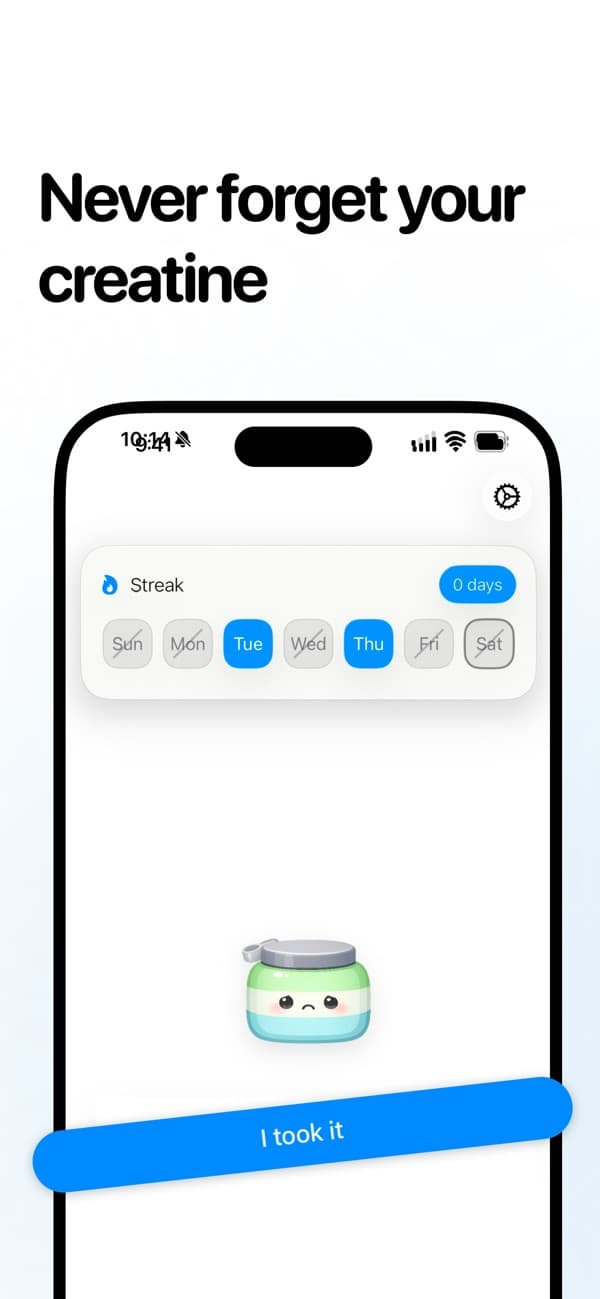
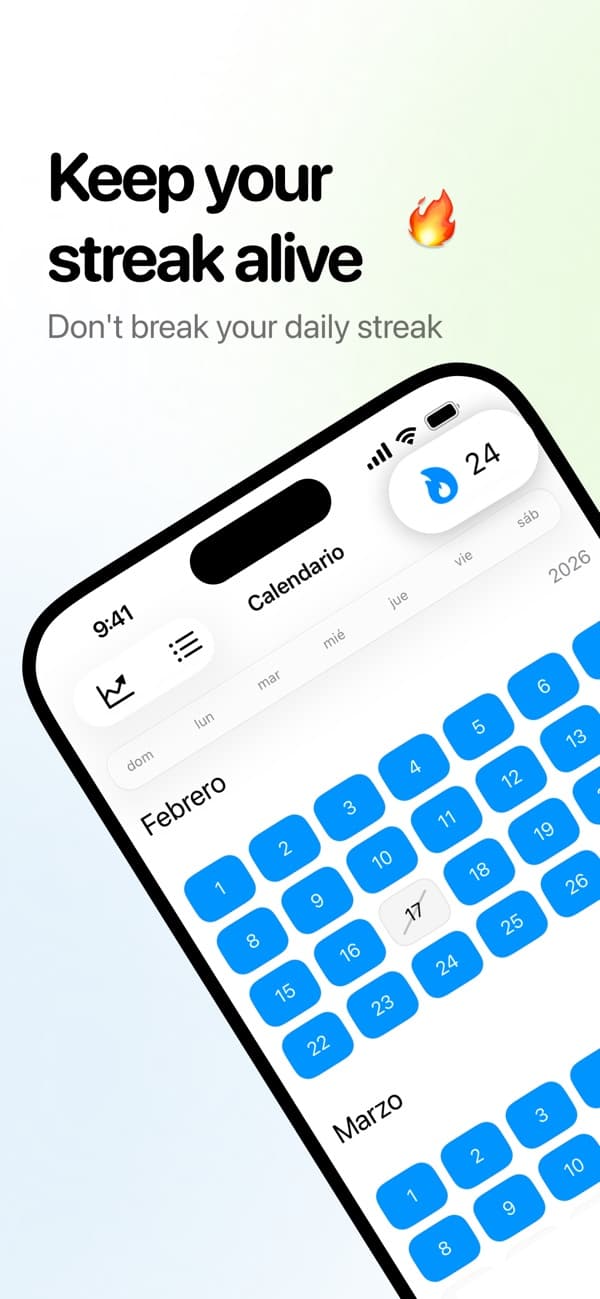
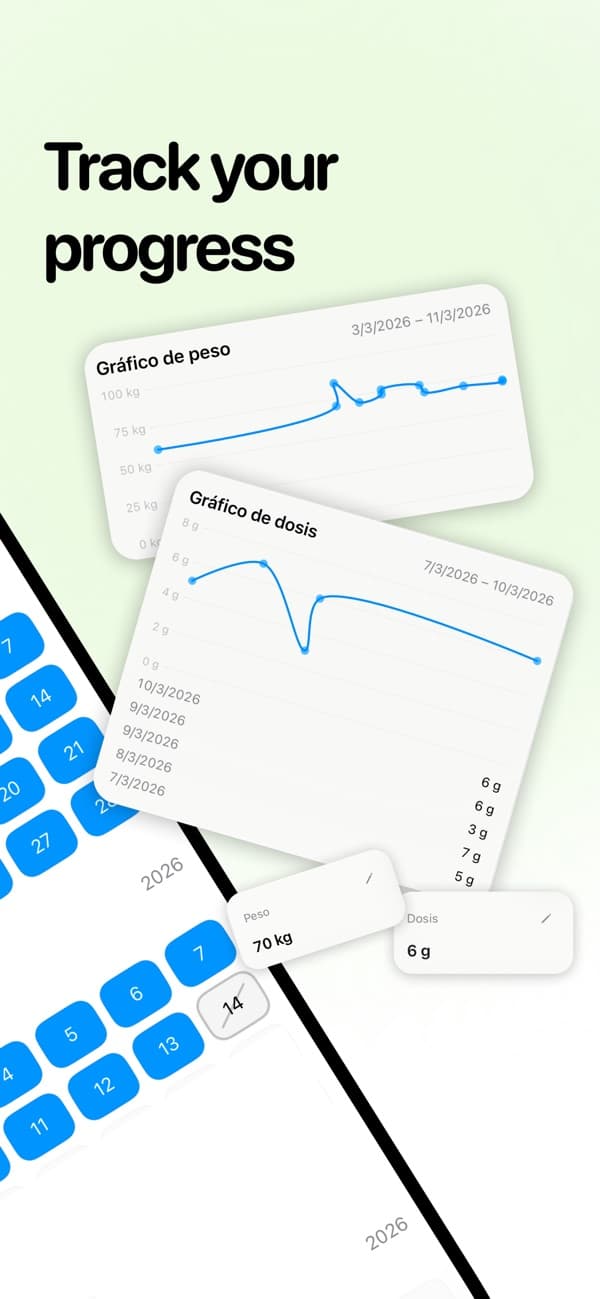
Taking it every day is the hard part, right?
Creatinely reminds you until you log your creatine and keeps your streak going, with widgets and a Live Activity on your lock screen.
How to store it
Keep the lid closed, the scoop dry and the tub away from steam, so not in the bathroom or right above the kettle. Dry creatine monohydrate showed no measurable breakdown after more than three years in stability tests, even stored at 40 °C (Jäger et al., 2011). Moisture is the problem, not heat. Clumps, the best-before date and when to bin a tub are covered in does creatine expire.
Running out breaks a streak more often than forgetting does. The creatine tub calculator tells you the date your tub will run out, so you can order the next one in time.
Creatine Tub Calculator: How Many Days Will My Tub Last?Enter your tub size and the serving you already take to see how many days it lasts.Common mistakes
- Premixing a bottle in the morning and drinking it hours or days later.
- Taking it only on training days.
- Using a heaped scoop without knowing what it weighs.
- Doubling up after a missed day.
- Stopping "for a bit" when the tub runs out, and never restarting.
Who should ask a doctor first
The research on creatine comes mostly from healthy adults. Talk to a doctor or dietitian before starting if you have kidney disease or reduced kidney function, are pregnant or breastfeeding, take regular medication or are under 18. The ISSN says people with existing kidney disease should talk to their physician (Kreider et al., 2017). Creatine can also raise creatinine on a blood test, so mention it before any checkup; creatine and kidneys explains why.
Frequently asked questions
Should I take creatine every day?
The studies behind creatine gave it every day, training days and rest days alike, because it works by keeping the creatine store in your muscles topped up. Missing an odd day changes little, but long gaps let the store drain slowly.
What is the best way to take creatine?
Most research used creatine monohydrate powder mixed into a drink and taken once a day. The drink and the time of day matter less than taking it daily. For the amount, follow the label or ask a doctor or dietitian.
What can I mix creatine with?
Water, juice, coffee, tea, milk, a protein shake, a smoothie or yogurt. It dissolves better in warm liquids than cold ones. Whatever you use, drink it soon after mixing, because creatine slowly breaks down once it is dissolved.
Does it matter what time of day I take creatine?
Not much, according to the timing studies. A 2021 review found a slight lean toward taking it after exercise but said the evidence is too limited for firm conclusions. Pick a time you can repeat every day, including days you don't train.
Do I have to do a loading phase?
No. In a 1996 study, a small daily amount reached about the same muscle level as a loading week, it just took about four weeks instead of six days. Loading only changes how fast you get there.
Can I take creatine on an empty stomach?
There is no clear evidence either way for normal servings. Some people get an upset stomach from large single servings, and a trial found more diarrhea with one big serving than with the same amount split in two. Taking it with a meal is an easy fix and an easy anchor.
Sources
- Kreider RB et al. (2017). ISSN position stand: safety and efficacy of creatine supplementation in exercise, sport, and medicine. Journal of the International Society of Sports Nutrition 14:18.
- Kreider RB, Jäger R, Purpura M (2022). Bioavailability, efficacy, safety, and regulatory status of creatine and related compounds: a critical review. Nutrients 14(5):1035.
- Hultman E et al. (1996). Muscle creatine loading in men. Journal of Applied Physiology 81(1):232–237.
- Ribeiro F et al. (2021). Timing of creatine supplementation around exercise: a real concern? Nutrients 13(8):2844.
- Lally P et al. (2010). How are habits formed: Modelling habit formation in the real world. European Journal of Social Psychology 40(6):998–1009.
- Jäger R et al. (2011). Analysis of the efficacy, safety, and regulatory status of novel forms of creatine. Amino Acids 40(5):1369–1383.

About the author
22, software developer and founder based in Madrid.
I'm Gabriel, I'm 22 and I live in Madrid. I write software, build my own products and I'm into maths, sport and fashion. Among other things I make three iPhone apps, Creatinely, LockTy and RepZet, and here I write about training, creatine and the small daily habits that add up. I also build apps and software for B2B clients as an independent developer. If you want to work together, write to me.
This is general information, not medical advice. Talk to a professional about your own situation.
Keep reading

How Much Creatine Should a Woman Take? What the Studies Used
There is no separate female dose in the research. The daily amounts and loading protocols studies in women used, and what the ISSN position stand describes.

Should You Take Creatine If You Don't Work Out? What Studies Found Without Training
Without exercise, most studies found creatine does little for muscle, and the brain research is early and mixed. What that means if you're not a gym person.

Does Creatine Make You Gain Weight or Feel Bloated? What Is Water and What Isn't
Creatine can add some water weight, mostly during a high-dose loading week. It is not fat. Here is what studies found, and why bloating is often about the dose.

Creatine for Women Over 40: What the Menopause Research Shows
Most studies in women over 40 paired creatine with strength training. What they found for muscle, bone and brain fog, and where the evidence is still thin.

Does Creatine Cause Hair Loss? What the Studies Actually Measured
The hair loss worry comes from a 2009 study that never measured hair. A 2025 trial that did measure it found no difference. What we know, and what we don't.

How Long Does Creatine Take to Work? Days With Loading, Weeks Without
In studies, muscle creatine rose in about a week with a loading phase and over 3 to 4 weeks without one. What changes first, and why some people notice little.