Does Creatine Expire? How Long the Powder Lasts and When to Toss It
 Gabriel SánchezPublished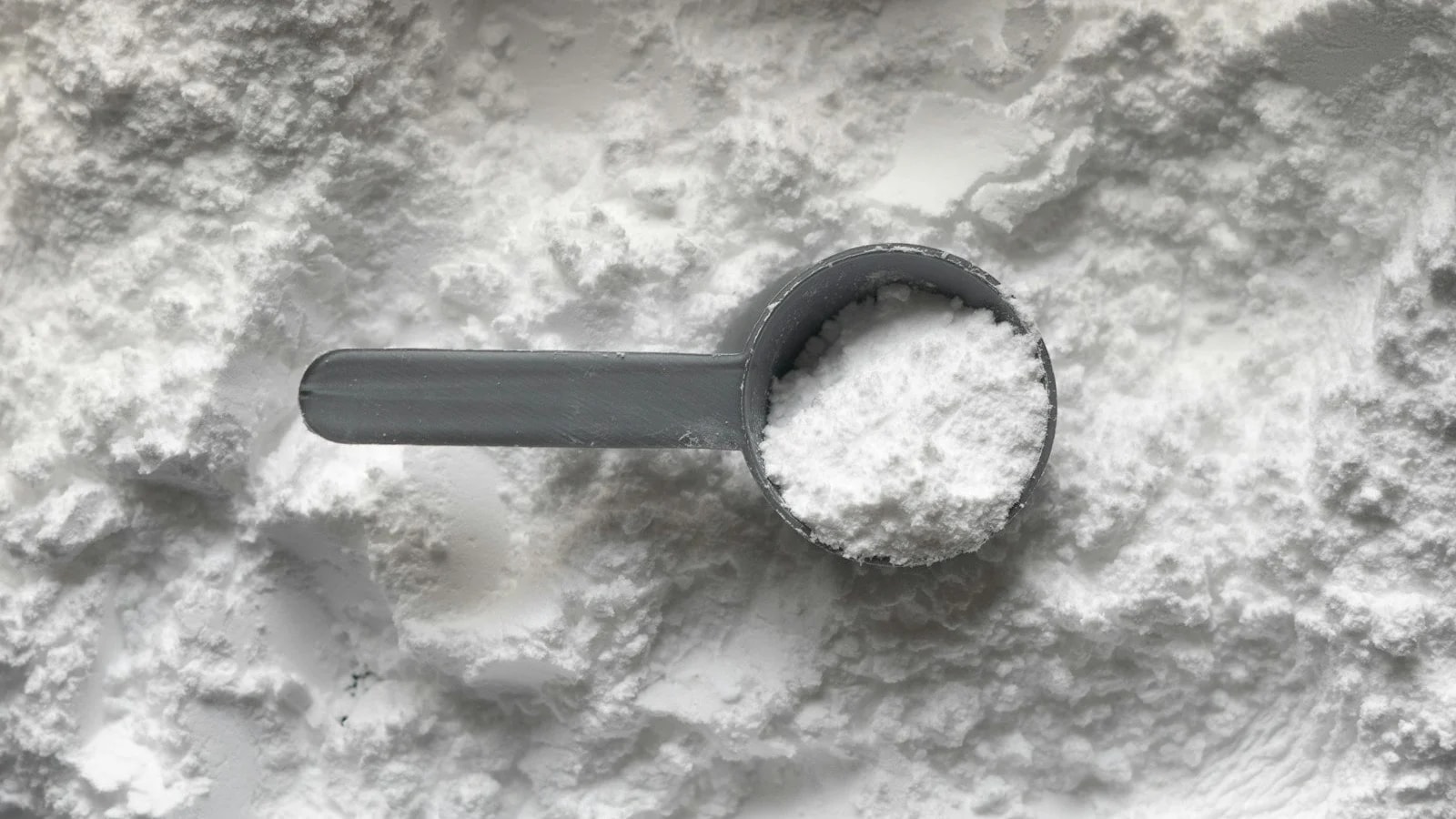
Dry creatine monohydrate powder is very stable: in stability tests it showed no measurable breakdown after more than three years, even when stored at 40 °C (104 °F). What ruins creatine is water, because creatine dissolved in liquid slowly turns into creatinine, the by-product your body normally passes in urine.
What the stability tests show
The most detailed data I found on creatine powder comes from stability testing summarised in a 2011 review of creatine forms. The way to check whether creatine has broken down is to measure creatinine, its breakdown product, which lab equipment can detect at levels as low as 67 parts per million.
At room temperature, and at 40 °C, creatine monohydrate powder showed no detectable creatinine after more than three years. Even stored at 60 °C (140 °F), a small amount of creatinine (106 ppm) only appeared after 44 months (Jäger et al., 2011). The review's summary line is that creatine monohydrate powder is very stable, with no signs of degradation over years.
Two caveats. These numbers are for creatine monohydrate, the most common form. The same review reports that some other forms are less stable: one creatine salt, tricreatine citrate, reached 770 ppm of creatinine after 28 days at 40 °C. And the tests describe powder kept dry, which is not always how a tub in a kitchen lives.
Why water is the problem
The ISSN position stand puts it plainly: creatine is stable in solid form but not in aqueous solution. In water, the molecule slowly closes in on itself and becomes creatinine. The lower the pH and the higher the temperature, the faster that happens. After 3 days at 25 °C, about 4% had converted at pH 5.5, 12% at pH 4.5 and 21% at pH 3.5 (Kreider et al., 2017). The paper adds that this is the main reason creatine is sold as a powder.
A 2003 study of drinks made from effervescent creatine tablets shows how far it can go. Dissolved and kept at room temperature, 90% of the creatine had degraded within 45 days. In the fridge it was 80% over the same period (Ganguly et al., 2003).
This only applies to creatine sitting in liquid before you drink it. The ISSN paper notes that it does not mean creatine is broken down during digestion.
In practice: mix creatine right before you drink it, and don't prepare a bottle of it for the week. If you do mix one ahead of time, the 2011 review suggests keeping it cold to slow the breakdown.
What the date on the tub means
In the United States, supplement makers aren't required to print an expiration date. When the FDA wrote its manufacturing rules for supplements in 2007, it decided not to require one, and said that any expiration date a company does put on the label, including a "best if used by" date, should be supported by data (FDA, 2007). Labelling rules differ in other countries.
So the date on your tub is the manufacturer's choice, backed by its own testing. It is not the day the powder turns bad. Dry creatine monohydrate was stable for years in the tests above, but those tests can't tell you how a specific tub has been stored, so I can't tell you it is fine after its date. If it is well past and you're unsure, ask a pharmacist or doctor, or replace it.
Clumps, hard lumps and when to throw it out
Clumps are the most common reason people ask this question. They usually mean moisture got in: a damp scoop, a lid left open, a tub stored near steam. The stability results above are for dry powder, and I couldn't find a study that measured how much creatine a clumped tub has lost. So a clumped tub is in an unknown state, not a tested one.
Throw it out if any of these apply:
- It got wet, or has hard, damp lumps that don't break apart.
- It has changed colour or smells odd.
- There is any sign of mould.
None of this is an exact science, and a tub of creatine costs less than the worry.
How to keep a tub dry
The rules are simple. Close the lid after every use, keep the scoop dry, and don't store the tub somewhere humid, such as a bathroom or right above a boiling kettle. Heat on its own did little in the tests; moisture is the thing to avoid.
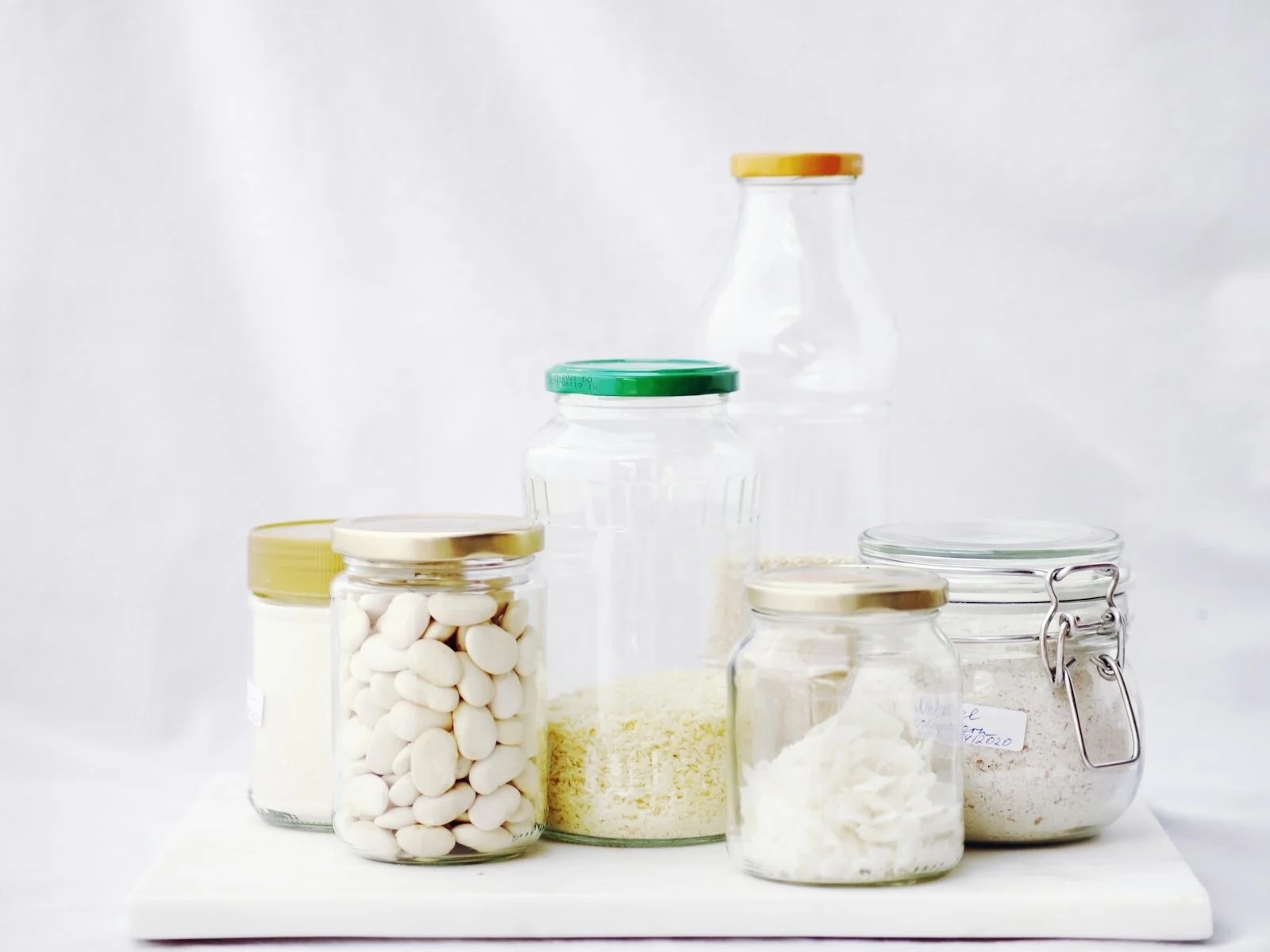
There's a small conflict here. A common trick for remembering creatine is keeping the tub next to the coffee machine or kettle, where you will see it every morning (from how to remember to take creatine). That works, as long as the lid stays closed and the tub isn't in the path of the steam. If you move it into a cupboard to keep it dry, you lose the visual cue, so you need another one.


If the tub is in the cupboard and out of sight
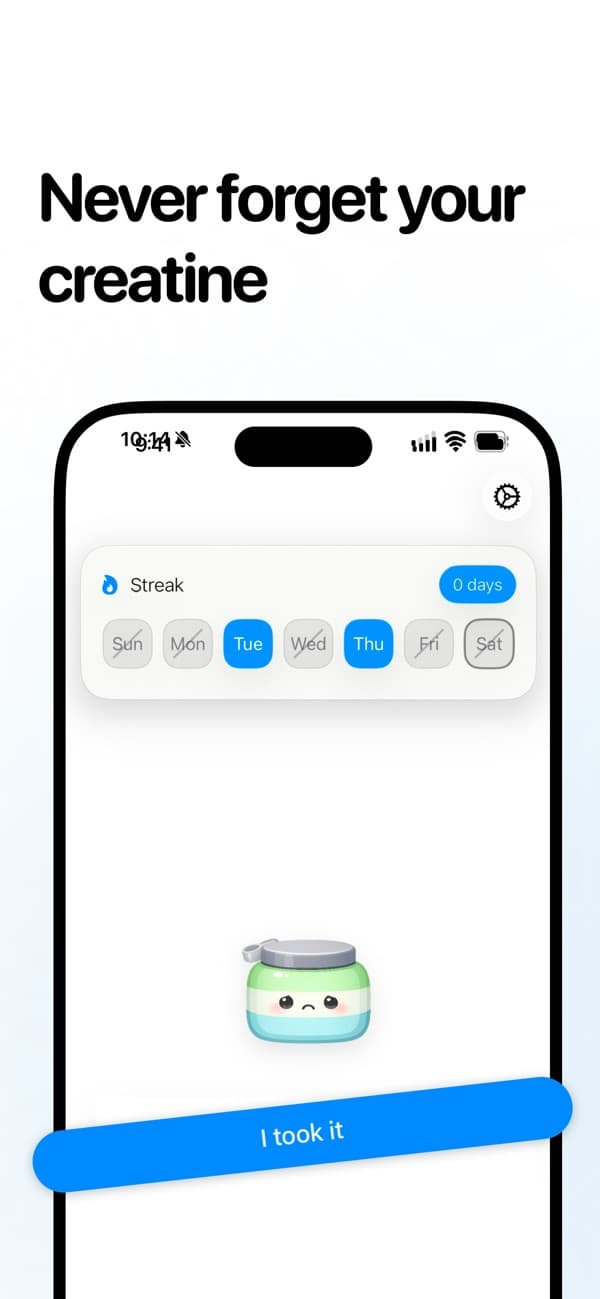
Creatinely reminds you at the time you choose and keeps a streak, so you don't depend on seeing the tub. (I make Creatinely.)
Buy tubs you will finish
The simplest way to avoid old creatine is to buy a size you finish well before its date. Divide the grams in the tub by the grams you take per serving and you have the number of days it lasts, which is explained in how long a tub of creatine lasts. The creatine tub calculator does the maths and gives you the date it runs out.
Keep the powder dry, mix it when you drink it, and the date on the lid is unlikely to be your problem.
Frequently asked questions
Can you take creatine after the expiration date?
In stability tests summarised in a 2011 review, dry creatine monohydrate showed no measurable breakdown after more than three years. The printed date is the maker's call, so if a tub is past it, check that it has stayed dry and looks and smells normal, and ask a pharmacist or doctor if you're unsure.
Is clumpy creatine still good?
Clumps usually mean some moisture got into the tub. The stability data is for dry powder and I couldn't find a study that measured breakdown in a clumped tub, so throw it out if it is wet, discoloured, smells odd or shows mould.
How long does creatine last once mixed with water?
Not long. The ISSN position stand reports that creatine in solution at 25 °C partly turned into creatinine within 3 days, and more so in acidic drinks, so mix it when you are about to drink it.
Does creatine need to be refrigerated?
The dry powder doesn't: it stayed stable at 40 °C in the tests. A drink you have already mixed breaks down more slowly in the fridge than at room temperature.


Sources
- Jäger R et al. (2011). Analysis of the efficacy, safety, and regulatory status of novel forms of creatine. Amino Acids 40(5):1369–1383.
- Kreider RB et al. (2017). ISSN position stand: safety and efficacy of creatine supplementation in exercise, sport, and medicine. Journal of the International Society of Sports Nutrition 14:18.
- Ganguly S et al. (2003). Evaluation of the stability of creatine in solution prepared from effervescent creatine formulations. AAPS PharmSciTech 4(2):E25.
- U.S. FDA (2007). Current Good Manufacturing Practice in Manufacturing, Packaging, Labeling, or Holding Operations for Dietary Supplements; Final Rule. Federal Register 72(121):34752–34958.
About the author
22, software developer and founder based in Madrid.
I'm Gabriel, I'm 22 and I live in Madrid. I write software, build my own products and I'm into maths, sport and fashion. Among other things I make three iPhone apps, Creatinely, LockTy and RepZet, and here I write about training, creatine and the small daily habits that add up.
This is general information, not medical advice. Talk to a professional about your own situation.
Keep reading

How Much Creatine Should a Woman Take? What the Studies Used
There is no separate female dose in the research. The daily amounts and loading protocols studies in women used, and what the ISSN position stand describes.

Should You Take Creatine If You Don't Work Out? What Studies Found Without Training
Without exercise, studies found creatine does little for muscle. The brain research is early and mixed. What that means if you are curious but not a gym person.

Does Creatine Make You Gain Weight or Feel Bloated? What Is Water and What Isn't
Creatine can add some water weight, mostly during a high-dose loading week. It is not fat. Here is what studies found, and why bloating is often about the dose.