New Year's Resolutions 2027: How to Make Ones That Last
 Gabriel SánchezPublished


To make New Year's resolutions that last in 2027, pick one to three, phrase each one as something to start rather than something to stop, turn it into a small daily action with a set time and place, and track it every day. Resolutions have a worse reputation than they deserve: in one study, 46% of people who made one were still on track six months later, against 4% of people with the same goals who didn't.
Do New Year's resolutions work?
The two best-known studies say yes, more often than people think.
In a 2002 study, researchers followed 159 people who made New Year's resolutions and 123 people with similar goals who planned to change at some later point. The most common goals were losing weight, starting to exercise and quitting smoking. After six months, 46% of the resolvers had kept at it without a break, compared with 4% of the non-resolvers (Norcross et al., 2002). Confidence, skills to change and being ready to change, all measured before January 1, predicted who would succeed.
A larger Swedish experiment followed 1,066 people for a full year. After twelve months, 55% considered themselves successful (Oscarsson et al., 2020). The most common resolutions were about physical health (33%), weight loss (20%) and eating habits (13%).
Both studies rely on what people said about themselves, and people who join a resolutions study are probably more motivated than average. Still, the picture is far from "everyone quits by February".
January also helps. Researchers have found that searches for "diet", gym visits and commitments to goals all rise after fresh-start moments like a new week, a new month or a new year (Dai et al., 2014). The new year gives you a push. The steps below are about keeping going once that push fades.
How to make resolutions that last: 7 steps
1. Choose fewer
Each resolution needs its own action, its own time slot and its own check-in. Ten resolutions means ten new things competing for the same evening. Pick one to three. If you can't choose, start with the ones that make the others easier: more sleep, less time on the phone, a fixed time to train.
2. Phrase it as something to start
In the Swedish experiment, people whose main resolution was to start or do more of something ("approach" goals) were more often successful after a year than people whose goal was to stop or avoid something: 58.9% against 47.1% (Oscarsson et al., 2020).
Avoidance goal | Approach version |
|---|---|
Stop scrolling in bed | Read 10 pages in bed instead |
Stop eating junk food | Eat a portion of vegetables with lunch and dinner |
Stop being lazy | Walk 20 minutes after lunch |
Don't skip the gym | Train Monday, Wednesday and Friday at 7 p.m. |
Stop staying up late | Be in bed by 11 p.m. on weeknights |
The numbers in the right column are examples. Pick ones that fit your week.
3. Turn the goal into a daily or weekly action
"Get fit" and "read more" are directions, not actions. Ask what the resolution looks like on a normal Tuesday. If you can't answer, it's not ready. "Read more" becomes "20 minutes of reading after dinner". "Get fit" becomes "three workouts a week" and, if you train with weights, a plan to add a little each week, which is what progressive overload means.
4. Decide when and where with an if-then plan
An implementation intention is a plan in the form "when X happens, I will do Y": "When I finish dinner, I'll read on the couch for 20 minutes." A meta-analysis of 94 studies found that people who made plans like this reached their goals more often than people who only set the goal, with a medium-to-large effect (Gollwitzer and Sheeran, 2006). Tie the new habit to something that already happens every day.
5. Track it every day
A meta-analysis of 138 experiments with almost 20,000 participants found that monitoring progress helped people reach their goals, and the effect was larger when progress was recorded physically or shared with others (Harkin et al., 2016). A tick on a calendar, a note or an app all count. What matters is that you check every day, not once a month when you remember.

Turn resolutions into daily goals
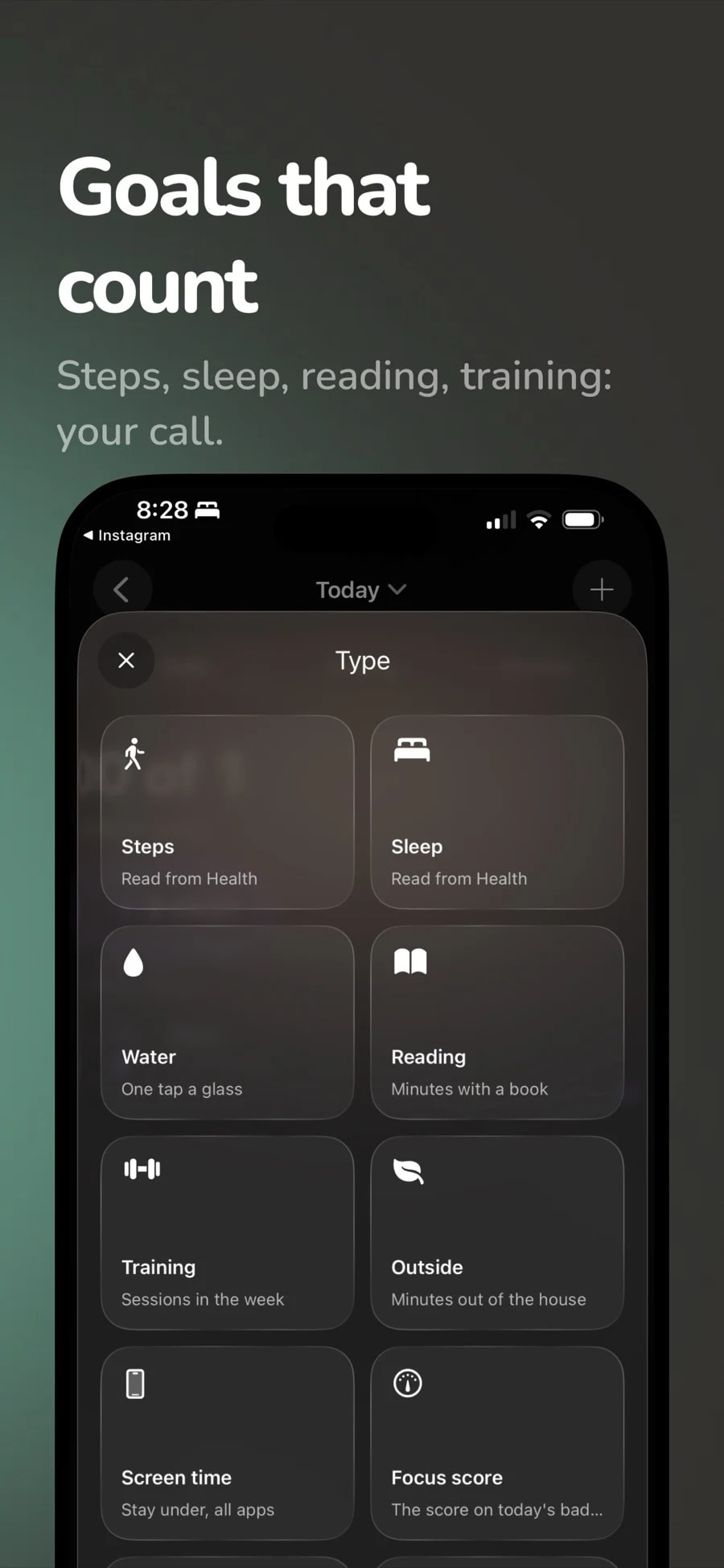
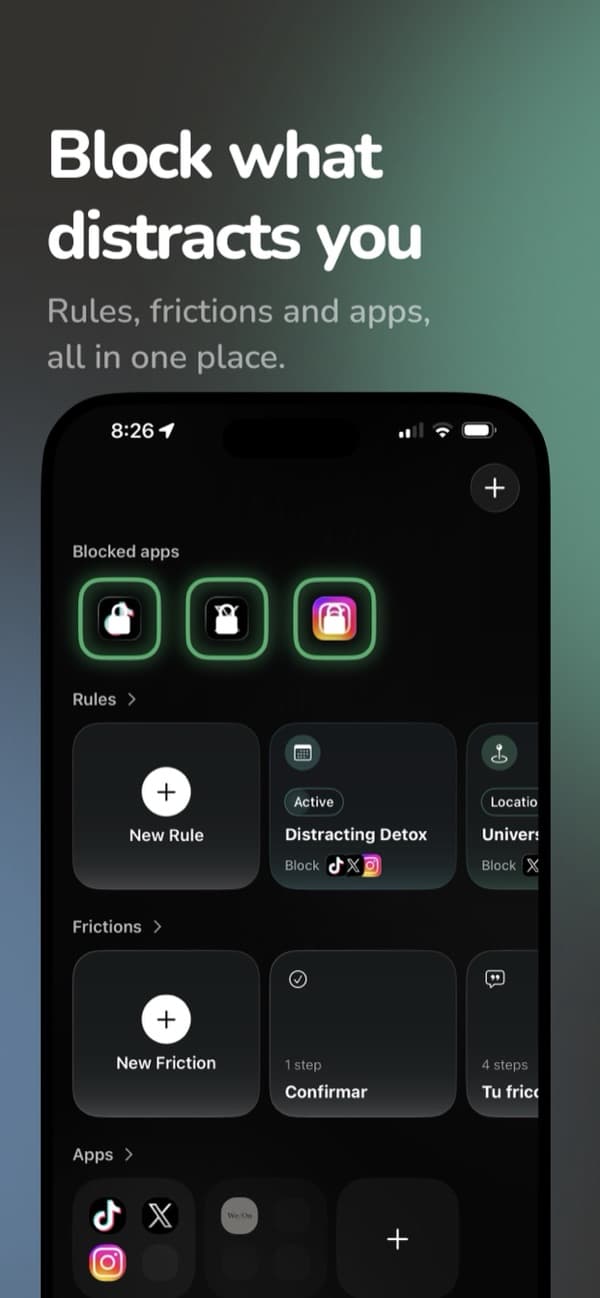
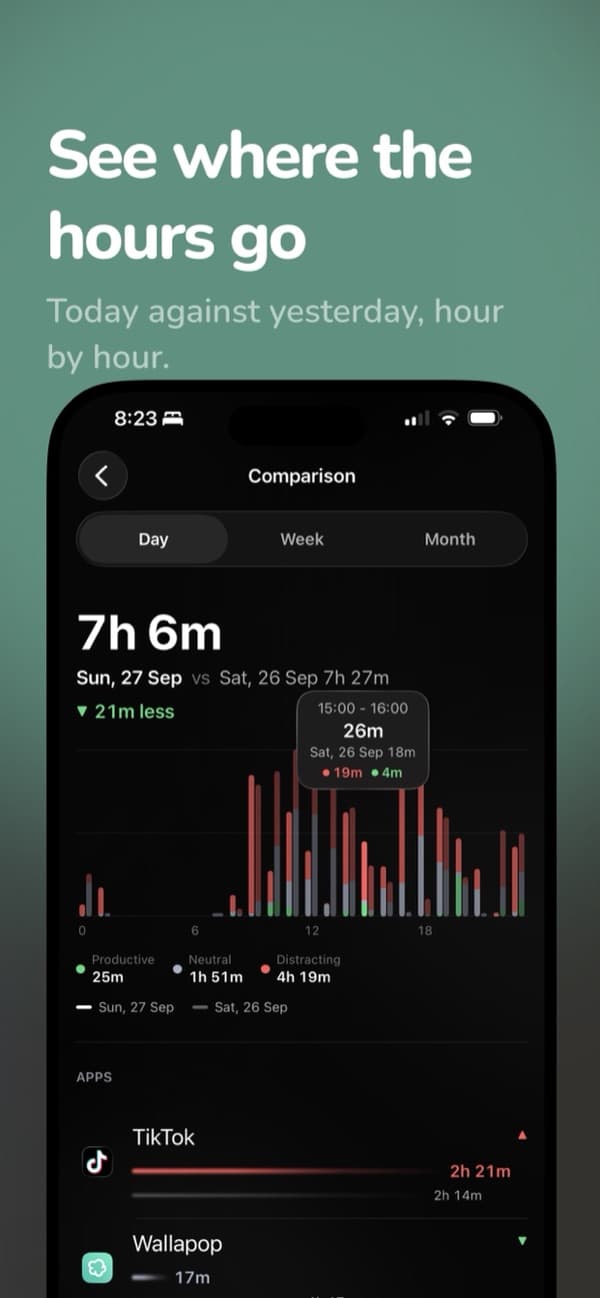
LockTy turns resolutions into daily goals: steps and sleep read from Apple Health, water, reading, training, time outside and screen time. The apps that distract you stay locked until you meet them, so the goal gets done before the scrolling.
6. Plan for missed days
You will miss days. In the best-known study on habit formation, missing a single day didn't meaningfully slow down how fast the habit became automatic (Lally et al., 2010). The same study found a median of 66 days for a daily habit to feel automatic, with a range from 18 to 254. So January 31 is too early to judge. Decide now what happens after a missed day: you start again the next day, same time, same place. The habit formation calculator shows the dates for your own start.
7. Get one person on your side
In the Swedish experiment, the group that named one person to support them through the year, and got a short note on dealing with setbacks, did best: 62.3% success, against 55.9% for the group with no support (Oscarsson et al., 2020). The group that got the most instruction on goal setting did no better than the group with none. One person who asks "how's it going?" helped more than extra theory.
Examples of resolutions for 2027 you can track
Resolution | Daily or weekly action | How to track it |
|---|---|---|
Sleep better | In bed by 11 p.m., same wake time every day | Sleep hours from your watch or phone |
Use my phone less | Social apps closed until noon | Screen time |
Get fit | Train three times a week | Sessions per week |
Move more | Walk after lunch | Daily steps |
Read more | 20 minutes after dinner | Minutes read |
Drink more water | A glass with each meal | Glasses per day |
Wake up earlier | Same alarm every day, phone out of the bedroom | Wake-up time |
The times and amounts are examples. If waking up earlier is on your list, the guide to waking up early covers the sleep side, and if the phone is the problem, start with how to stop phone addiction.
Start before January 1
In the 2002 study, what people brought into the new year (confidence, skills and readiness) predicted who succeeded (Norcross et al., 2002). Use the last weeks of December to prepare: write the one to three resolutions, choose the daily action and the if-then plan for each, set up how you'll track them and tell the person who will check in. On January 1 you only have to start.
If you want something stricter than a list of resolutions, monk mode is the same idea in a shorter, more intense form: a set period with fewer distractions and one or two goals.
Frequently asked questions
Do New Year's resolutions work?
More often than their reputation suggests. In a 2002 study, 46% of people who made a resolution were still succeeding six months later, against 4% of people with the same goals who planned to change 'later'. In a 2020 study of over 1,000 people, 55% considered themselves successful after a year. Both rely on self-reports.
What are the most common New Year's resolutions?
Health goals dominate. In a 2020 Swedish study, 33% of resolutions were about physical health, 20% about weight loss and 13% about eating habits. In a 2002 US study, weight loss, exercise and quitting smoking were the most common.
How many New Year's resolutions should I make?
There is no proven number, but each goal needs its own daily action and its own place in your day. One to three is enough for most people. If you have ten, pick the ones that would make the rest easier, like sleep or less phone time.
How do you keep a New Year's resolution?
Phrase it as something to do rather than something to avoid, turn it into a specific action with a time and place, track it every day and plan what you'll do after a missed day. Having one person who checks in with you also helped in a large study.
What are good goals for the new year?
Goals you can turn into a daily or weekly action: read 20 pages after dinner, walk after lunch, train three times a week, be in bed by 11 p.m., keep social apps closed until noon. A goal like 'be healthier' only works once you decide what it means on a normal Tuesday.
What happens if I miss a day?
In research on habit formation, missing a single day didn't meaningfully affect how fast a habit formed. Missing one day is normal. The risk is letting one missed day turn into a missed week, so decide in advance that you'll start again the next day.
LockTy
Lock the apps that distract you and unlock them by meeting your daily goals: steps, sleep, reading or training.
Sources
- Norcross JC, Mrykalo MS, Blagys MD (2002). Auld lang syne: success predictors, change processes, and self-reported outcomes of New Year's resolvers and nonresolvers. Journal of Clinical Psychology 58(4):397–405.
- Oscarsson M, Carlbring P, Andersson G, Rozental A (2020). A large-scale experiment on New Year's resolutions: approach-oriented goals are more successful than avoidance-oriented goals. PLoS ONE 15(12):e0234097.
- Dai H, Milkman KL, Riis J (2014). The fresh start effect: temporal landmarks motivate aspirational behavior. Management Science 60(10):2563–2582.
- Gollwitzer PM, Sheeran P (2006). Implementation intentions and goal achievement: a meta-analysis of effects and processes. Advances in Experimental Social Psychology 38:69–119.
- Harkin B, Webb TL, Chang BP, et al. (2016). Does monitoring goal progress promote goal attainment? A meta-analysis of the experimental evidence. Psychological Bulletin 142(2):198–229.
- Lally P, van Jaarsveld CHM, Potts HWW, Wardle J (2010). How are habits formed: modelling habit formation in the real world. European Journal of Social Psychology 40(6):998–1009.

About the author
22, software developer and founder based in Madrid.
I'm Gabriel, I'm 22 and I live in Madrid. I write software, build my own products and I'm into maths, sport and fashion. Among other things I make three iPhone apps, Creatinely, LockTy and RepZet, and here I write about training, creatine and the small daily habits that add up. I also build apps and software for B2B clients as an independent developer. If you want to work together, write to me.
This is general information, not medical advice. Talk to a professional about your own situation.
Keep reading

How Long Does It Take to Form a Habit? The 66-Day Study vs the 21-Day Myth
Forming a new habit takes about two months, not 21 days. In the best-known study the median was 66 days, with a range from 18 to 254 days by person.

How to Wake Up Early: 8 Steps Backed by Sleep Research
To wake up early, move your bedtime first, keep the same wake time every day, get daylight in the morning and keep your phone out of the bedroom at night.

How to Be Disciplined: Avoid Temptation Instead of Fighting It
Disciplined people resist temptation less often because they set up their days to avoid it. Here's how to do the same: 8 steps, an example week and research.

Morning Routine: A Simple Plan That Starts Without Your Phone
A good morning routine is short, happens at the same time daily and starts before your phone. A 10, 30 and 60 minute version, plus how to make it stick.

Dopamine Detox: What It Gets Right and What It Gets Wrong
A dopamine detox can't lower or reset your dopamine. The useful part of the trend is cutting easy, high-reward habits at set times and getting used to boredom.

How to Set Daily Goals You Can Keep: 7 Steps and Examples
Set 3 to 5 daily goals you can measure, tie each to a time and place, and tick them off the same day. Here's how, with examples for steps, sleep and reading.