How to Stop Phone Addiction: 9 Changes That Beat Willpower
 Gabriel SánchezPublished

To stop using your phone so much, change the setup instead of relying on willpower: cut notifications, lock the apps you check most at set times or places, and keep the phone out of reach when you need to focus. Experiments that limited social media or added friction to opening apps found real drops in use and, in some, small improvements in mood.
Why it's so hard to put down
Most phone checks aren't decisions. They are habits set off by a cue: a notification, a moment of boredom, the end of a task. The app opens before you have thought about it.
The phone also costs attention when you're not using it. In one set of experiments, people did worse on attention and memory tests when their own phone was on the desk than when it was in another room, even face down and silent (Ward et al., 2017).
That's why "just use it less" rarely works. You're fighting a habit at the exact moment it fires.
What the research says about cutting back
- Limiting social media. Students who limited Facebook, Instagram and Snapchat to 10 minutes each per day for three weeks reported less loneliness and fewer depressive symptoms than students who used them as usual (Hunt et al., 2018).
- A month without Facebook. People paid to deactivate it for four weeks spent more time offline and reported a small rise in well-being (Allcott et al., 2020).
- Self-set limits. Giving people a tool to limit their own use reduced their time on the targeted apps (Allcott et al., 2022).
- Full "digital detox". A review of detox studies found mixed results: some benefits, some none, depending on how long and how strict the break was (Radtke et al., 2022).
The pattern: targeted limits on the apps that cause trouble are easier to keep and more realistic than giving up the phone.
9 changes that work better than willpower
- Find your two or three problem apps. Check Screen Time in Settings. Most of the wasted time usually sits in a few apps.
- Turn off notifications for everything except calls, messages from people and anything work requires.
- Move distracting apps off the home screen. Put them in a folder on the last page, or remove them and use the browser.
- Lock apps at set times. For example, no social apps before noon or after 10 p.m.
- Lock apps in set places. The gym, the library and the office desk are where a quick check turns into half an hour.
- Keep the phone out of the bedroom. Use a cheap alarm clock instead.
- Put the phone in another room for focused work, not just face down on the desk.
- Use grayscale in Accessibility settings if colorful feeds pull you in.
- Replace, don't just remove. Decide what you'll do instead: a book in the bag, a walk, a call.
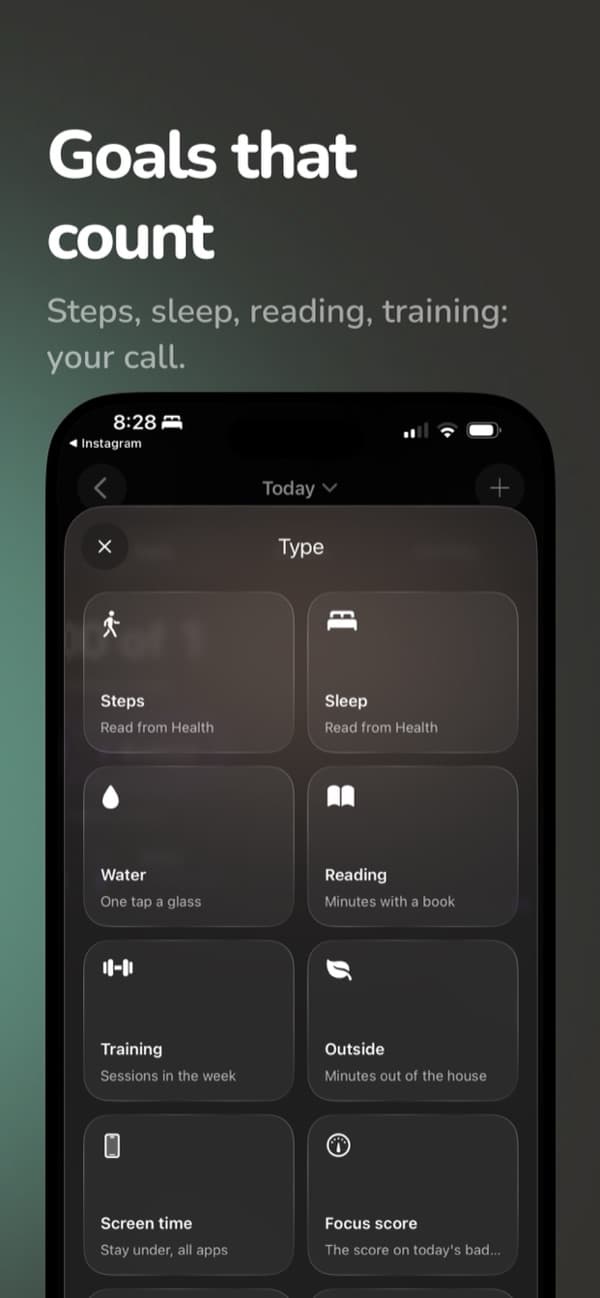
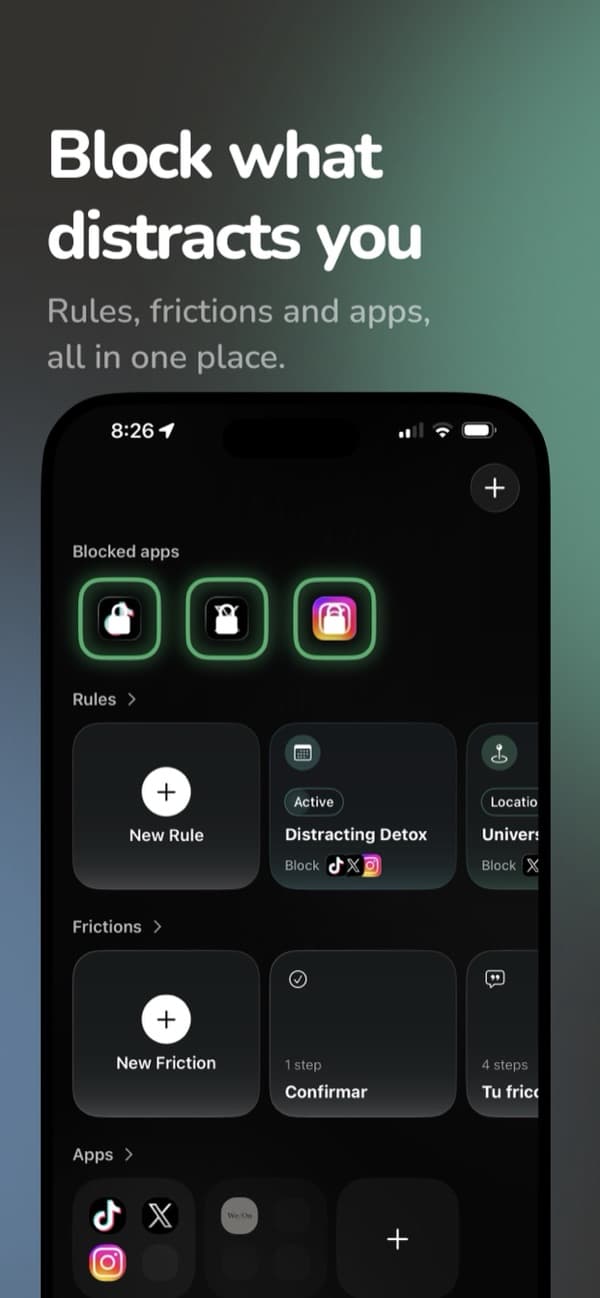
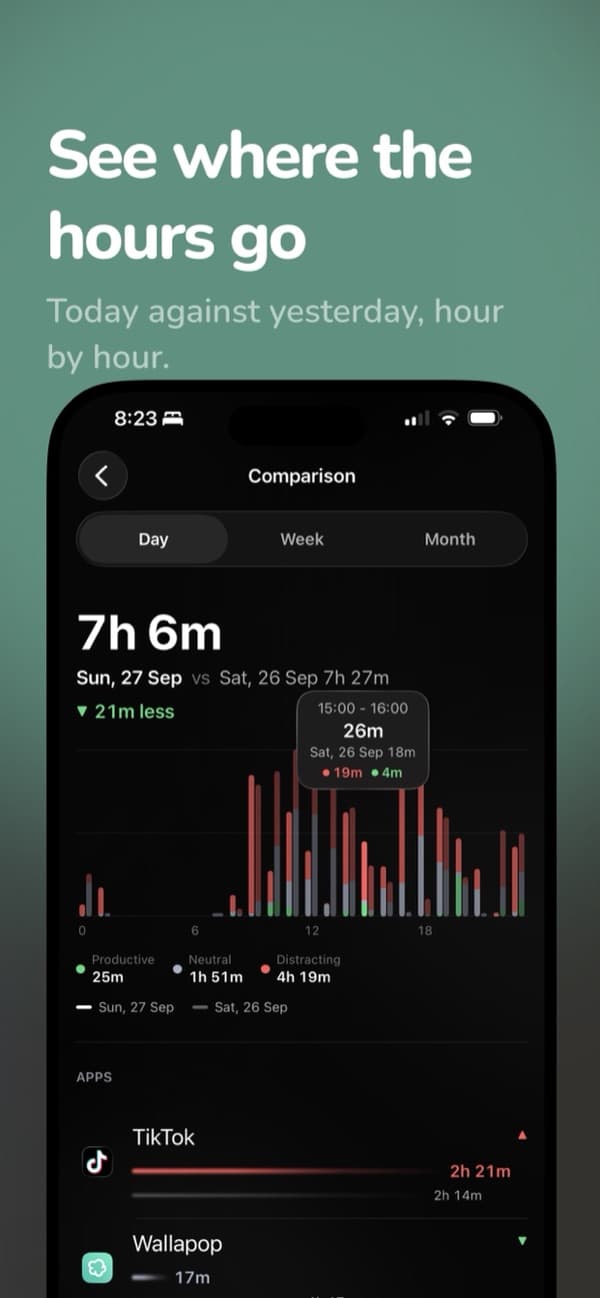

Set the rules once
LockTy locks the apps you choose by schedule or when you arrive at the gym, the library or another place you pick. If you really need one, ask for a short break instead of switching everything off.
How long it takes
Expect the first one to two weeks to feel the hardest, because the cues are still there and the habit still fires. In research on forming new daily habits, the median time to feel automatic was 66 days, with a range from 18 to 254 (Lally et al., 2010). The same applies in reverse: give the new routine a couple of months. The habit formation calculator gives a rough estimate for your case.
When to get help
If your phone use is hurting your sleep, work or relationships and these changes don't help, talk to a doctor or a psychologist. Heavy phone use sometimes sits on top of anxiety, low mood or ADHD, and those are worth looking at directly.
For most people, though, a few rules set in advance do most of the work.
Frequently asked questions
Is phone addiction a real addiction?
It is not an official diagnosis. Researchers use terms like problematic smartphone use. Whatever you call it, if your phone use gets in the way of sleep, work, study or people, it is worth changing.
How can I stop checking my phone all the time?
Remove the triggers and add friction. Turn off most notifications, move distracting apps off the home screen, keep the phone in another room while you work and lock the apps you check most at set times or places.
Does limiting social media help?
In a 2018 experiment, students who limited Facebook, Instagram and Snapchat to 10 minutes each per day for three weeks reported less loneliness and fewer depressive symptoms than a control group. In a larger 2020 study, deactivating Facebook for four weeks led to a small rise in well-being.
How long does it take to break a phone habit?
There is no fixed number. Research on forming new habits found a median of 66 days for a new daily behavior to feel automatic, with a range from 18 to 254 days. Expect the first two weeks to be the hardest.
LockTy
Lock the apps that distract you and unlock them by meeting your daily goals: steps, sleep, reading or training.
Sources
- Hunt MG, Marx R, Lipson C, Young J (2018). No more FOMO: limiting social media decreases loneliness and depression. Journal of Social and Clinical Psychology 37(10):751–768.
- Allcott H, Braghieri L, Eichmeyer S, Gentzkow M (2020). The welfare effects of social media. American Economic Review 110(3):629–676.
- Allcott H, Gentzkow M, Song L (2022). Digital addiction. American Economic Review 112(7):2424–2463.
- Ward AF, Duke K, Gneezy A, Bos MW (2017). Brain drain: the mere presence of one's own smartphone reduces available cognitive capacity. Journal of the Association for Consumer Research 2(2):140–154.
- Radtke T, Apel T, Schenkel K, Keller J, von Lindern E (2022). Digital detox: an effective solution in the smartphone era? A systematic literature review. Mobile Media & Communication 10(2):190–215.
- Lally P, van Jaarsveld CHM, Potts HWW, Wardle J (2010). How are habits formed: modelling habit formation in the real world. European Journal of Social Psychology 40(6):998–1009.

About the author
22, software developer and founder based in Madrid.
I'm Gabriel, I'm 22 and I live in Madrid. I write software, build my own products and I'm into maths, sport and fashion. Among other things I make three iPhone apps, Creatinely, LockTy and RepZet, and here I write about training, creatine and the small daily habits that add up. I also build apps and software for B2B clients as an independent developer. If you want to work together, write to me.
This is general information, not medical advice. Talk to a professional about your own situation.
Keep reading

How to Set Daily Goals You Can Keep: 7 Steps and Examples
Set 3 to 5 daily goals you can measure, tie each to a time and place, and tick them off the same day. Here's how, with examples for steps, sleep and reading.
Best App Blocker for iPhone in 2026: Screen Time, Opal, one sec, Jomo and LockTy Compared
Screen Time is free and enough if you rarely tap Ignore Limit. If you do, a blocker adds friction. What Opal, one sec, Jomo, AppBlock and LockTy do and cost.

How to Stop Procrastinating: 10 Steps That Work When Willpower Doesn't
To stop procrastinating, make the first step tiny, decide in advance when and where you'll start, and keep your phone out of reach while you work.
What Is Monk Mode? A 30-Day Plan That Starts With Your Phone
Monk mode is a set period, often 30 to 90 days, to cut distractions and focus on one or two goals. Start with your phone and rules you decide in advance.

Do You Take Creatine on Rest Days? What the Research Shows
Creatine works through a store in your muscles that needs a daily top-up, so studies kept it going on rest days. Why, and when to take it with no workout.

What Happens If You Miss a Day of Creatine? (Less Than You Think)
Missing one day of creatine barely changes your muscle stores, which fall slowly over weeks. What the studies show and what to do the day after you forget.