How to Set Daily Goals You Can Keep: 7 Steps and Examples
 Gabriel SánchezPublished

To set daily goals you'll keep, pick three to five, make each one a number you can check (8,000 steps, 20 minutes of reading), tie it to a time and place, and record it the same day. That combination has the research behind it: specific goals beat "do your best", if-then plans make you follow through more often, and tracking progress raises the odds of getting there.
Why daily goals work
Four findings explain most of it:
- Specific goals beat vague ones. Across decades of studies, specific, hard goals led to better performance than easy goals or "do your best", as long as people were committed and got feedback on their progress (Locke and Latham, 2002).
- Near goals beat distant ones. In a classic experiment, children who struggled with math set either small session-by-session goals or one distant goal. Those with near goals progressed faster, mastered more and became more interested in the subject; the distant goal had no clear effect (Bandura and Schunk, 1981). A daily goal is a near goal.
- Planning when and where helps. Across 94 tests, people who added an if-then plan ("when it's 7 p.m., I'll read for 20 minutes") reached their goals more often than people with the goal alone (Gollwitzer and Sheeran, 200638002-1)).
- Tracking helps, especially on record. A meta-analysis of 138 studies with almost 20,000 people found that monitoring progress improved goal attainment. The effect was larger when progress was physically recorded or reported to others (Harkin et al., 2016).
How to set daily goals in 7 steps
- Start from the bigger goal. Write down what you want this year or this month, then ask what one day of progress looks like. "Get fitter" becomes "walk 8,000 steps" or "train on Monday, Wednesday and Friday".
- Keep it to three to five. Each extra goal makes a full day harder to complete. If the list doesn't fit on a sticky note, it's too long.
- Make each one a number. Steps, minutes, pages, glasses, hours. "Read more" can't be ticked off; "read 20 minutes" can.
- Pick actions, not outcomes. You control whether you walk today. You don't control what the scale says today. Daily goals work best as things you do.
- Set the level for a normal day. Locke and Latham found hard goals raise performance when you're committed to them. For something you'll repeat daily for months, aim for a target you can hit on most days and raise it once it feels easy.
- Attach an if-then plan. "After I pour my coffee, I read 10 pages." "If it's 9 p.m., the phone goes on the charger in the kitchen."
- Record it today, review it weekly. Tick it off the same day, on paper or in an app. Once a week, look at which goals you missed most and fix the plan, not just your effort.
Daily goal examples
The targets below are examples, not prescriptions. Take your current average and go a little above it.
Goal | Example target | Where the number comes from |
|---|---|---|
Steps | 8,000 a day | Mortality risk kept dropping up to about 6,000 to 8,000 steps a day in adults 60+ and 8,000 to 10,000 in younger adults (Paluch et al., 202200302-9)) |
Sleep | 7 hours or more | Sleep medicine consensus for adults (Watson et al., 2015) |
Water | Your own daily amount | Depends on body size, climate and activity; the water intake calculator gives an estimate |
Reading | 20 minutes | Example; choose a length you'll finish |
Training | 3 sessions a week | Example; set it to your plan |
Time outside | 30 minutes | Example |
Screen time | Under a set limit | Start from your current Screen Time average |
If any goal touches a health condition, such as sleep problems or a new exercise routine after a long break, check with a doctor before setting the numbers.
Common mistakes
- Too many goals. Ten goals means most days end with several unchecked, and the list stops feeling useful.
- Vague wording. "Be healthier" or "use my phone less" can't be checked at night.
- All-or-nothing thinking. In the study behind the 66-day habit figure, missing one day did not materially affect the process. Pick it back up tomorrow.
- Goals that live somewhere you never look. A note buried in an app doesn't count as tracking. Put the list where you see it every day.
- The phone gets there first. Many daily goals lose to ten minutes of scrolling that becomes an hour. That's a setup problem more than a discipline one; see how to stop phone addiction.
Make your goals the key to your apps
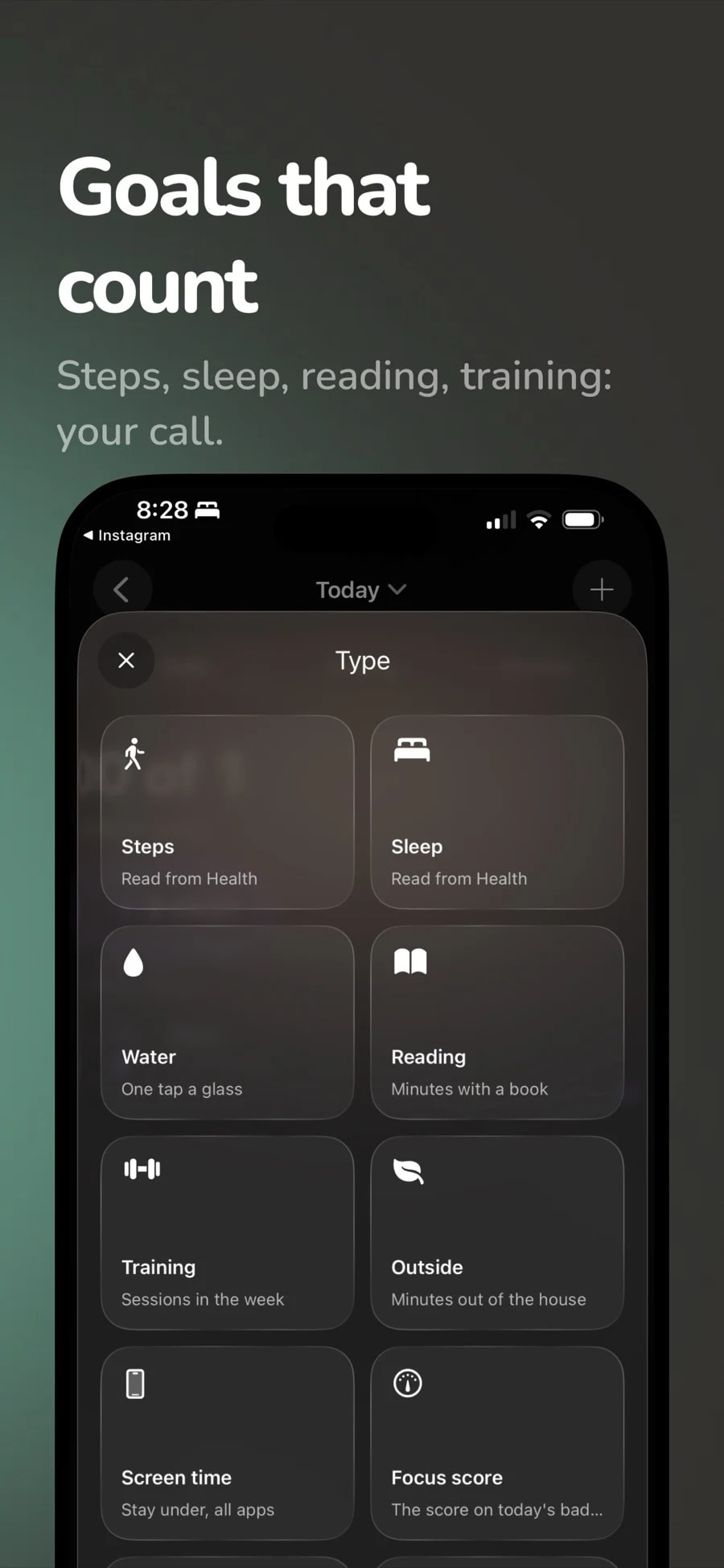
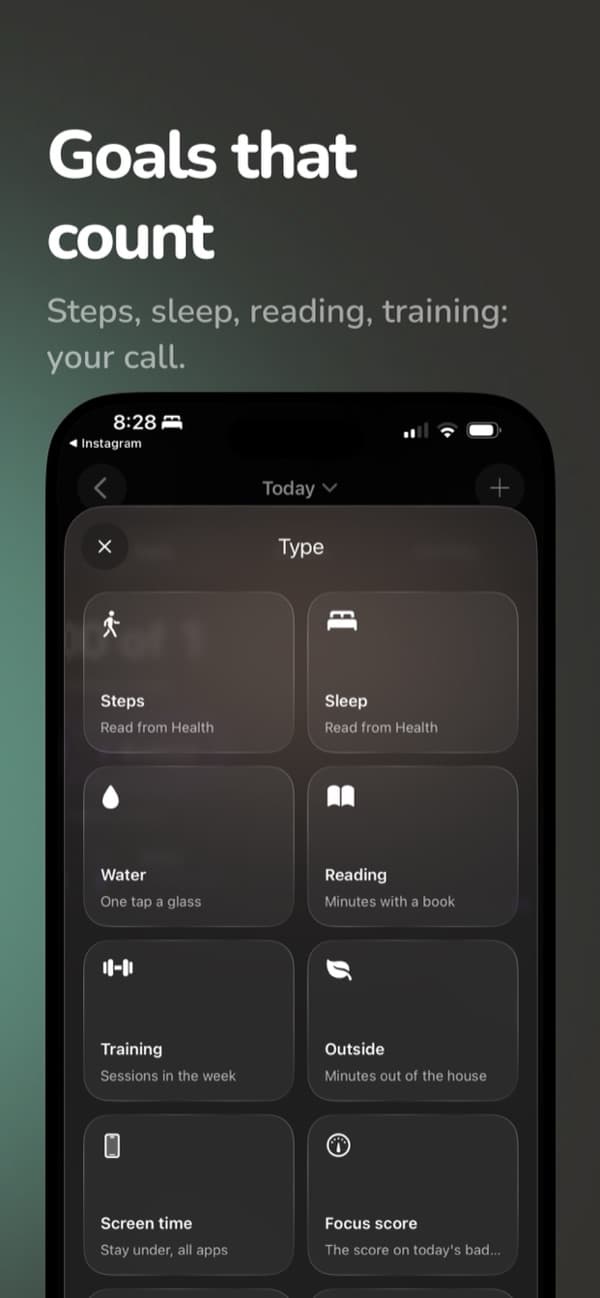
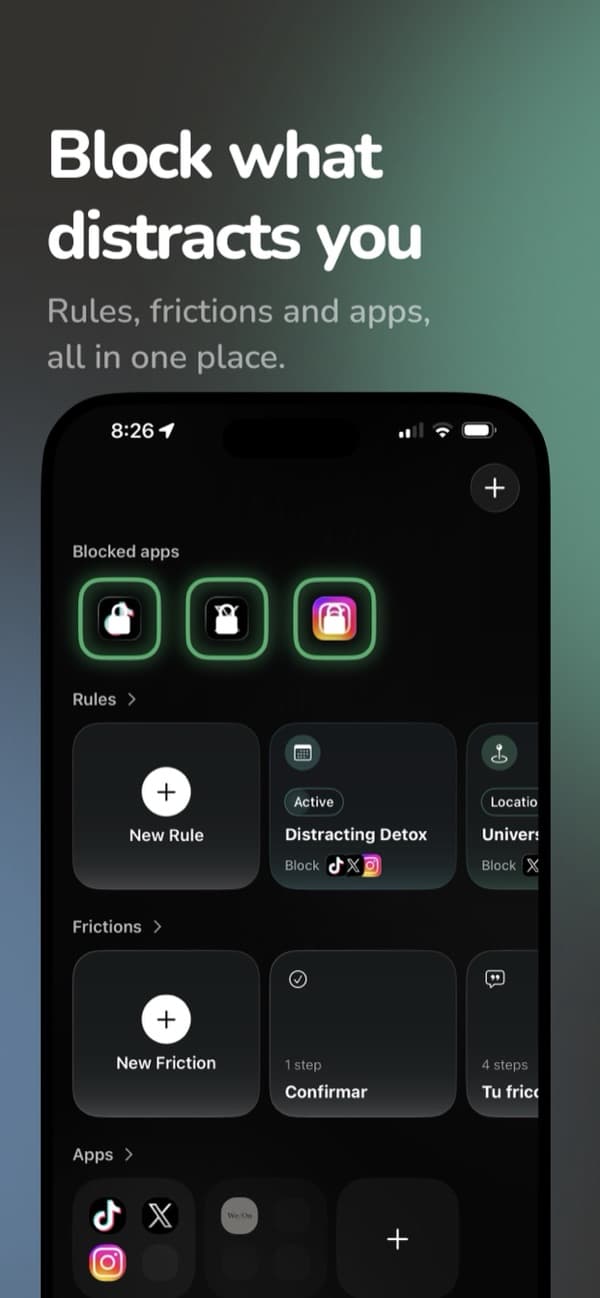
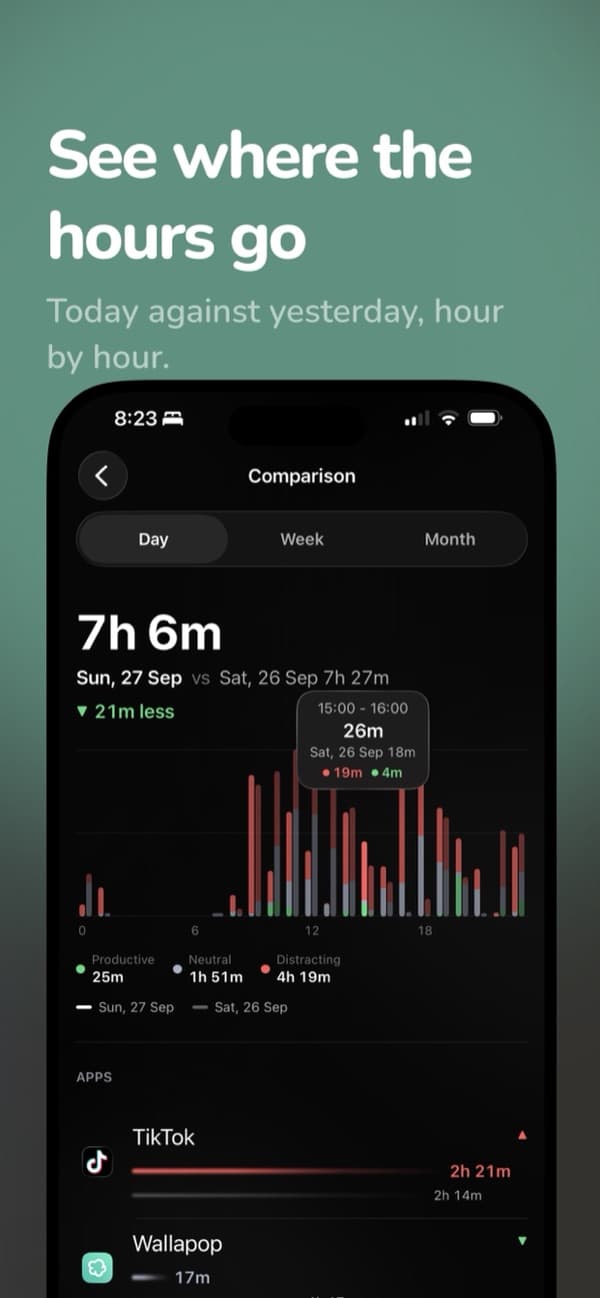
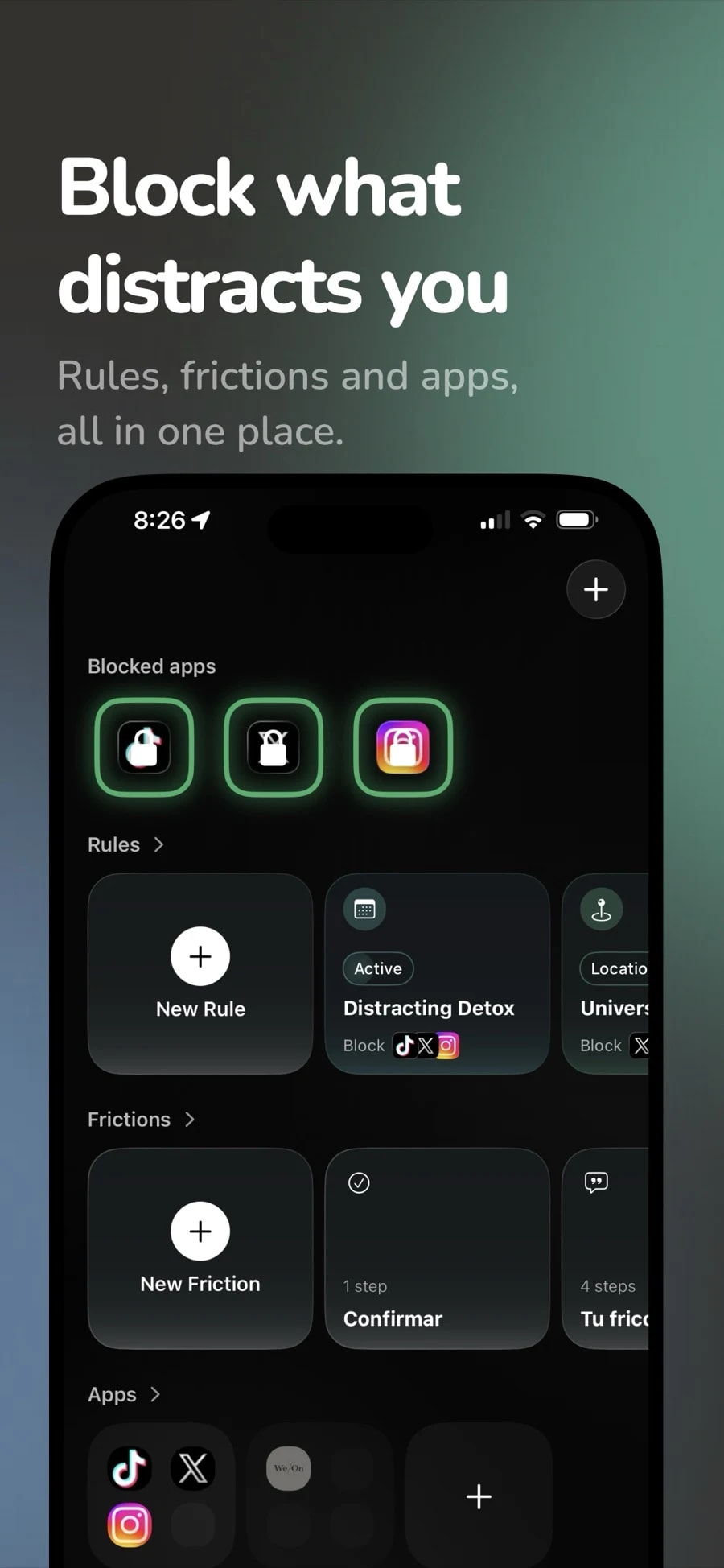
LockTy turns daily goals into the condition for using your distracting apps. You choose the goals: steps and sleep are read from Apple Health, water takes one tap per glass, reading counts minutes with a book, training counts sessions in the week, and there are also time outside, a screen time limit and a focus score. The apps you pick stay locked until the goals are done.
That puts two of the findings above into one place: the goal is specific and checked every day, and the reward you'd normally reach for first comes after it.

Hit your goals, then open your apps
Pick the daily goals that matter to you, like steps, sleep, reading, water or training. LockTy keeps the apps you choose locked until you've done them, and it lives on your lock screen so you see where you stand.
From daily goals to habits
A daily goal is the scaffolding. Repeated in the same context, it turns into a habit that runs without the list, which takes about two months on average; how long it takes to form a habit covers the research. Once a goal runs on autopilot, raise it or swap it for the next one. If you're planning a stricter reset, monk mode is built from the same pieces: a few daily goals and fewer distractions.
Frequently asked questions
What are some examples of daily goals?
Walk a set number of steps, sleep at least 7 hours, read for 20 minutes, drink a set amount of water, train on planned days, spend 30 minutes outside, or keep screen time under a limit. The numbers should come from your own starting point.
How many daily goals should I have?
Few enough to finish on a normal day. Three to five is a practical range: enough to cover what matters, small enough that a busy day doesn't wipe them all out.
How do I set daily goals and actually stick to them?
Make each goal specific, attach it to a time and place with an if-then plan, and record it the same day. In experiments, if-then plans and progress monitoring both raised the chances of reaching a goal.
Should I write my daily goals down?
Yes, or track them somewhere you'll see. A meta-analysis of 138 studies found that monitoring progress helped people reach goals, and the effect was larger when progress was physically recorded or reported.
What is a good daily step goal?
There's no single number. In a large analysis of 15 cohorts, the lowest risk of death was reached around 6,000 to 8,000 steps a day for adults 60 and over and 8,000 to 10,000 for younger adults. Start from your current average and build up.
LockTy
Lock the apps that distract you and unlock them by meeting your daily goals: steps, sleep, reading or training.
Sources
- Locke EA, Latham GP (2002). Building a practically useful theory of goal setting and task motivation: a 35-year odyssey. American Psychologist 57(9):705–717.
- Bandura A, Schunk DH (1981). Cultivating competence, self-efficacy, and intrinsic interest through proximal self-motivation. Journal of Personality and Social Psychology 41(3):586–598.
- Gollwitzer PM, Sheeran P (2006). Implementation intentions and goal achievement: a meta-analysis of effects and processes. Advances in Experimental Social Psychology 38:69–119.
- Harkin B, Webb TL, Chang BPI, et al. (2016). Does monitoring goal progress promote goal attainment? A meta-analysis of the experimental evidence. Psychological Bulletin 142(2):198–229.
- Watson NF, Badr MS, Belenky G, et al. (2015). Recommended amount of sleep for a healthy adult: a joint consensus statement of the American Academy of Sleep Medicine and Sleep Research Society. Sleep 38(6):843–844.
- Paluch AE, Bajpai S, Bassett DR, et al. (2022). Daily steps and all-cause mortality: a meta-analysis of 15 international cohorts. The Lancet Public Health 7(3):e219–e228.

About the author
22, software developer and founder based in Madrid.
I'm Gabriel, I'm 22 and I live in Madrid. I write software, build my own products and I'm into maths, sport and fashion. Among other things I make three iPhone apps, Creatinely, LockTy and RepZet, and here I write about training, creatine and the small daily habits that add up. I also build apps and software for B2B clients as an independent developer. If you want to work together, write to me.
This is general information, not medical advice. Talk to a professional about your own situation.
Keep reading

How to Stop Procrastinating: 10 Steps That Work When Willpower Doesn't
To stop procrastinating, make the first step tiny, decide in advance when and where you'll start, and keep your phone out of reach while you work.
How to Stop Phone Addiction: 9 Changes That Beat Willpower
Use your phone less by changing your setup, not your willpower: fewer notifications, distracting apps locked at set times and the phone out of the bedroom.
What Is Monk Mode? A 30-Day Plan That Starts With Your Phone
Monk mode is a set period, often 30 to 90 days, to cut distractions and focus on one or two goals. Start with your phone and rules you decide in advance.
Best App Blocker for iPhone in 2026: Screen Time, Opal, one sec, Jomo and LockTy Compared
Screen Time is free and enough if you rarely tap Ignore Limit. If you do, a blocker adds friction. What Opal, one sec, Jomo, AppBlock and LockTy do and cost.

Do You Take Creatine on Rest Days? What the Research Shows
Creatine works through a store in your muscles that needs a daily top-up, so studies kept it going on rest days. Why, and when to take it with no workout.

What Happens If You Miss a Day of Creatine? (Less Than You Think)
Missing one day of creatine barely changes your muscle stores, which fall slowly over weeks. What the studies show and what to do the day after you forget.