What Is Monk Mode? A 30-Day Plan That Starts With Your Phone
 Gabriel SánchezPublished

Monk mode is a set period, usually 30 to 90 days, where you cut out distractions and put that time into one or two goals. It has nothing to do with real monks: the idea comes from online self-improvement communities, and in practice it starts with the phone, because that is where most of the distraction lives.
What monk mode actually is
There is no official definition, but most versions share the same shape. For a fixed number of days you:
- choose one main goal, such as training, an exam or a side project;
- remove or limit what pulls you away from it, usually social media, games, porn, alcohol and late nights;
- add a few daily basics, such as sleep at a set time, training and time outside.
The aim is to make the important thing the easy default for a while, until it becomes a habit.
Why the phone comes first
Most monk mode rules are about the phone, and there is a reason for that. In one set of experiments, people did worse on tests of working memory and attention when their own phone was on the desk than when it was in another room, even when it was face down and silent (Ward et al., 2017). Simply having it nearby took up some attention.
Social media is the biggest time sink. In a large experiment, people paid to deactivate Facebook for four weeks spent about an hour a day more offline, including more time with friends and family, and reported a small rise in well-being (Allcott et al., 2020). That study is about one app, but it shows what a month away can free up.
How long monk mode should last
Thirty days is the most common choice, and it's a good first block. Just don't expect a habit to feel automatic by then. In a well-known study, people who added one daily behavior took a median of 66 days to reach their peak of automaticity, and the range ran from 18 to 254 days (Lally et al., 2010). Missing a single day didn't derail the process.
So a practical approach is a 30-day block, a review, then another 30 or 60 days for what's working. The habit formation calculator gives a rough idea of how long a specific habit might take.
Monk mode rules that are easy to keep
Pick three to five. More than that and you'll break one by day four and give up on all of them.
- No social apps before a set time, for example noon.
- No phone in the bedroom. Charge it in another room and use a cheap alarm clock.
- The phone stays locked at the gym or the library. Places are easier to stick to than vague time limits.
- One main goal per day. Write it down the night before.
- Sleep and wake at the same time, weekends included.
- Train every day you planned to, even if it's a short session.
Why willpower isn't the plan
Habits are triggered by context, such as a place, a time or the previous action, and they run with little thought once they are set (Wood & Neal, 2007). Unlocking the phone and opening Instagram is a habit like that. Telling yourself "not now" every time it fires is tiring and tends to fail when you're stressed or bored.
What works better is deciding once, in advance, and letting the setup do the rest: apps locked in the morning, at the gym and in bed, with a deliberate step if you really need them.
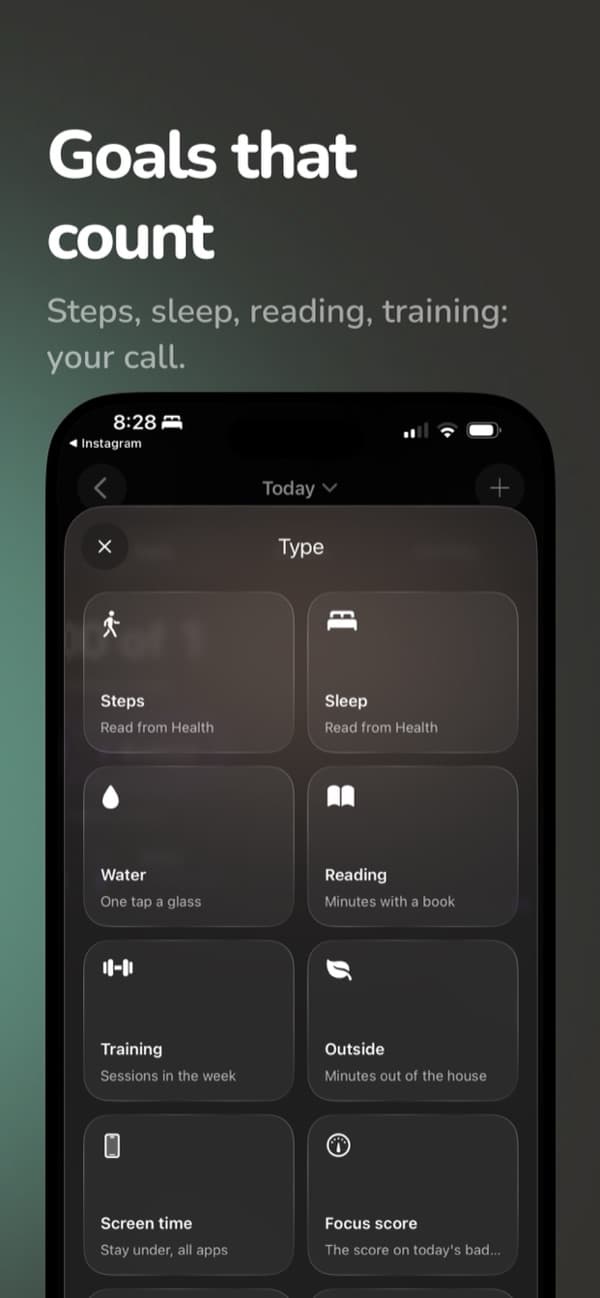
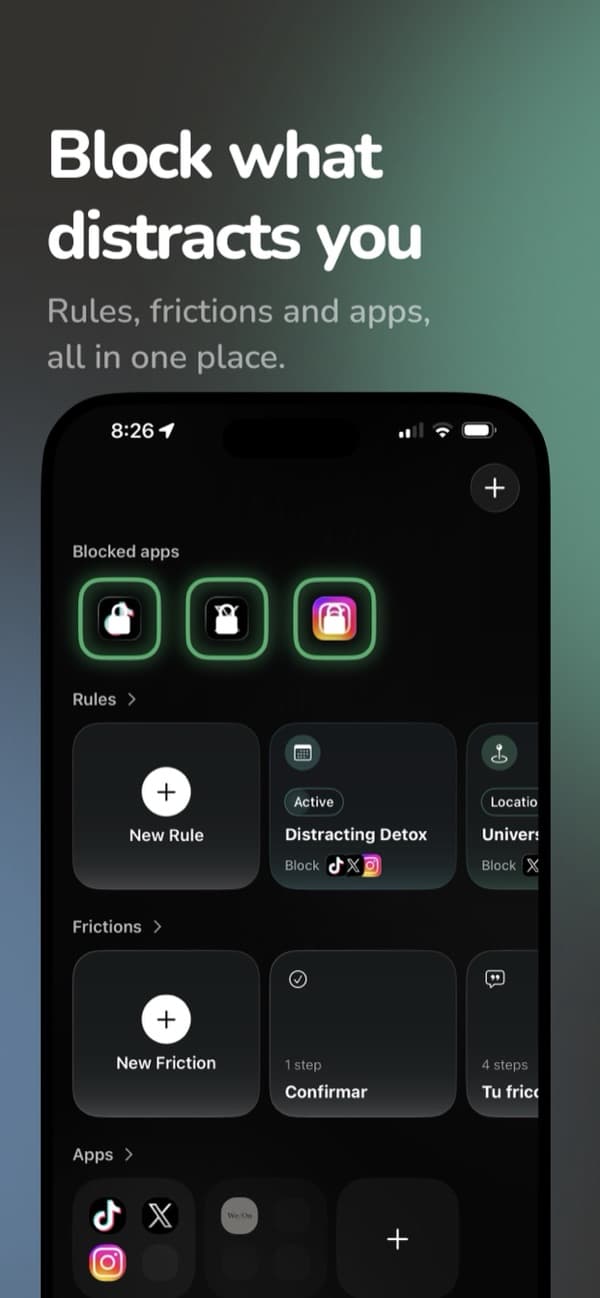
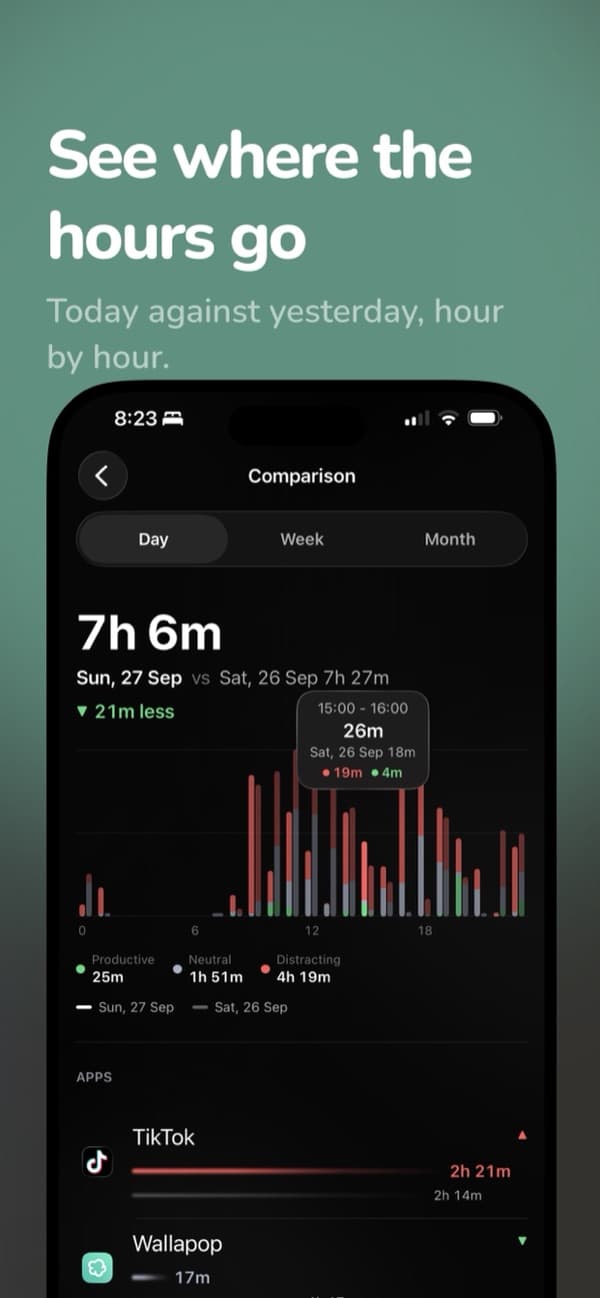

Lock your phone in advance
LockTy locks the apps you choose by schedule or by place, so your monk mode rules apply on their own at the gym, in the library or before noon. If you really need an app, you can ask for a short break.
A simple 30-day plan
Days 1–3: set up. Pick your goal and rules. Decide which apps get locked, when and where. Move distracting apps off the home screen.
Days 4–14: the hard part. Expect the urge to check the phone, especially when bored. Keep the rules even when you don't feel like it, and note what triggers the urge.
Days 15–30: adjust. Keep what works and loosen rules that are pointless. Add one new habit if the basics feel easy.
Day 30: review. Look at your screen time, your sleep and progress on your goal. Decide on the next block.
Common mistakes
- Too many rules. Five rules you keep beat fifteen you break.
- Cutting off people. Monk mode is about distractions, not friends and family. Keep them in.
- Relying on willpower. If unlocking takes one tap, you'll unlock. Add friction ahead of time.
- All or nothing. One bad day doesn't end it. Start again the next morning.
Monk mode works when the rules are few, decided in advance and easy to follow on a bad day.
Frequently asked questions
What does monk mode mean?
Monk mode is a self-imposed period, usually 30 to 90 days, where you remove distractions such as social media, games and nights out and spend that time on one or two goals, for example training, studying or a project. It is an internet idea, not a religious practice.
How long should monk mode last?
Most people pick 30, 60 or 90 days. Research on habit formation found that a new daily behavior took a median of 66 days to feel automatic, with a very wide range, so 30 days is a good first block and 90 days gives habits more time to settle.
What are the rules of monk mode?
There is no official list. Common rules are no social media or only at set times, no phone in the first hour of the day, daily training, a fixed sleep schedule and one main goal. Pick three to five rules you can actually keep.
Do I have to delete social media for monk mode?
No. Many people keep the apps but block them at set times or in set places, such as the gym, the library or the bedroom. A one-month experiment with Facebook found that people who deactivated it spent more time offline and reported a small rise in well-being.
Is monk mode healthy?
Cutting down distractions and sleeping and training regularly are sensible goals. Cutting out all contact with friends is not. Keep the people who matter in your plan and treat monk mode as a focus period, not isolation.
LockTy
Lock the apps that distract you and unlock them by meeting your daily goals: steps, sleep, reading or training.
Sources
- Lally P, van Jaarsveld CHM, Potts HWW, Wardle J (2010). How are habits formed: modelling habit formation in the real world. European Journal of Social Psychology 40(6):998–1009.
- Ward AF, Duke K, Gneezy A, Bos MW (2017). Brain drain: the mere presence of one's own smartphone reduces available cognitive capacity. Journal of the Association for Consumer Research 2(2):140–154.
- Allcott H, Braghieri L, Eichmeyer S, Gentzkow M (2020). The welfare effects of social media. American Economic Review 110(3):629–676.
- Wood W, Neal DT (2007). A new look at habits and the habit-goal interface. Psychological Review 114(4):843–863.

About the author
22, software developer and founder based in Madrid.
I'm Gabriel, I'm 22 and I live in Madrid. I write software, build my own products and I'm into maths, sport and fashion. Among other things I make three iPhone apps, Creatinely, LockTy and RepZet, and here I write about training, creatine and the small daily habits that add up. I also build apps and software for B2B clients as an independent developer. If you want to work together, write to me.
This is general information, not medical advice. Talk to a professional about your own situation.
Keep reading

Do You Take Creatine on Rest Days? What the Research Shows
Creatine works through a store in your muscles that needs a daily top-up, so studies kept it going on rest days. Why, and when to take it with no workout.

What Happens If You Miss a Day of Creatine? (Less Than You Think)
Missing one day of creatine barely changes your muscle stores, which fall slowly over weeks. What the studies show and what to do the day after you forget.

How to Remember to Take Creatine Every Day (7 Tricks That Stick)
Take creatine right after a habit you never skip and keep the tub in sight. Seven tricks, with the research behind them, for people who keep forgetting.