Morning Routine: A Simple Plan That Starts Without Your Phone
 Gabriel SánchezPublished

A good morning routine is short, happens at the same time every day and starts before you pick up your phone: get up at a fixed time, get some daylight, drink water, move for a few minutes and do one thing that matters to you. Then open the phone. Ten to thirty minutes is enough if you do it daily.
Why the phone comes last
The first minutes of the day are when you're most likely to do whatever is in reach. If that's the phone, the morning goes to whoever sent you something overnight.
Two findings explain why it matters:
- Notifications scatter attention. When 221 students kept alerts on and the phone within reach for a week, they reported more inattention and hyperactivity than in a week with alerts off and the phone put away (Kushlev et al., 2016).
- The phone costs attention even when you don't touch it. People did worse on memory and attention tests with their own phone on the desk than with it in another room, even when it was face down and silent (Ward et al., 2017).
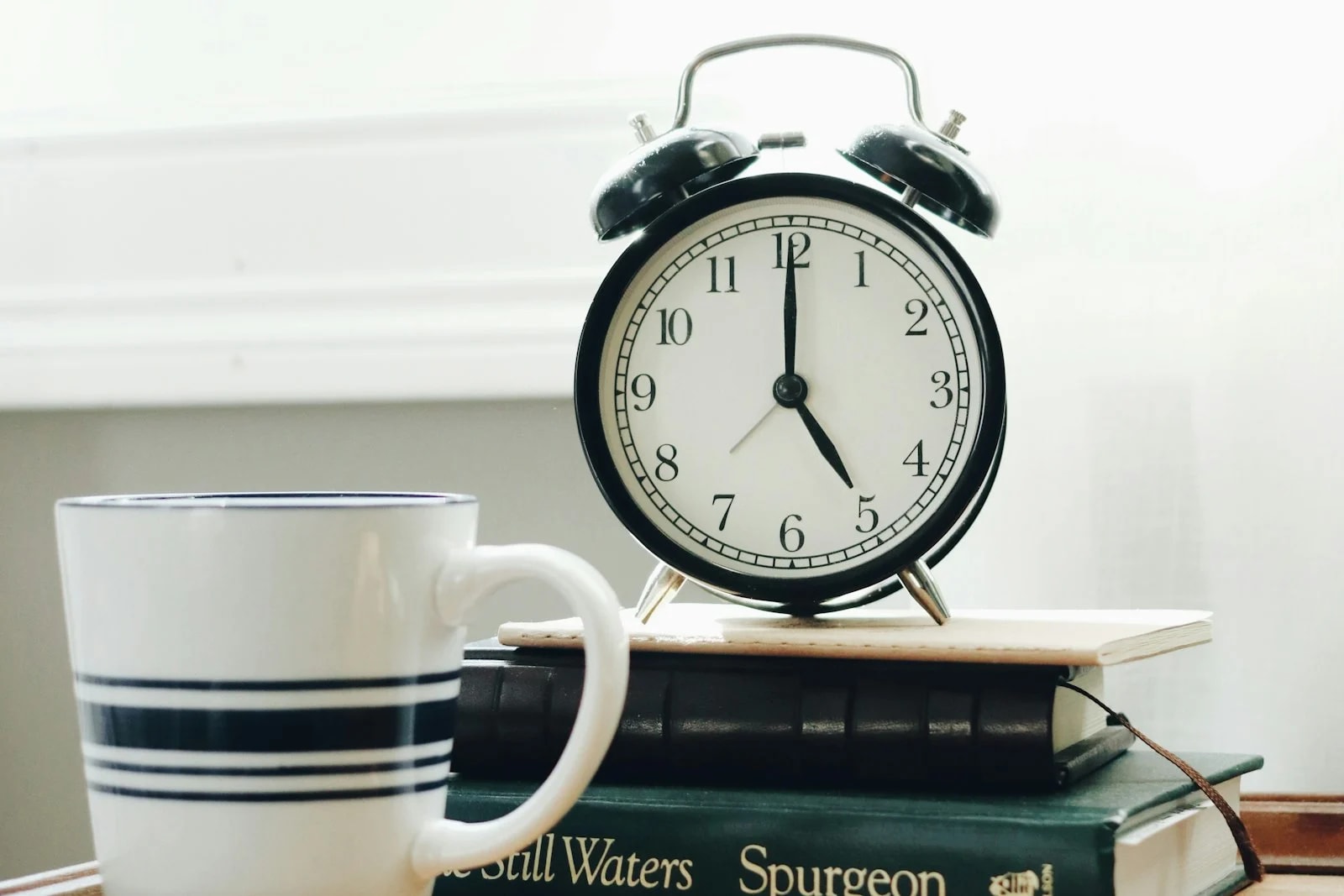
The simplest fix is physical: charge the phone in the kitchen or hallway and use a cheap alarm clock. You can't scroll in bed if the phone isn't there.
A morning routine in 6 steps
- Wake up at the same time. A fixed time is the cue that starts everything else. Keep it within about an hour on weekends so Monday doesn't feel like a new start.
- Get daylight. Open the curtains, step onto a balcony or walk to the corner. Light in the morning tends to shift your body clock earlier, and bright light late at night pushes it later (Blume et al., 2019).
- Drink a glass of water and leave the glass out the night before, so it's the first thing you see.
- Move for 5 to 10 minutes. A walk, some stretching, a short bodyweight set. On training days this can be the full workout.
- Do one thing that matters. Read ten pages, write tomorrow's top task, study a flashcard deck, pray, journal. One, not five.
- Then open the phone. Check messages with a clear head and a plan for the day already written.
If you wake up groggy, that's normal for the first minutes and says nothing about the rest of the day. Snoozing is less harmful than its reputation: in a lab study of regular snoozers, 30 minutes of snoozing cost about 6 minutes of sleep and did not hurt test performance right after getting up (Sundelin et al., 2023). The problem is when the snooze button lives on your phone, because the next tap is usually an app.
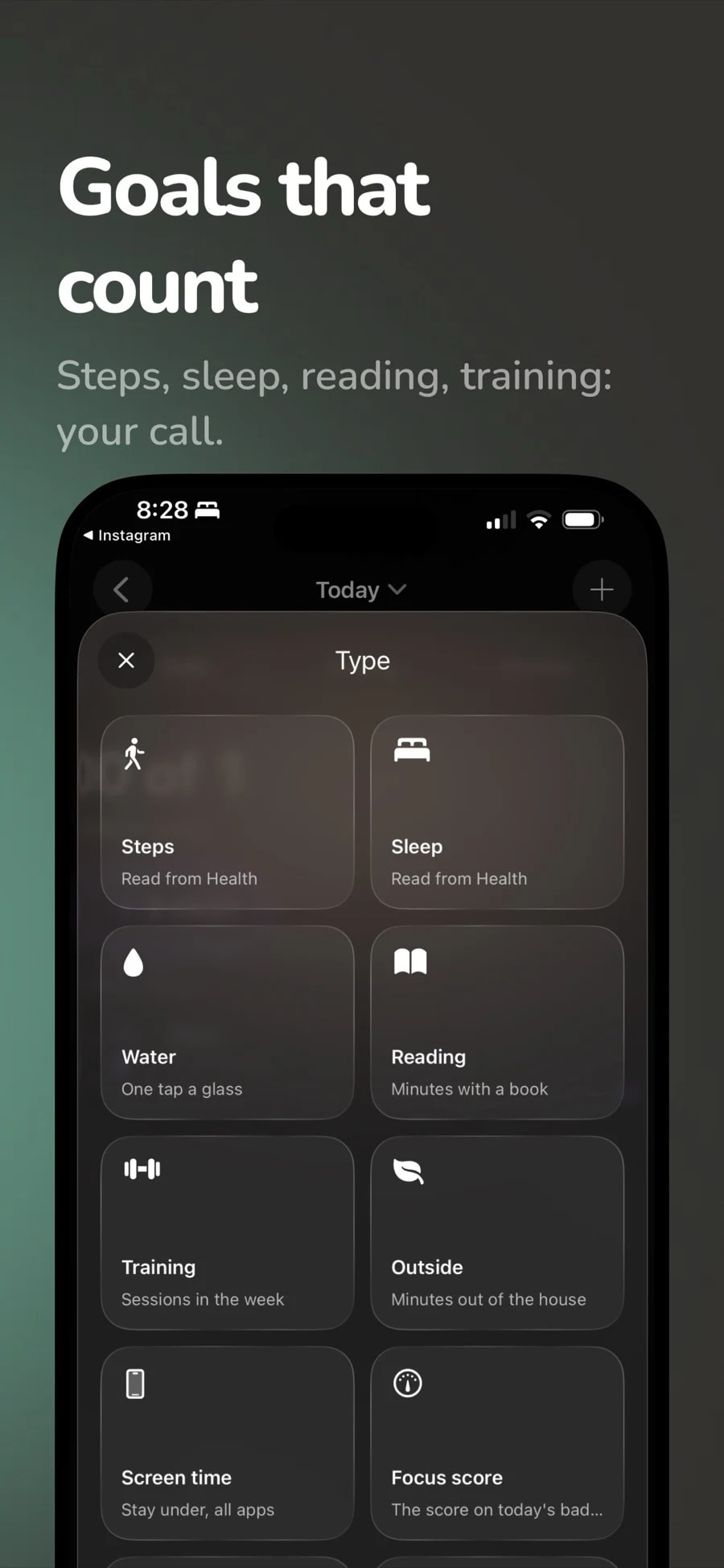
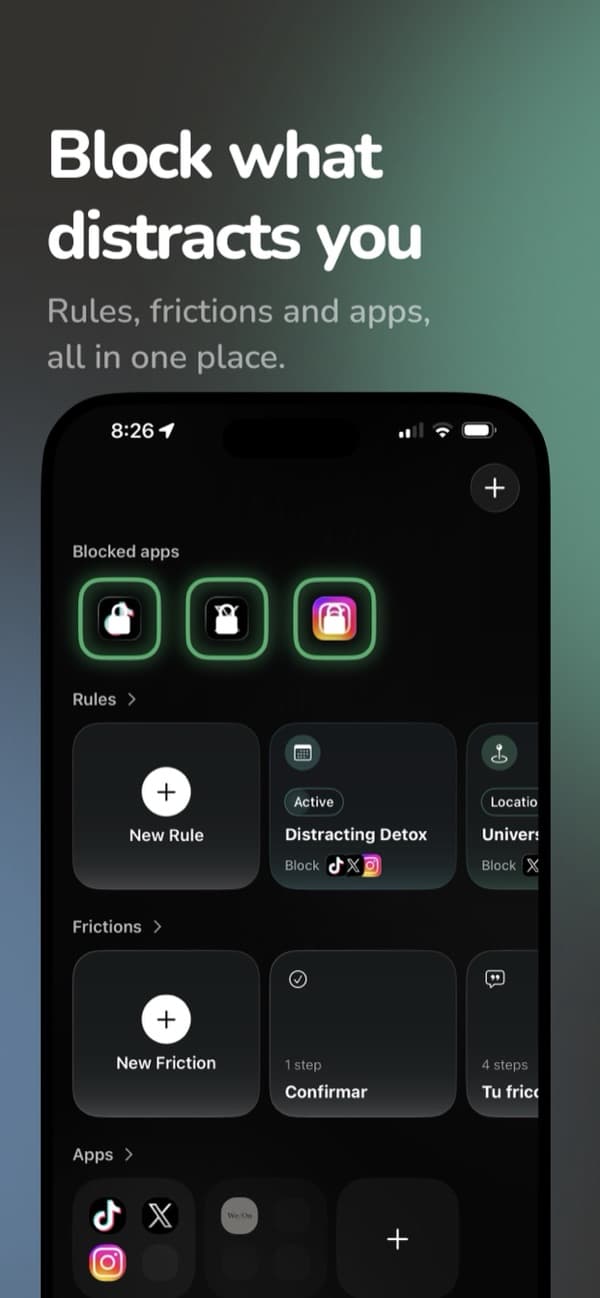

Apps unlock when the morning is done
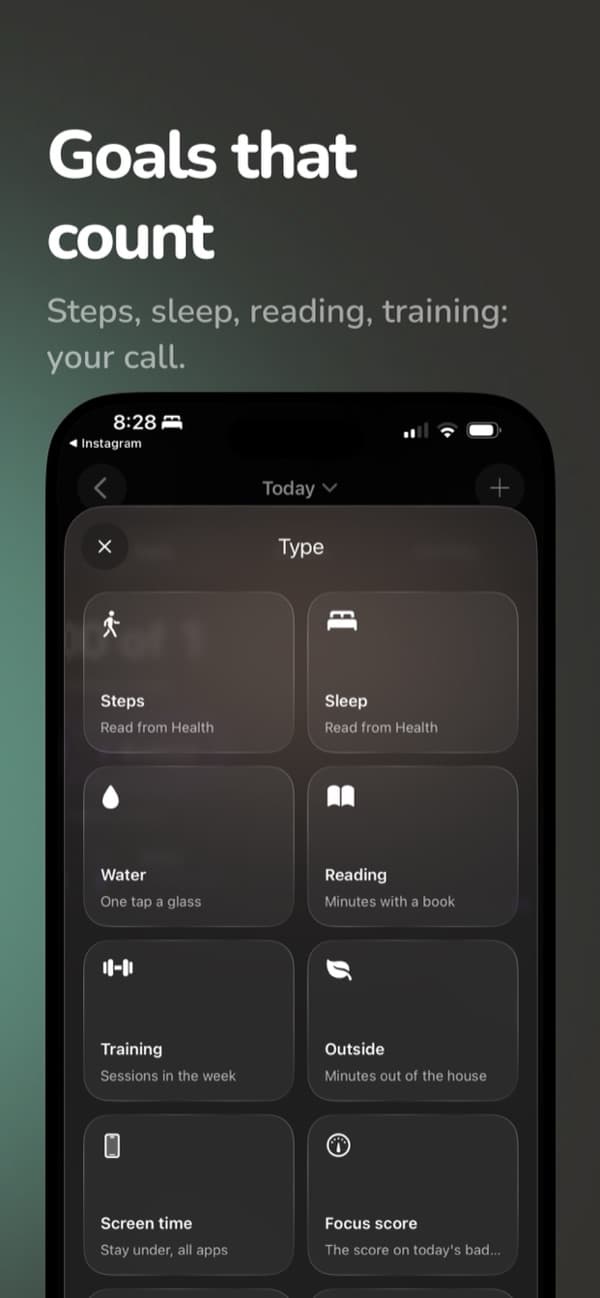
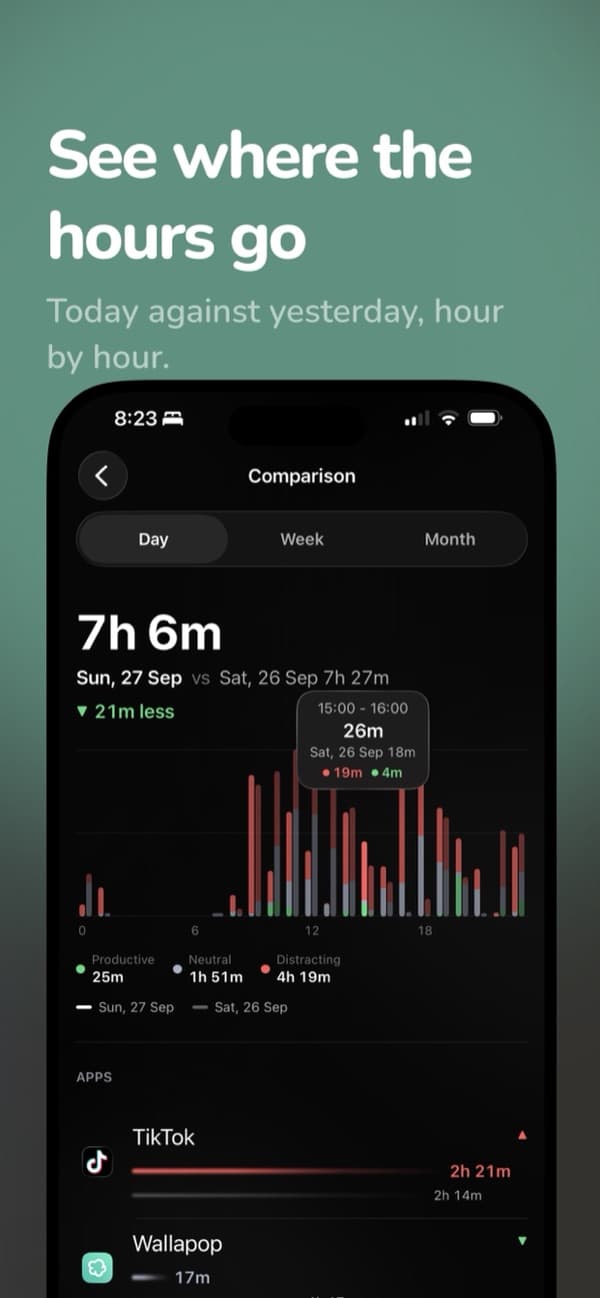
In LockTy you set daily goals like steps, water, reading or a workout, and the apps you choose stay locked until you meet them. Your morning routine stops depending on whether you feel like it.
Three versions: 10, 30 and 60 minutes
These timings are examples. Use the one you could keep on your worst weekday.
Step | 10 minutes | 30 minutes | 60 minutes |
|---|---|---|---|
Daylight + water | 2 min | 5 min | 5 min |
Movement | 3 min of stretching | 10 min walk | 30 min workout |
One thing that matters | 5 min: write the day's top task | 10 min reading | 15 min reading or study |
Plan the day | (included above) | 5 min | 10 min |
Phone | after | after | after |
How to make it stick
- Tie it to something you already do. Write it as an if-then plan: "After I turn off the alarm, I open the curtains." "After I fill the kettle, I drink a glass of water." Plans in this format had a medium-to-large effect on reaching goals in a meta-analysis of 94 tests (Gollwitzer & Sheeran, 200638002-1)).
- Prepare the night before. Clothes out, book on the table, glass by the sink, phone charging outside the bedroom.
- Keep the order fixed. The same sequence every day turns each step into the cue for the next.
- Give it time. In a study of new daily habits, the median time to feel automatic was 66 days, with a range from 18 to 254. Missing one morning didn't undo the progress (Lally et al., 2010). The habit formation calculator shows those dates from your start day.
Common mistakes
- Copying a famous person's 5 a.m. routine. If it costs you sleep, it's a worse routine. The right wake time is one that leaves you enough sleep.
- Too many steps. Cold shower, meditation, journaling, gym, reading and a smoothie is a list you'll break by Wednesday.
- "Just checking one thing" on the phone. It rarely stays one thing. Open it after the routine, not during.
- Starting over every Monday. Do the short version on bad days instead of skipping.
A morning routine is one of the easiest places to practise being more disciplined, because the setup does most of the work. If the phone is the main problem, start with how to stop phone addiction.
Frequently asked questions
What is a good morning routine?
One you can repeat on a bad day. For most people that's a fixed wake-up time, daylight, water, a few minutes of movement and one important task before opening the phone. Ten to thirty minutes is enough.
Should I check my phone first thing in the morning?
It's better to wait until you've done the few things you care about. Notifications pull your attention in other people's directions, and once you start scrolling the routine is easy to skip. Charging the phone outside the bedroom helps the most.
How long should a morning routine be?
As long as you can keep on a normal weekday. Ten minutes done every day is worth more than an hour you manage twice a week. Start short and add steps once the first ones are automatic.
Is it bad to hit snooze?
Not necessarily. In a 2023 lab study of regular snoozers, 30 minutes of snoozing cost about 6 minutes of sleep and did not harm thinking right after waking. If the phone is your alarm, though, snoozing is often how the scrolling starts.
What time should I wake up for a morning routine?
There's no best hour. Pick a time that still lets you sleep enough and that you can keep most days, including weekends. Waking up at 5 a.m. on too little sleep defeats the point.
LockTy
Lock the apps that distract you and unlock them by meeting your daily goals: steps, sleep, reading or training.
Sources
- Ward AF, Duke K, Gneezy A, Bos MW (2017). Brain drain: the mere presence of one's own smartphone reduces available cognitive capacity. Journal of the Association for Consumer Research 2(2):140–154.
- Kushlev K, Proulx J, Dunn EW (2016). "Silence your phones": smartphone notifications increase inattention and hyperactivity symptoms. Proceedings of CHI 2016:1011–1020.
- Blume C, Garbazza C, Spitschan M (2019). Effects of light on human circadian rhythms, sleep and mood. Somnologie 23(3):147–156.
- Sundelin T, Landry S, Axelsson J (2023). Is snoozing losing? Why intermittent morning alarms are used and how they affect sleep, cognition, cortisol, and mood. Journal of Sleep Research e14054.
- Gollwitzer PM, Sheeran P (2006). Implementation intentions and goal achievement: a meta-analysis of effects and processes. Advances in Experimental Social Psychology 38:69–119.
- Lally P, van Jaarsveld CHM, Potts HWW, Wardle J (2010). How are habits formed: modelling habit formation in the real world. European Journal of Social Psychology 40(6):998–1009.

About the author
22, software developer and founder based in Madrid.
I'm Gabriel, I'm 22 and I live in Madrid. I write software, build my own products and I'm into maths, sport and fashion. Among other things I make three iPhone apps, Creatinely, LockTy and RepZet, and here I write about training, creatine and the small daily habits that add up. I also build apps and software for B2B clients as an independent developer. If you want to work together, write to me.
This is general information, not medical advice. Talk to a professional about your own situation.
Keep reading

How to Set Daily Goals You Can Keep: 7 Steps and Examples
Set 3 to 5 daily goals you can measure, tie each to a time and place, and tick them off the same day. Here's how, with examples for steps, sleep and reading.

How to Stop Procrastinating: 10 Steps That Work When Willpower Doesn't
To stop procrastinating, make the first step tiny, decide in advance when and where you'll start, and keep your phone out of reach while you work.
What Is Monk Mode? A 30-Day Plan That Starts With Your Phone
Monk mode is a set period, often 30 to 90 days, to cut distractions and focus on one or two goals. Start with your phone and rules you decide in advance.

Dopamine Detox: What It Gets Right and What It Gets Wrong
A dopamine detox can't lower or reset your dopamine. The useful part of the trend is cutting easy, high-reward habits at set times and getting used to boredom.
Pomodoro Technique: How It Works, Does It Help and How to Make It Stick
The Pomodoro Technique: work on one task for 25 minutes, take a short break and repeat four times before a longer one. Steps, what studies say and mistakes.
How to Stop Phone Addiction: 9 Changes That Beat Willpower
Use your phone less by changing your setup, not your willpower: fewer notifications, distracting apps locked at set times and the phone out of the bedroom.