Dopamine Detox: What It Gets Right and What It Gets Wrong
 Gabriel SánchezPublished


A dopamine detox can't lower, flush or reset your dopamine. Your brain uses it all day, and a day away from your phone doesn't change that. The useful part of the trend is something else: cutting back on easy, high-reward habits like short videos and social feeds at set times, and getting used to boredom again. That part makes sense, and there is some evidence behind it.
Where the dopamine detox came from
The trend started in 2019 with a guide to "dopamine fasting" by Cameron Sepah. As Harvard Health explains, his method was based on cognitive behavioral therapy. You limit the behaviors you find hard to control (he listed emotional eating, too much internet and gaming, gambling and shopping, porn, thrill seeking and recreational drugs) for set periods, so you get better at sitting with boredom and loneliness.
Sepah didn't mean the name literally. Dopamine was the mechanism that explains how those habits get reinforced, not something you could fast from.
Online, the idea changed. It turned into a "tolerance break" for dopamine, as if it were a drug: avoid screens, food, exercise, music and other people for a day, and everything will feel more rewarding afterward. That's the version that doesn't hold up.
What dopamine does, and why you can't detox it
Dopamine isn't a pleasure chemical you overdose on and then flush out. Two lines of research explain what it does:
- It helps you learn what predicts a reward. In classic monkey studies, dopamine neurons fired when a reward was better than expected. Once the animals learned which cue came before the reward, the neurons fired at the cue instead (Schultz et al., 1997).
- Wanting is not liking. Berridge and Robinson argued that dopamine is tied to "wanting", the pull toward a reward, more than to "liking", the pleasure you get from it (Berridge & Robinson, 199800019-8)).
The second point fits phone use well. The pull to open an app can be strong even when the scrolling itself isn't much fun.
There's also no tank to refill. Dopamine rises with rewards, but it doesn't drop when you avoid stimulating activities, so a day of nothing doesn't lower your levels or make everything feel better afterward (Harvard Health, 2020).
What the trend gets right
Remove the brain chemistry and there is a reasonable habit plan underneath.
Cues matter. If the brain learns to respond to whatever predicts a reward, then the notification, the red badge and the icon on your home screen are part of the habit. Taking them away is the core of Sepah's method.
Most people are bad at boredom. Across 11 studies, people generally didn't enjoy spending 6 to 15 minutes alone with nothing to do but think. In one of them, 67% of men and 25% of women gave themselves at least one mild electric shock during 15 minutes of thinking time, after saying they would pay to avoid it (Wilson et al., 2014). If doing nothing feels that bad, it's no surprise the phone comes out at every red light.
Breaks from social media can help a little. In a randomized experiment, people paid to deactivate Facebook for four weeks spent more time offline, reported a small rise in well-being and used Facebook less after the experiment ended (Allcott et al., 2020).
What it gets wrong
What you'll hear | What the evidence says |
|---|---|
"One day off resets your dopamine" | Dopamine doesn't fall when you avoid stimulation, so there is nothing to reset. |
"Dopamine is the pleasure chemical" | It's more about wanting and learning which cues lead to rewards than about pleasure itself. |
"Avoid food, exercise, music and people" | Not part of the original method. Cutting out people is isolation, not treatment. |
"A full detox fixes your focus and mood" | A review of 21 digital detox studies with 3,625 people found mixed results: some positive effects, some none and a few negative (Radtke et al., 2022). |
"Dopamine is bad" | It's how you learn which actions pay off and stay motivated. The problem is a few habits that take more time than you want to give them. |
A dopamine detox that makes sense
If you want to try it, treat it as a habit experiment, not a brain reset.
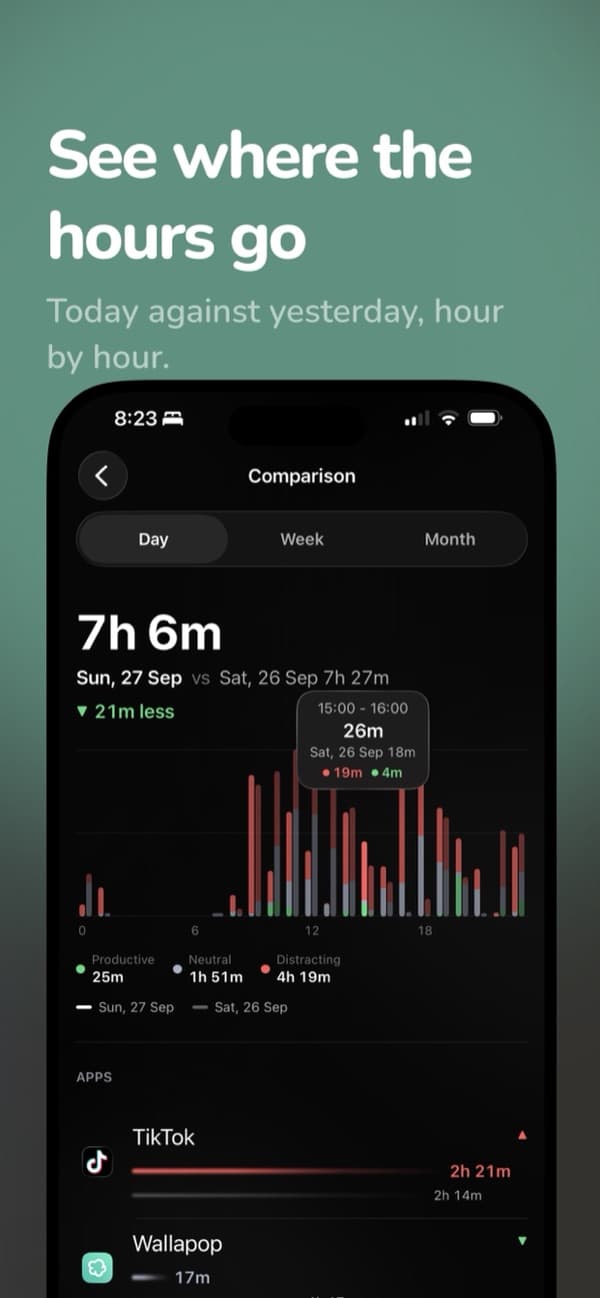
- Pick two or three behaviors. Usually short videos, social feeds, games or late-night browsing. Your phone's Screen Time report shows where the hours go.
- Set the windows in advance. Sepah suggested short, regular blocks rather than one heroic week: a few hours each evening, a day on the weekend, a weekend each quarter and a week a year.
- Remove the cue. Turn off notifications, move the apps off the home screen and leave the phone in another room during the window.
- Practice doing nothing for 10 minutes. Walk without headphones or wait in line without the phone. Expect it to feel uncomfortable at first; the Wilson studies show that's normal.
- Plan what fills the gap. Training, reading, cooking, calling a friend. Without a plan, the old habit takes the free time back.
- Review after two weeks. Keep the rules you managed to follow and drop the ones you didn't.

Make the windows automatic
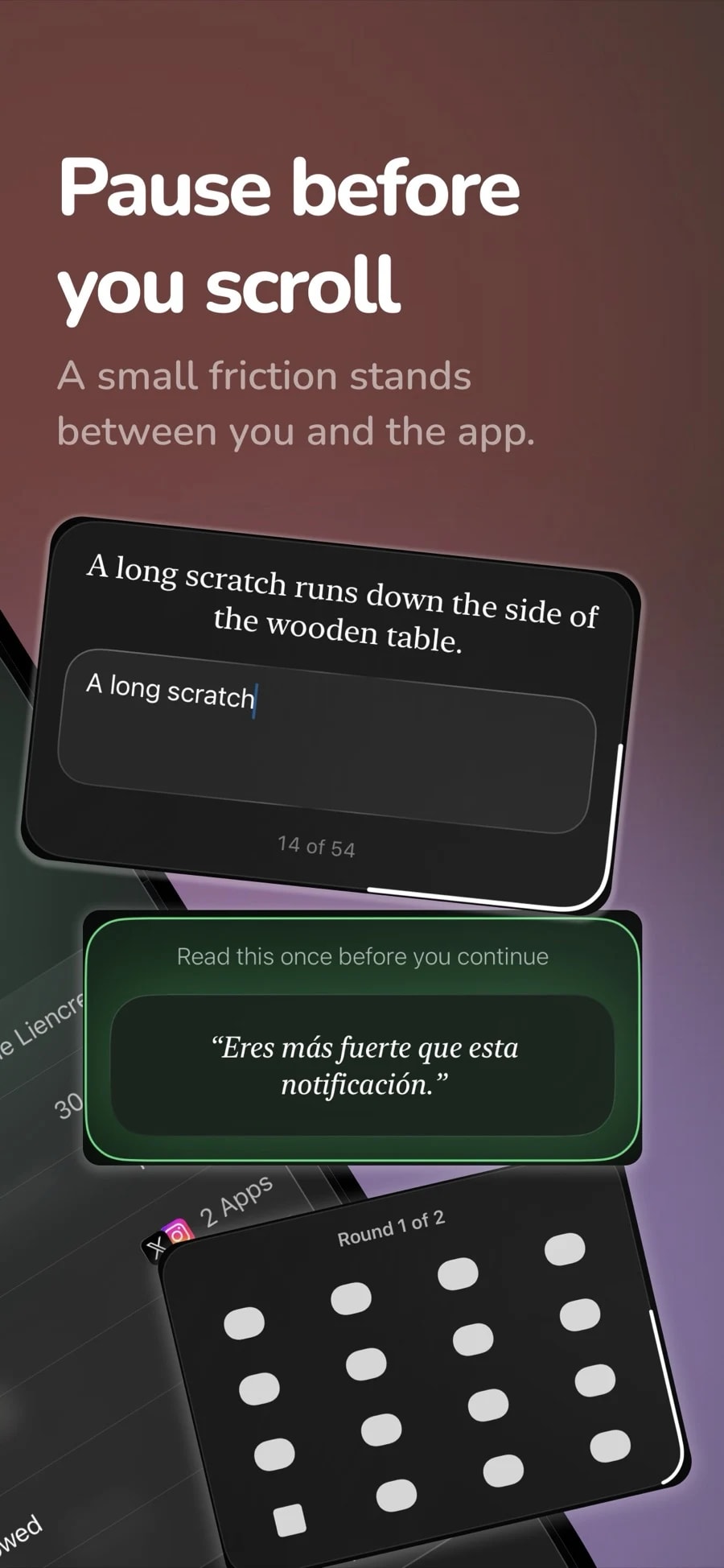
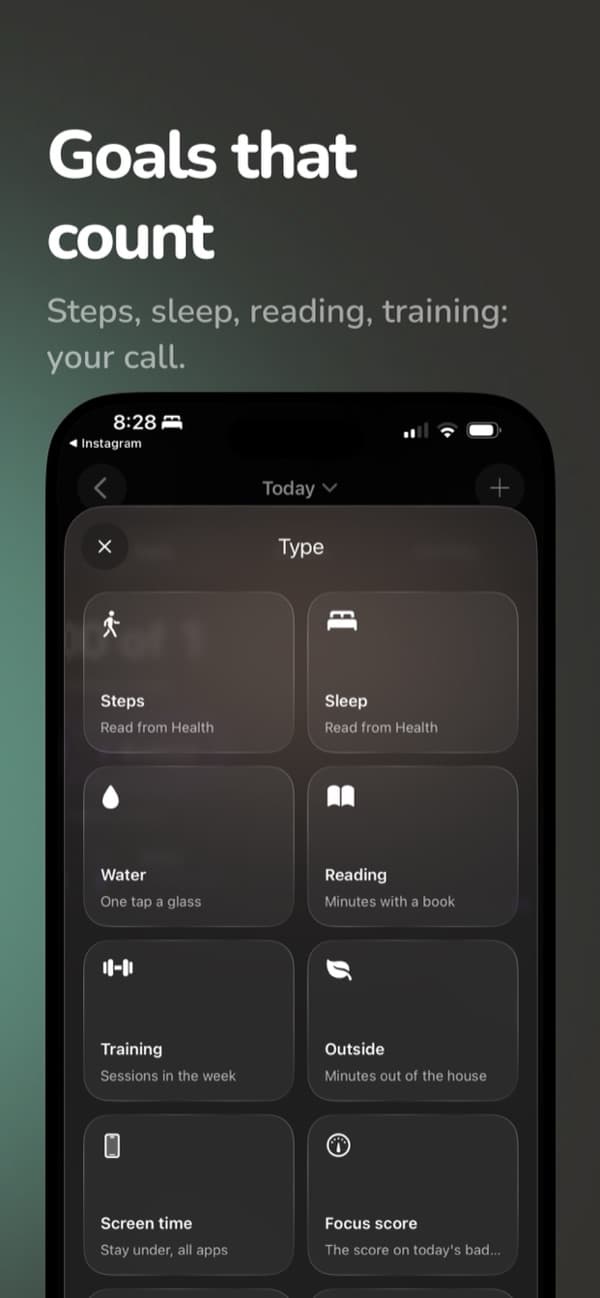
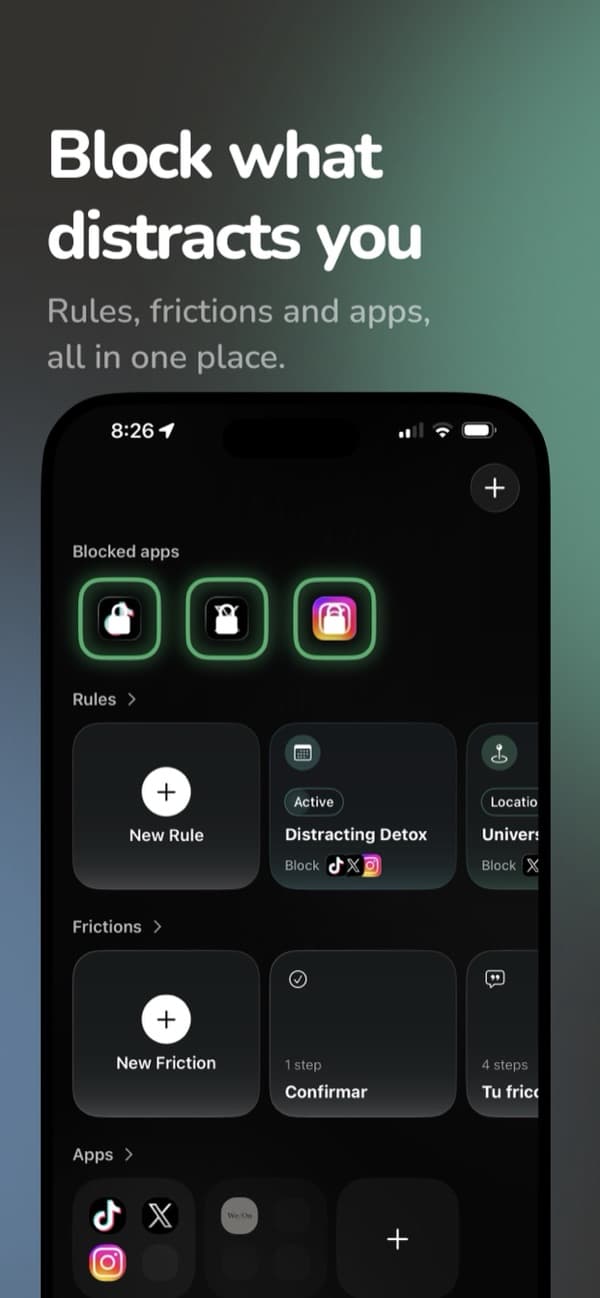
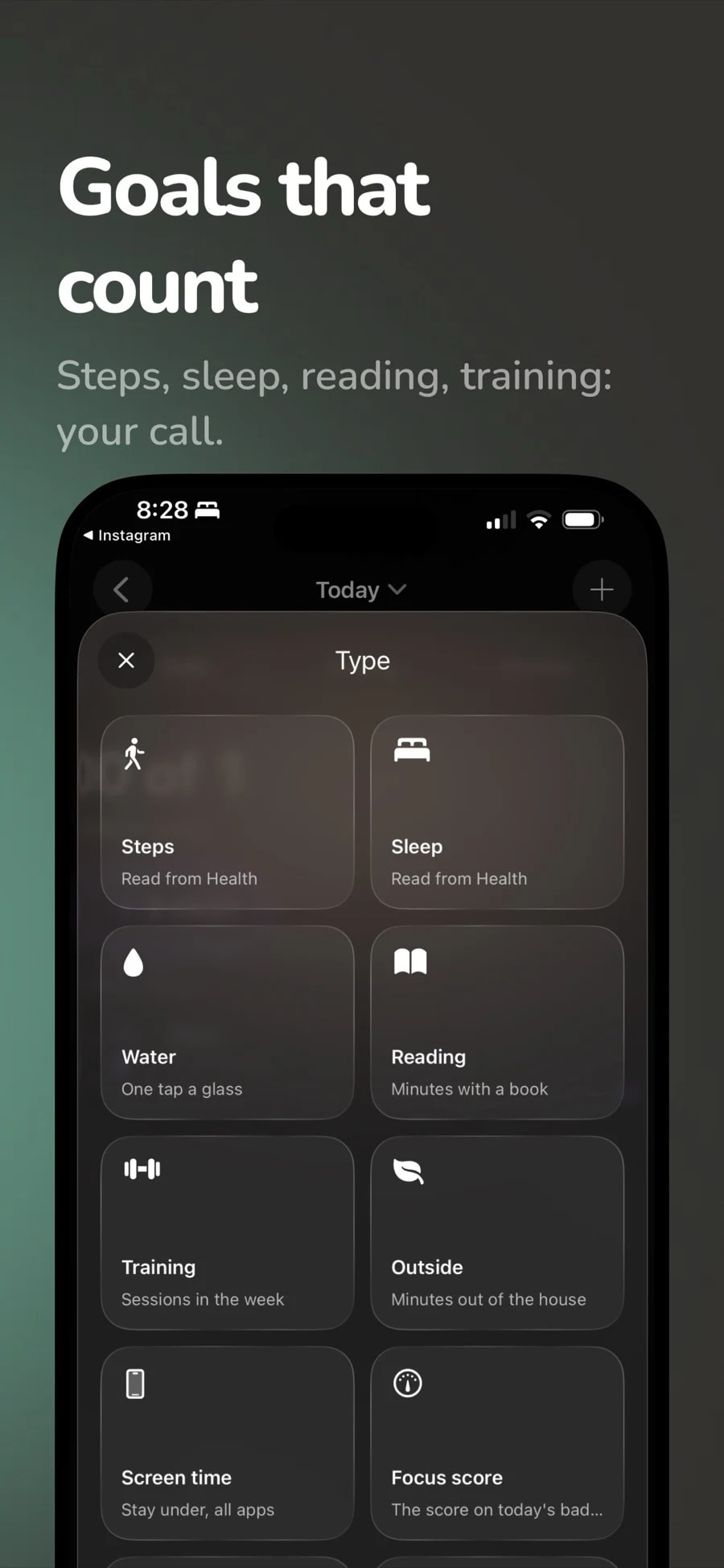
LockTy blocks the apps you choose on a schedule, in places like the gym or the library, or by mode, and puts a short pause between you and the feed. You can also set daily goals such as steps, reading or training that unlock the apps once you meet them.
How long should a dopamine detox last?
No study gives a right length, because "dopamine detox" hasn't been tested under that name. The closest evidence comes from social media breaks, such as the four-week Facebook experiment above. A short daily window you keep for weeks will do more than one strict weekend that ends in a binge.
New routines take time to feel automatic. The habit formation calculator gives a rough timeline for your start date.
When it's more than a habit
If you keep failing to control gambling, porn, gaming, shopping, alcohol or drugs, a self-imposed fast isn't enough. Talk to a doctor or a psychologist. The same applies if the urge to scroll sits on top of anxiety, low mood or poor sleep.
For a longer plan built on the same idea, monk mode sets rules for 30 to 90 days. How to stop phone addiction walks through the phone setup step by step, and if your real goal is getting work done, start with how to focus.
Frequently asked questions
Does a dopamine detox actually work?
Not in the way the name suggests. Avoiding stimulation doesn't lower or reset your dopamine. What can help is the behavioral part: limiting a few habits that are hard to control, such as short videos or social feeds, at set times and removing the cues that trigger them.
Can you reset your dopamine levels?
No. Your brain releases dopamine all day as part of learning and motivation. Dopamine rises with rewards, but it doesn't fall when you avoid stimulating activities, so there is no level to reset by spending a day doing nothing.
How long should a dopamine detox last?
There is no tested length, because dopamine detox hasn't been studied under that name. The method's creator suggested short, regular blocks, such as a few hours each evening or one day on the weekend. A daily window you keep for weeks is more useful than one strict weekend.
What can you do during a dopamine detox?
Anything except the two or three habits you chose to limit. Training, reading, walking, cooking and seeing friends are all fine. Skipping food, exercise, music or people was never part of the original idea.
Is a dopamine detox bad for you?
Limiting social media or games for a few hours is harmless for most people. The extreme versions, with no food, no talking and no contact with others, have no evidence behind them. If you are trying to control gambling, porn, alcohol or drugs, talk to a professional.
LockTy
Lock the apps that distract you and unlock them by meeting your daily goals: steps, sleep, reading or training.
Sources
- Grinspoon P (2020). Dopamine fasting: Misunderstanding science spawns a maladaptive fad. Harvard Health Publishing.
- Schultz W, Dayan P, Montague PR (1997). A neural substrate of prediction and reward. Science 275(5306):1593–1599.
- Berridge KC, Robinson TE (1998). What is the role of dopamine in reward: hedonic impact, reward learning, or incentive salience? Brain Research Reviews 28(3):309–369.
- Wilson TD, Reinhard DA, Westgate EC, et al. (2014). Just think: the challenges of the disengaged mind. Science 345(6192):75–77.
- Allcott H, Braghieri L, Eichmeyer S, Gentzkow M (2020). The welfare effects of social media. American Economic Review 110(3):629–676.
- Radtke T, Apel T, Schenkel K, Keller J, von Lindern E (2022). Digital detox: an effective solution in the smartphone era? A systematic literature review. Mobile Media & Communication 10(2):190–215.

About the author
22, software developer and founder based in Madrid.
I'm Gabriel, I'm 22 and I live in Madrid. I write software, build my own products and I'm into maths, sport and fashion. Among other things I make three iPhone apps, Creatinely, LockTy and RepZet, and here I write about training, creatine and the small daily habits that add up. I also build apps and software for B2B clients as an independent developer. If you want to work together, write to me.
This is general information, not medical advice. Talk to a professional about your own situation.
Keep reading
How to Stop Phone Addiction: 9 Changes That Beat Willpower
Use your phone less by changing your setup, not your willpower: fewer notifications, distracting apps locked at set times and the phone out of the bedroom.

How to Set Daily Goals You Can Keep: 7 Steps and Examples
Set 3 to 5 daily goals you can measure, tie each to a time and place, and tick them off the same day. Here's how, with examples for steps, sleep and reading.
Best App Blocker for iPhone in 2026: Screen Time, Opal, one sec, Jomo and LockTy Compared
Screen Time is free and enough if you rarely tap Ignore Limit. If you do, a blocker adds friction. What Opal, one sec, Jomo, AppBlock and LockTy do and cost.

How to Stop Procrastinating: 10 Steps That Work When Willpower Doesn't
To stop procrastinating, make the first step tiny, decide in advance when and where you'll start, and keep your phone out of reach while you work.
What Is Monk Mode? A 30-Day Plan That Starts With Your Phone
Monk mode is a set period, often 30 to 90 days, to cut distractions and focus on one or two goals. Start with your phone and rules you decide in advance.

75 Hard Challenge: The Official Rules, 75 Soft and the Risks
75 Hard means two 45-minute workouts, a diet with no alcohol or cheat meals, a gallon of water, 10 pages and a photo daily for 75 days. Rules, 75 Soft, risks.