75 Hard Challenge: The Official Rules, 75 Soft and the Risks
 Gabriel SánchezPublished


75 Hard is a 75-day challenge created by Andy Frisella in which you do five things every day: follow a diet with no alcohol and no cheat meals, complete two 45-minute workouts (one outdoors), drink a gallon of water, read 10 pages of nonfiction and take a progress picture. If you miss any of them, you start again at day 1. Frisella sells it as a mental toughness program, not a fitness plan.
The official 75 Hard rules
These come from Frisella's own page, not from the TikTok versions, which often change details (Frisella, 2021). Every day for 75 days:
- Follow a diet. You pick it (keto, paleo, vegetarian, whatever fits your goal), but there is zero alcohol and no cheat meals.
- Do two workouts of at least 45 minutes. They have to be three hours apart and one has to be outdoors, whatever the weather. Any type counts: running, lifting, walking, yoga.
- Drink a gallon of water. That's about 3.8 liters.
- Read 10 pages. Nonfiction meant to improve some area of your life. Audiobooks don't count.
- Take a progress picture.
The rule that holds it together: if you fail any task, at any point, you start over at day 1. No substitutions, no modifications. Frisella's info page also tells you to check with your doctor before starting and says plainly that it is "not a physical challenge" (75 HARD info).
75 Hard vs 75 Soft
75 Soft isn't Frisella's. It's a community version that spread on social media, and its rules vary from source to source. The most common version is the one Cleveland Clinic describes (Cleveland Clinic, 2023).
75 Hard (official) | 75 Soft (common version) | |
|---|---|---|
Workouts | Two a day, 45 min each, one outdoors | One a day, 45 min, one active recovery day per week |
Diet | Your plan, zero alcohol, no cheat meals | Eat well, alcohol only on social occasions |
Water | 1 gallon (about 3.8 L) | 3 liters |
Reading | 10 pages of nonfiction, no audiobooks | 10 pages of any book |
Photo | Every day | Not in every version |
Miss a day | Back to day 1 | Keep going |
If 75 Hard sounds like too much, 75 Soft is closer to what most training plans look like. Other versions add meditation or only ask for four workouts a week, so decide your rules before day 1 and write them down.
What 75 Hard gets right
I couldn't find any published study that tested 75 Hard as a program, so claims about results are anecdotes. Still, a few parts of the design make sense:
- The rules are decided in advance, so you don't negotiate with yourself every morning about whether to train.
- It's daily and short-term: 75 days is long enough to feel like a project and short enough to picture the finish.
- It covers more than the gym. Reading, water and a break from alcohol come along with the workouts.
- The outdoor session gets you walking or running in daylight, which many gym-only routines skip.
The problems come from how strict each rule is.
The risks
Two workouts a day, every day, with no rest
Two 45-minute sessions are 90 minutes a day, or 630 minutes a week. The US Physical Activity Guidelines recommend 150 to 300 minutes of moderate activity a week plus muscle strengthening on two or more days (Piercy et al., 2018). 75 Hard asks for more than double the upper end, with no rest day for 75 days.
For someone who already trains, that can be fine if one session is easy. For a beginner who turns both sessions into hard workouts, it's a quick route to sore joints, poor sleep and a stalled lift. The practical fix: make the outdoor session a walk most days and keep hard lifting to three or four days a week.
The gallon of water
A gallon is a lot more than most people drink, and the rule makes you finish it even when you aren't thirsty. The international consensus on exercise-associated hyponatremia (low blood sodium) names drinking beyond thirst as the main cause and recommends drinking to thirst instead (Hew-Butler et al., 2015). Most healthy people who spread 3.8 liters across the day won't have a problem, but don't chug it at night to hit the number, and get medical help for a headache, nausea or confusion after drinking a lot. If you have kidney or heart problems, ask your doctor before adopting any water target. The water intake calculator gives a more personal starting point.
A strict diet with no cheat meals
75 Hard doesn't set calories, so the risk depends on the diet you choose. A very low-calorie plan plus two workouts a day is a hard combination to sustain. The all-or-nothing approach matters too: in a study of non-obese women, rigid dieting was linked to more eating disorder symptoms and flexible dieting was not (Stewart et al., 2002). That study shows an association, not cause and effect, but if you have a history of disordered eating, skip the no-exceptions rule. For anything extreme (long fasts, very low calories, cutting out whole food groups), talk to a doctor or a registered dietitian first.
Restarting from day 1
This is the rule most people quit over. In the main study on how habits form, missing one opportunity to do the behavior did not materially affect how the habit developed (Lally et al., 2010). One missed day doesn't erase the progress of the previous 40. A Cleveland Clinic psychologist puts it this way: for beginners, starting over makes it "very difficult to find the motivation to keep going" (Cleveland Clinic, 2023).
Who should adapt it
- Beginners. Start with 75 Soft or with one workout a day and build up.
- Anyone with an injury, a heart or kidney condition, or who is pregnant. Get a doctor's OK first, as Frisella's own page advises.
- Anyone with a history of eating disorders. Leave out the strict diet rule entirely.
- People who want to build strength or muscle. Two hard sessions a day eats into recovery. Lift once and keep the second session easy.
- Shift workers and parents. Three hours between workouts plus a gallon of water may not fit your day. A plan you can keep for 75 days beats one you drop on day 12.
A saner version you can keep for 75 days
Example only, adjust it to your schedule:
Daily task | Example version |
|---|---|
Training | One planned session: lifting 3 or 4 days a week, cardio or mobility on the others |
Outdoors | A 20 to 45 minute walk |
Food | A plan you can keep, enough protein, alcohol on your own rules |
Water | Drink to thirst, with a bottle you refill a set number of times |
Reading | 10 pages of any book |
Photo | Once a week, same light and same spot |
Missed day | Never miss twice in a row |
The lifting is where the progress happens, so treat it as a plan rather than 45 minutes of whatever. Add reps or weight a little at a time (what progressive overload is), and keep weekly volume reasonable with the weekly sets calculator.
How to track it
You need two things: a log for the workouts and a checklist for the rest.
For the workouts, write down every set: weight, reps and how hard it felt. After 75 days that log shows whether you got stronger, which the progress photos alone won't. A notebook works, or any app from our workout tracker comparison.
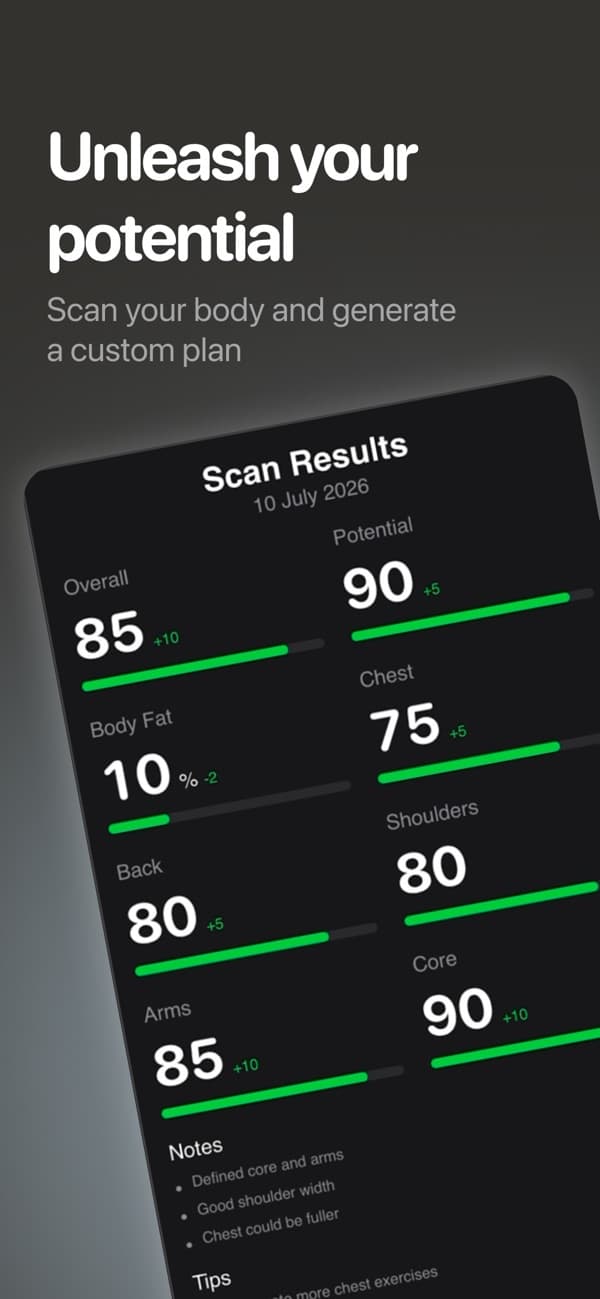
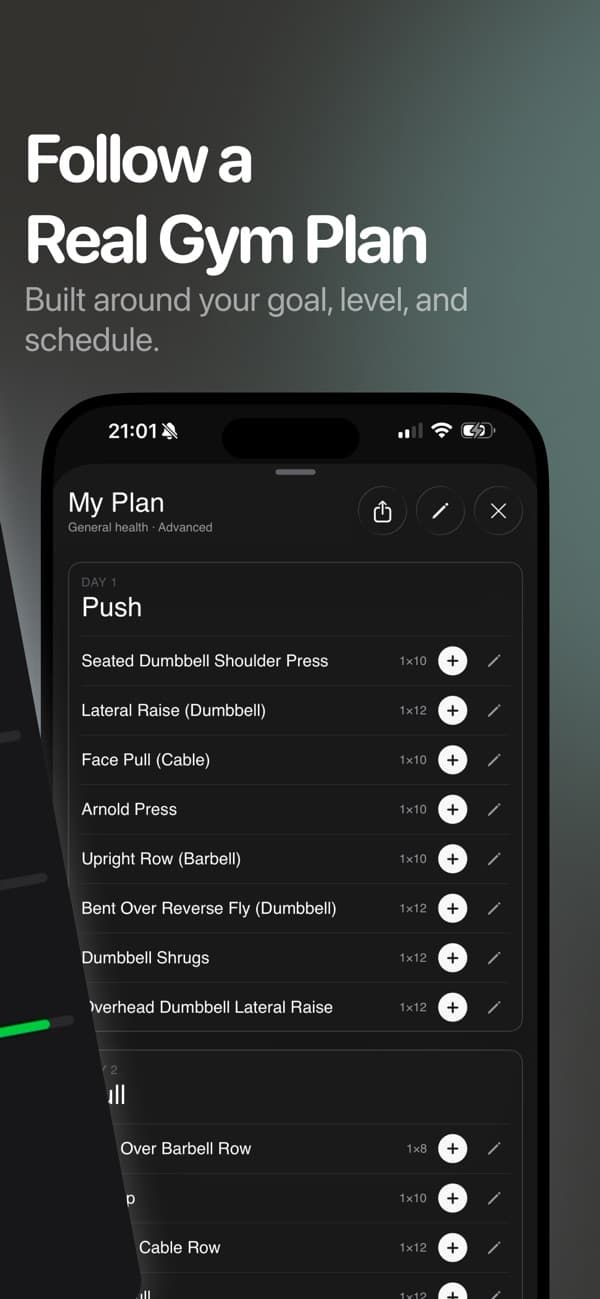
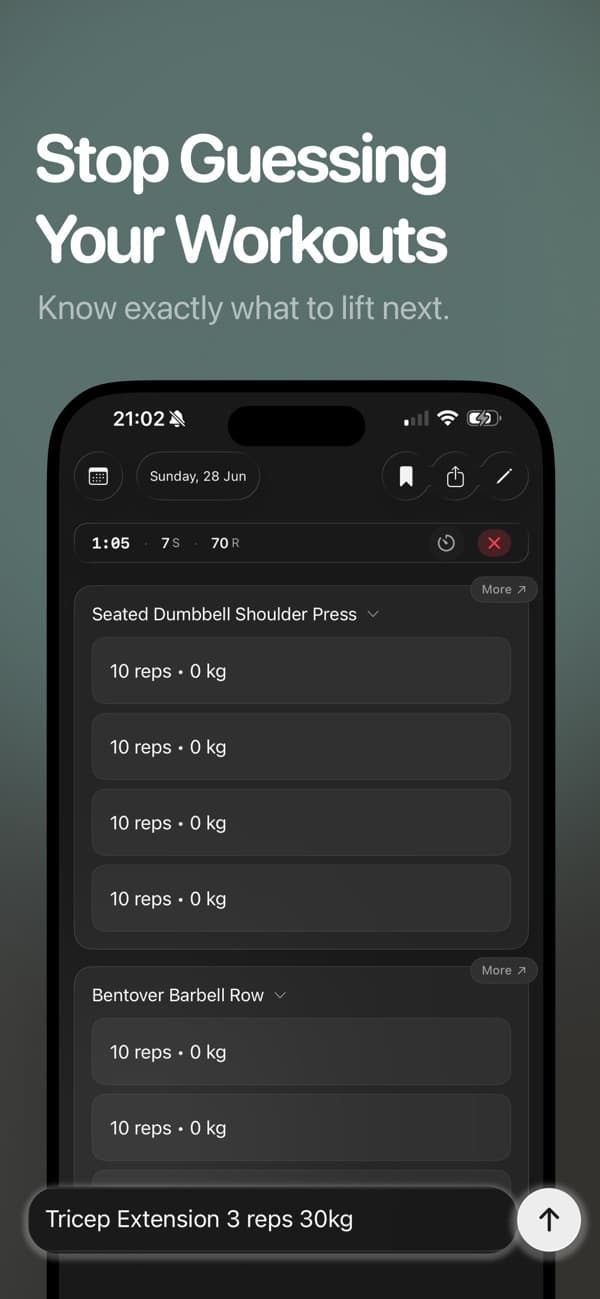

Train with a plan for all 75 days
Take a short test and scan your body, and RepZet builds a routine that's 100% personalized to you. Log each set like you're texting a friend, and it tells you what to lift next time.
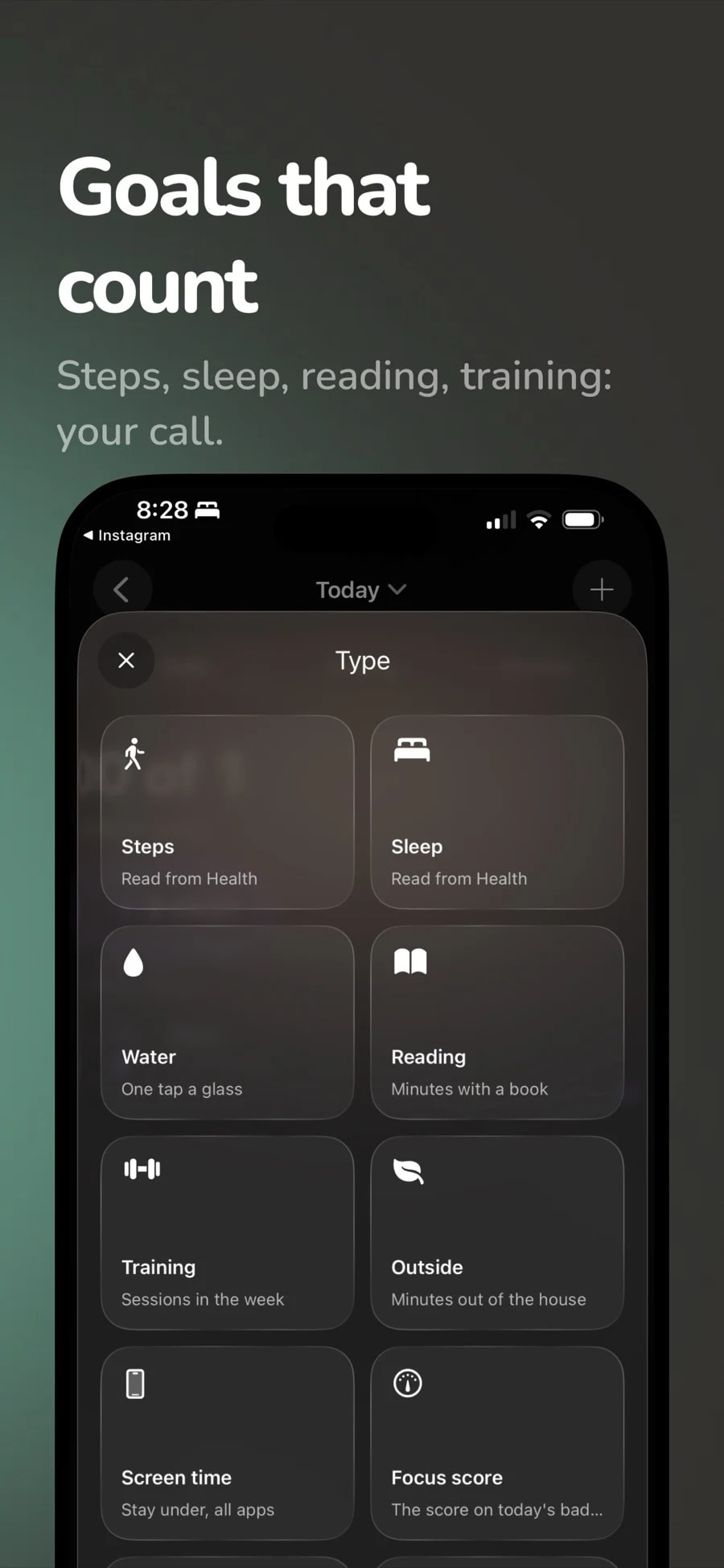
For the daily checklist (pages read, water, the walk), a paper grid on the fridge is enough. If you'd rather have it on your phone, LockTy has daily goals for reading, water, workouts and steps from Apple Health, and keeps the apps you pick locked until you've done them.
If what you really want from 75 Hard is fewer distractions and a few daily non-negotiables, read our guide to monk mode. And if you're curious how long a new routine takes to stick, try the habit formation calculator.
Frequently asked questions
What are the rules of 75 Hard?
Every day for 75 days: follow a diet of your choice with no alcohol and no cheat meals, do two workouts of at least 45 minutes (one outdoors, three hours apart), drink a gallon of water, read 10 pages of a nonfiction book (audiobooks don't count) and take a progress picture. Miss anything and you start again at day 1.
What is the difference between 75 Hard and 75 Soft?
75 Soft is an unofficial, softer version. The most common one asks for one 45-minute workout a day with one active recovery day a week, eating well with alcohol only on social occasions, 3 liters of water and 10 pages of any book. Missing a day doesn't send you back to day 1.
Is a gallon of water a day too much?
A gallon is about 3.8 liters. Spread over a day, healthy people usually handle it, but forcing water you don't want, especially during long exercise, is the main cause of exercise-associated hyponatremia (low blood sodium). Drink to thirst, spread it out and talk to a doctor if you have kidney or heart problems.
What happens if you miss a day of 75 Hard?
Under the official rules you start over at day 1, whether you were on day 2 or day 74. That applies to any task, including the reading and the photo.
Can you take a rest day on 75 Hard?
No. The official rules require two workouts every day for 75 days. You can make one of them light, like a walk or yoga, which most people do to recover.
Does 75 Hard work for weight loss?
It can, if the diet you choose puts you in a calorie deficit. The challenge itself doesn't set calories. I couldn't find any published study that tested 75 Hard as a program, so results depend on what you eat and how you train.
RepZet
Take a quick test and scan your body to get a 100% personalized routine built around your weak points.
Sources
- Frisella A (2021). 75 HARD rules. andyfrisella.com.
- Cleveland Clinic (2023). What is the 75 Soft challenge? Health Essentials.
- Hew-Butler T, Rosner MH, Fowkes-Godek S, et al. (2015). Statement of the Third International Exercise-Associated Hyponatremia Consensus Development Conference, Carlsbad, California, 2015. Clinical Journal of Sport Medicine 25(4):303–320.
- Piercy KL, Troiano RP, Ballard RM, et al. (2018). The Physical Activity Guidelines for Americans. JAMA 320(19):2020–2028.
- Lally P, van Jaarsveld CHM, Potts HWW, Wardle J (2010). How are habits formed: modelling habit formation in the real world. European Journal of Social Psychology 40(6):998–1009.
- Stewart TM, Williamson DA, White MA (2002). Rigid vs. flexible dieting: association with eating disorder symptoms in nonobese women. Appetite 38(1):39–44.

About the author
22, software developer and founder based in Madrid.
I'm Gabriel, I'm 22 and I live in Madrid. I write software, build my own products and I'm into maths, sport and fashion. Among other things I make three iPhone apps, Creatinely, LockTy and RepZet, and here I write about training, creatine and the small daily habits that add up. I also build apps and software for B2B clients as an independent developer. If you want to work together, write to me.
This is general information, not medical advice. Talk to a professional about your own situation.
Keep reading
How to Set Daily Goals You Can Keep: 7 Steps and Examples
Set 3 to 5 daily goals you can measure, tie each to a time and place, and tick them off the same day. Here's how, with examples for steps, sleep and reading.

How to Stop Procrastinating: 10 Steps That Work When Willpower Doesn't
To stop procrastinating, make the first step tiny, decide in advance when and where you'll start, and keep your phone out of reach while you work.
How to Stop Phone Addiction: 9 Changes That Beat Willpower
Use your phone less by changing your setup, not your willpower: fewer notifications, distracting apps locked at set times and the phone out of the bedroom.

Arnold Split: The Full 6-Day Program, Who It Suits and a 4-Day Version
The Arnold split trains chest and back, shoulders and arms, then legs, twice a week. The full 6-day program, who it suits, a 4- and 5-day version and PPL.
What Is Monk Mode? A 30-Day Plan That Starts With Your Phone
Monk mode is a set period, often 30 to 90 days, to cut distractions and focus on one or two goals. Start with your phone and rules you decide in advance.
Double Progression Explained: When to Add Weight and How Much
Double progression: keep the weight, add reps until every set hits the top of your range, then add a little weight and start again. Rep ranges, jumps, examples.