What Is Progressive Overload? Definition, Methods and Real Examples
 Gabriel SánchezPublished
Progressive overload means gradually increasing the demand you put on your muscles over weeks and months, so they keep a reason to adapt. In the gym that usually looks like doing a little more than last time with the same exercise: one more rep, a bit more weight or an extra set.
What progressive overload means
The American College of Sports Medicine describes progressive overload as the gradual increase of stress placed on the body during exercise training, and lists the main ways to apply it: lift a heavier load, do more reps with the current load, change the tempo, adjust rest periods and gradually increase total volume (ACSM, 2009).
Its 2026 update keeps the same idea. It describes progressive overload as increasing the stimulus on the muscle, through load, volume, training frequency, exercise selection or session duration, even if only slightly, because the body adapts to the work it is given (Currier et al., 2026). The same paper adds a useful nuance: training still brings benefits without progression, and progression matters most for people who want to keep improving over the long term.
So if your goal is to get stronger or build muscle year after year, the workout that felt hard three months ago has to become your warm-up at some point.
The main ways to apply it
Weight on the bar gets most of the attention, but it is only one of several levers. The table shows the common ones with an example of each.
Method | What changes | Example |
|---|---|---|
Load | More weight for the same reps | Squat 60 kg × 8 becomes 62.5 kg × 8 |
Reps | More reps with the same weight | Dumbbell row 24 kg × 8 becomes 24 kg × 10 |
Sets | More hard sets per week | 3 sets of bench press become 4 |
Range of motion | Deeper or longer reps with the same weight | Squat to a lower box, Romanian deadlift to mid-shin |
Tempo and control | Slower lowering, no bouncing | 2-second lowering on every rep of the bench press |
Frequency | The muscle is trained on more days | Legs once a week become legs twice a week |
Reps are the option people overlook most. In a study of 43 people with at least a year of lower-body training, one group added weight while keeping reps in the same range and the other kept the weight fixed and added reps. After 8 weeks of training twice a week, muscle growth was similar between groups, and the squat 1RM slightly favored the load group by about 2 kg, a gap the authors described as of questionable practical importance (Plotkin et al., 2022).
That is good news if your gym has big jumps between dumbbells or you train at home. There is a full guide on progressive overload without adding weight.
Examples you can copy
Here is what four weeks of progressive overload can look like on the bench press for someone working in the 8 to 10 rep range:
Week | Weight | Sets × reps |
|---|---|---|
1 | 60 kg | 8, 8, 7 |
2 | 60 kg | 9, 8, 8 |
3 | 60 kg | 10, 10, 9 |
4 | 62.5 kg | 8, 8, 8 |
Reps go up first, then the weight goes up and the reps drop back to the bottom of the range. This method is called double progression, and it is the simplest way to keep moving forward once you can no longer add weight every session.
For the weight jumps, the ACSM's 2009 stand suggests a 2–10% increase when you can do one or two reps more than your target on two sessions in a row, using the lower end for small muscle groups and the higher end for large ones (ACSM, 2009). For a 60 kg bench that is 1.2 to 6 kg, and in most gyms that means a 1.25 or 2.5 kg jump. The progressive overload calculator works out the next target for you, and the plate calculator tells you which plates to load.
How hard each set needs to be
Progressive overload only works if the sets are hard enough for the extra rep or kilo to mean something. That does not mean going to failure every time. A 2023 meta-analysis of 15 studies found no clear advantage for training to momentary muscle failure over stopping short of it for muscle growth (Refalo et al., 2023).
A practical target is to end most working sets with one or two reps left in the tank. This is the reps-in-reserve approach: you pick a weight you think you could lift for, say, 10 reps while stopping one or two reps short of failure (Helms et al., 2016). If you finished last week's sets with four or five reps to spare, you have room to add reps or weight right away.
How fast you should progress
New lifters can often add weight or reps every session, because the ACSM notes that untrained people adapt in a short period (ACSM, 2009). After the first months the pace slows. Adding one rep per week, or 2.5 kg per month on a lift, still counts as progress.
A few rules keep it working:
- Change one thing at a time. If you add weight and an extra set in the same week and the session falls apart, you will not know why.
- Keep the same exercises long enough to compare. Swapping your main lifts every week makes it impossible to tell whether you are improving.
- Only count reps with the same technique. If this week's heavier squat stops 10 cm higher than last week's, it doesn't show that you got stronger.
- If you stall for two or three sessions in a row, go back to adding reps before adding more weight, or look at how many sets you are doing. The guide on sets per week to build muscle covers that side.
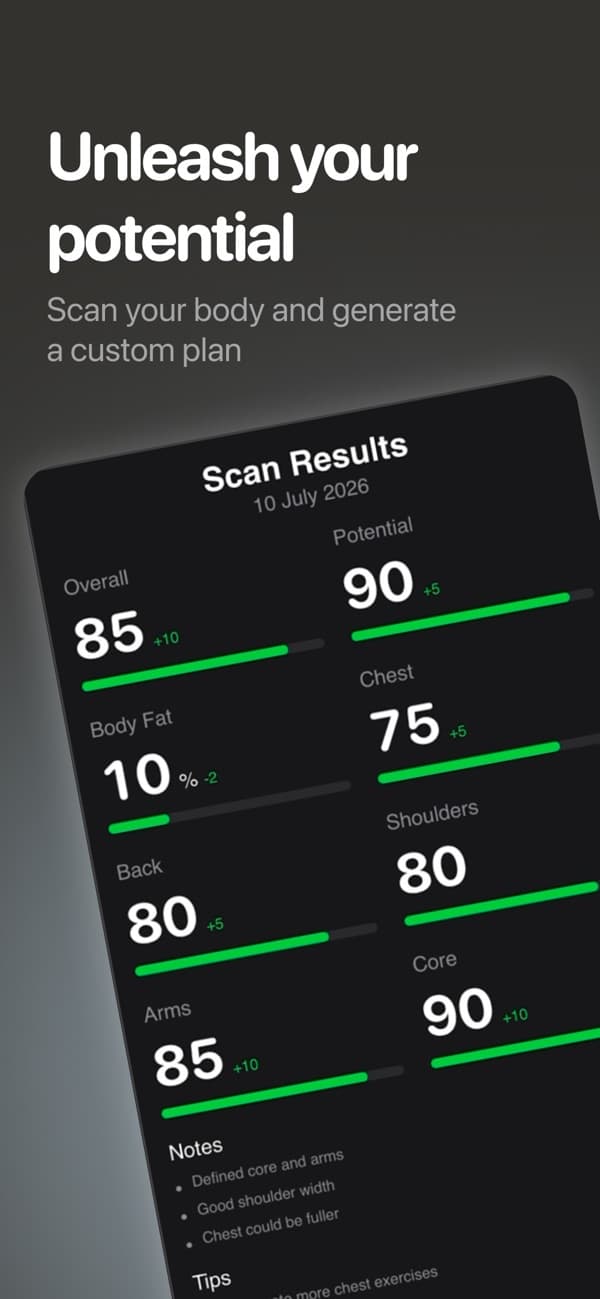
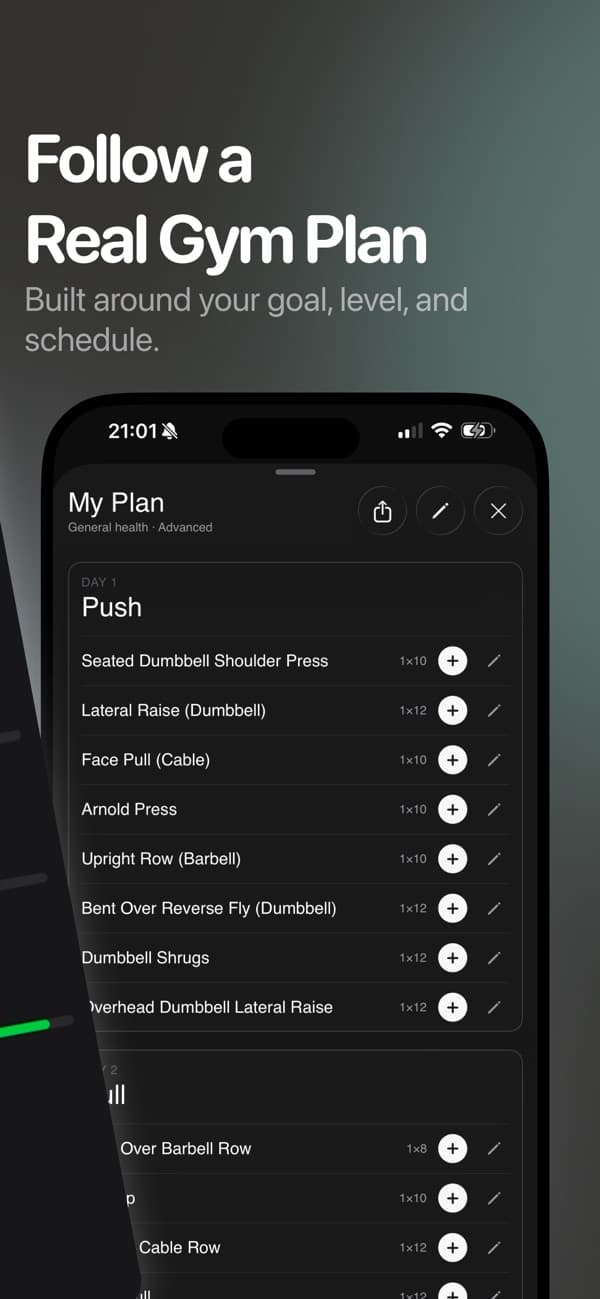
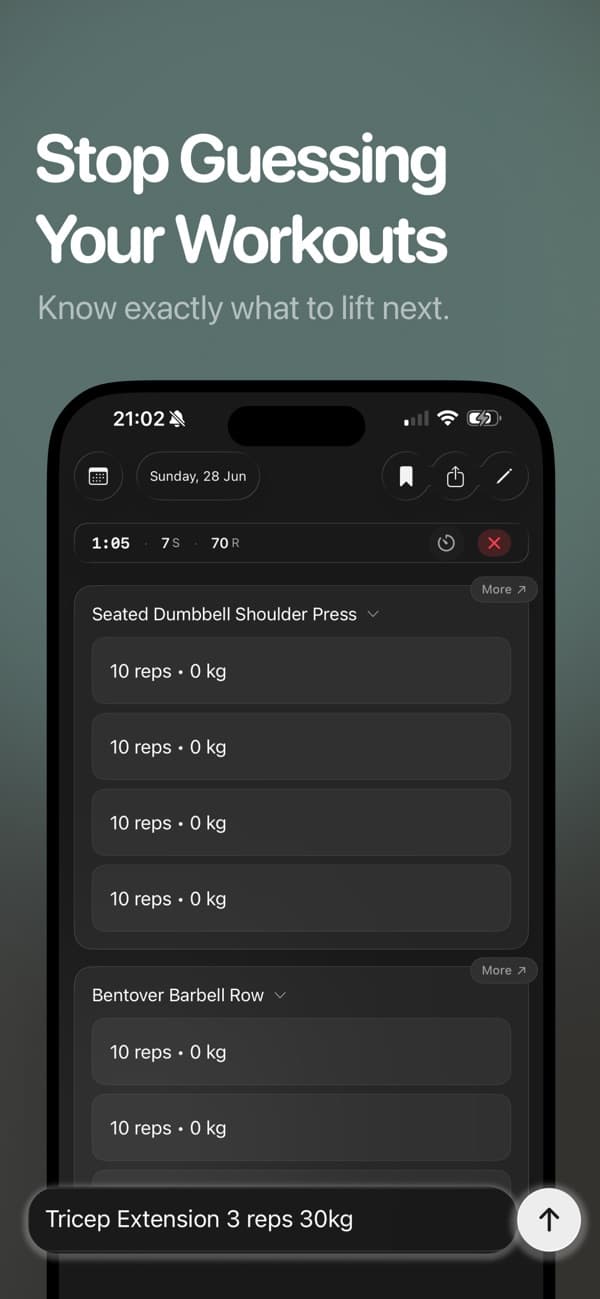

If you never remember what you lifted last time
RepZet lets you log each set by typing it the way you'd text a friend, and suggests what to beat next session for every exercise. (I make RepZet.)
Common mistakes
The most common one is not tracking. Without a log you are guessing whether 24 kg felt easier than last week, and guesses tend to drift. A notebook works fine.
The second is adding weight at the cost of form. Shorter range of motion, bouncing and leaning back move the load but take work away from the muscle you meant to train. Use a weight you can control through the full movement.
The third is trying to progress every variable forever. Progress comes in waves, and some weeks the goal is to repeat last week's numbers with better technique.
Finally, treat safety as part of the plan. Warm up with a few lighter sets before your working weight, use safety bars or a spotter on heavy presses and squats, and stop the set if you feel sharp or unusual pain. Pain is not a sign of progress, and a missed week from an injury costs more than a slower week.
Pick one lift, write down today's numbers, and aim to beat them by one rep next time.
Frequently asked questions
What is an example of progressive overload?
Bench pressing 60 kg for 3 sets of 8 one week and 3 sets of 9 the next is progressive overload. So is moving to 62.5 kg once you can do 3 sets of 10 with the same form.
How often should you increase the weight?
The ACSM's 2009 position stand suggests adding 2–10% to the load when you can do one or two reps more than your target on two sessions in a row. Beginners often meet that bar every week, while experienced lifters may need several weeks.
Is progressive overload necessary to build muscle?
The ACSM's 2026 position stand notes that training brings benefits even without progression, and that increasing the stimulus is mainly needed if you want to keep progressing over the long term. If you want to keep getting stronger or bigger, you need it.
Do you have to train to failure for progressive overload to work?
No. A 2023 meta-analysis found no clear muscle growth advantage for training to momentary failure compared with stopping short of it. Ending most sets one or two reps before failure is enough to see progress.
Sources
- American College of Sports Medicine (2009). Progression models in resistance training for healthy adults. Medicine & Science in Sports & Exercise 41(3):687–708.
- Currier BS et al. (2026). ACSM Position Stand. Resistance training prescription for muscle function, hypertrophy, and physical performance in healthy adults: an overview of reviews. Medicine & Science in Sports & Exercise 58(4):851–872.
- Plotkin D et al. (2022). Progressive overload without progressing load? The effects of load or repetition progression on muscular adaptations. PeerJ 10:e14142.
- Refalo MC et al. (2023). Influence of resistance training proximity-to-failure on skeletal muscle hypertrophy: a systematic review with meta-analysis. Sports Medicine 53:649–665.
- Helms ER et al. (2016). Application of the repetitions in reserve-based rating of perceived exertion scale for resistance training. Strength and Conditioning Journal 38(4):42–49.
About the author
22, software developer and founder based in Madrid.
I'm Gabriel, I'm 22 and I live in Madrid. I write software, build my own products and I'm into maths, sport and fashion. Among other things I make three iPhone apps, Creatinely, LockTy and RepZet, and here I write about training, creatine and the small daily habits that add up.
This is general information, not medical advice. Talk to a professional about your own situation.
Keep reading
Double Progression Explained: When to Add Weight and How Much
Double progression: keep the weight, add reps until every set hits the top of your range, then add a little weight and start again. Rep ranges, jumps, examples.

How to Calculate Your One Rep Max (Epley and Brzycki Formulas, With a % Table)
Estimate your one rep max from a set of 10 reps or fewer with the Epley or Brzycki formula. Worked examples, a percentage table and when to test a true max.

How Many Sets per Week to Build Muscle? (What the Studies Say per Muscle)
Most research supports about 10 to 20 hard sets per muscle per week to build muscle. How to count sets, split them across the week and know when to add more.