Double Progression Explained: When to Add Weight and How Much
 Gabriel SánchezPublished
Double progression means you keep the same weight and add reps each session until you reach the top of your rep range on every set, then add a small amount of weight and start again near the bottom of the range. For example, with 3 sets of 8–12 you build from 8, 8, 8 up to 12, 12, 12, then add 2.5 kg and drop back to about 8 reps.
How double progression works
It is called double because you progress two things in turn: reps, then weight. The steps:
- Choose a rep range, for example 3 sets of 8–12.
- Pick a weight you can lift for about 8 reps on the first set, stopping one or two reps before failure.
- Each session, try to add a rep to at least one set while keeping the same weight and technique.
- When you hit 12 reps on all three sets, add the smallest weight jump available next session.
- With the new weight you will usually be back near 8 reps. Repeat.
Here is what that looks like on a dumbbell bench press:
Session | Weight per hand | Reps per set |
|---|---|---|
1 | 24 kg | 8, 8, 7 |
2 | 24 kg | 9, 8, 8 |
3 | 24 kg | 10, 9, 9 |
4 | 24 kg | 11, 10, 10 |
5 | 24 kg | 12, 11, 11 |
6 | 24 kg | 12, 12, 12 |
7 | 26 kg | 9, 8, 8 |
Some sessions you will add a rep to every set, others only to one, and some weeks nothing moves. That's normal. What matters is that the total trends upward over a few weeks.
Why it works
Double progression uses two of the ways to apply progressive overload that the ACSM lists: more reps with the current load and a heavier load (ACSM, 2009).
The rep phase does real work. In an 8-week study of 43 trained lifters, a group that kept the same weight and added reps grew about as much muscle as a group that added weight while staying in an 8–12 rep range. Strength slightly favored the load group, by about 2 kg on the squat (Plotkin et al., 2022). Double progression combines both approaches, so you don't have to choose.
It also solves a practical problem. Weight jumps are fixed by your equipment, and on small exercises they are big. Going from a 12 kg to a 14 kg dumbbell is a 17% jump. Building up reps first means you have the strength to handle that jump before you take it.
Choosing your rep range
Muscle growth is similar across a wide range of loads. A meta-analysis of 21 studies found similar hypertrophy with low loads (60% of 1RM or less) and high loads, while maximal strength improved more with heavy loads (Schoenfeld et al., 2017). So choose ranges that let you train hard with good form:
Exercise type | Example range | Why |
|---|---|---|
Heavy compound lifts (squat, bench, deadlift) | 5–8 or 6–10 | Heavier loads build more maximal strength |
Other compound lifts (rows, presses, lunges) | 8–12 | Enough reps to make small weight jumps |
Isolation (curls, raises, extensions) | 10–15 or 12–20 | Dumbbell jumps are big compared with the weight |
The ACSM's 2009 stand recommended 8–12 reps for beginners and placed most hypertrophy work in the 6–12 range (ACSM, 2009). Keep the range at least three or four reps wide. A range of 8–9 leaves no room for the drop in reps after a weight jump.
When to add weight and how much
There are two common rules for when:
- Strict: add weight when every set reaches the top of the range.
- ACSM: add weight when you can do one or two reps more than your target on two sessions in a row (ACSM, 2009).
The strict rule is simpler to follow. The ACSM rule protects you from moving up after one unusually good day.
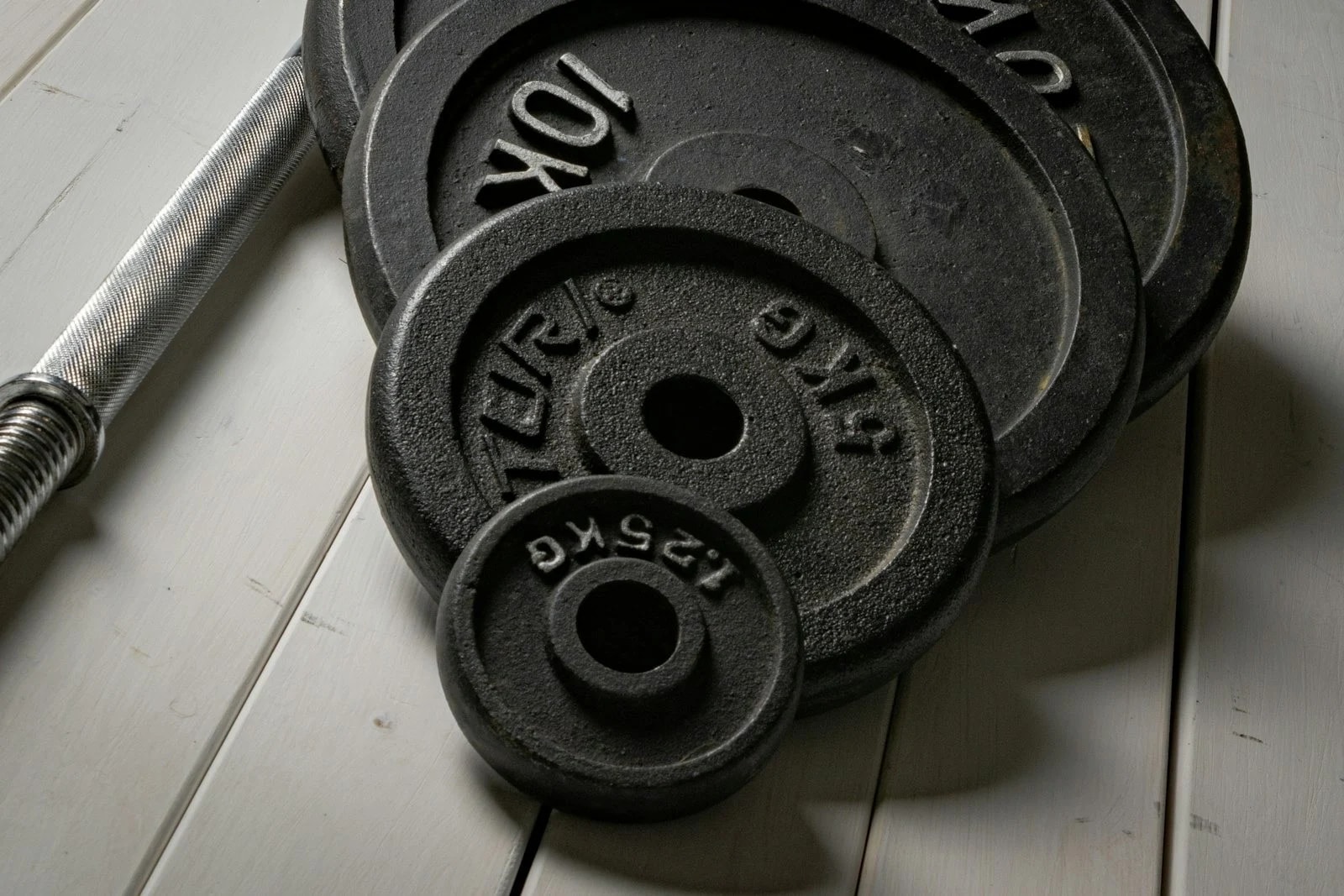
For how much, the ACSM recommends a 2–10% increase, using the lower percentage for exercises that train small muscles and the higher percentage for large ones. Here is what that range means for a few lifts:
Lift and weight | 2% | 10% | Usual jump |
|---|---|---|---|
Squat, 100 kg | 2 kg | 10 kg | 2.5 to 5 kg |
Bench press, 60 kg | 1.2 kg | 6 kg | 1.25 to 2.5 kg |
Dumbbell curl, 12 kg | 0.24 kg | 1.2 kg | Next dumbbell, often 2 kg |
The curl row shows why isolation work needs a wider rep range: the smallest dumbbell jump is already above 10%. If your gym has fractional plates or add-on weights, use them. The plate calculator helps on barbell lifts, and the progressive overload calculator suggests the next target from your last session.
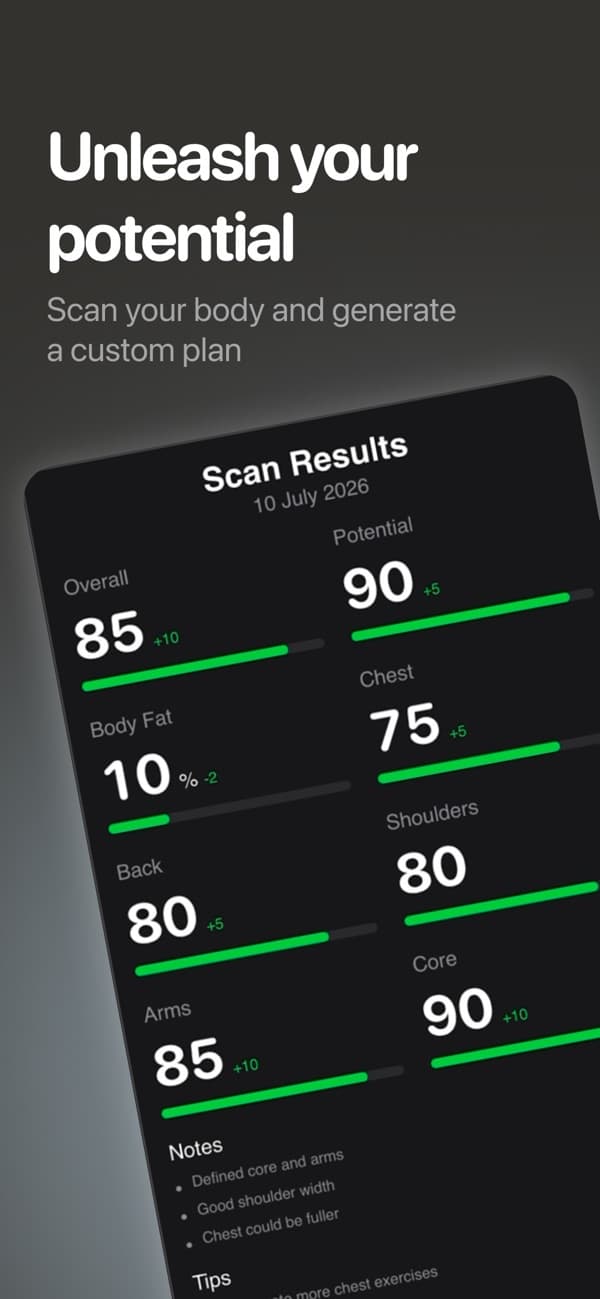
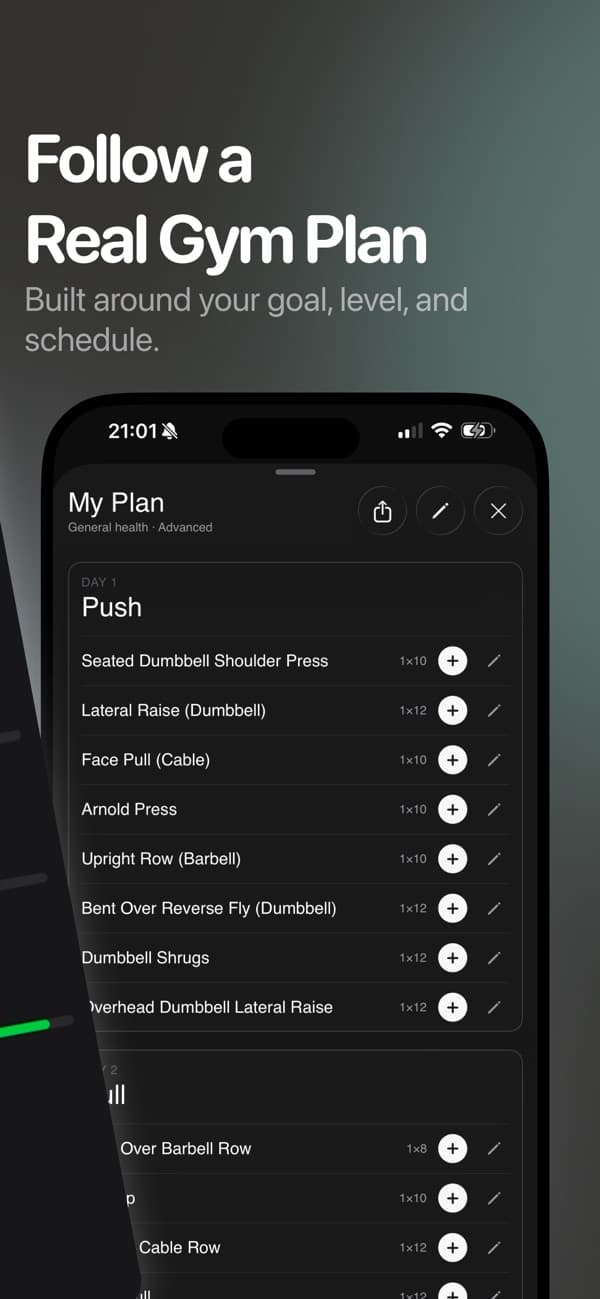
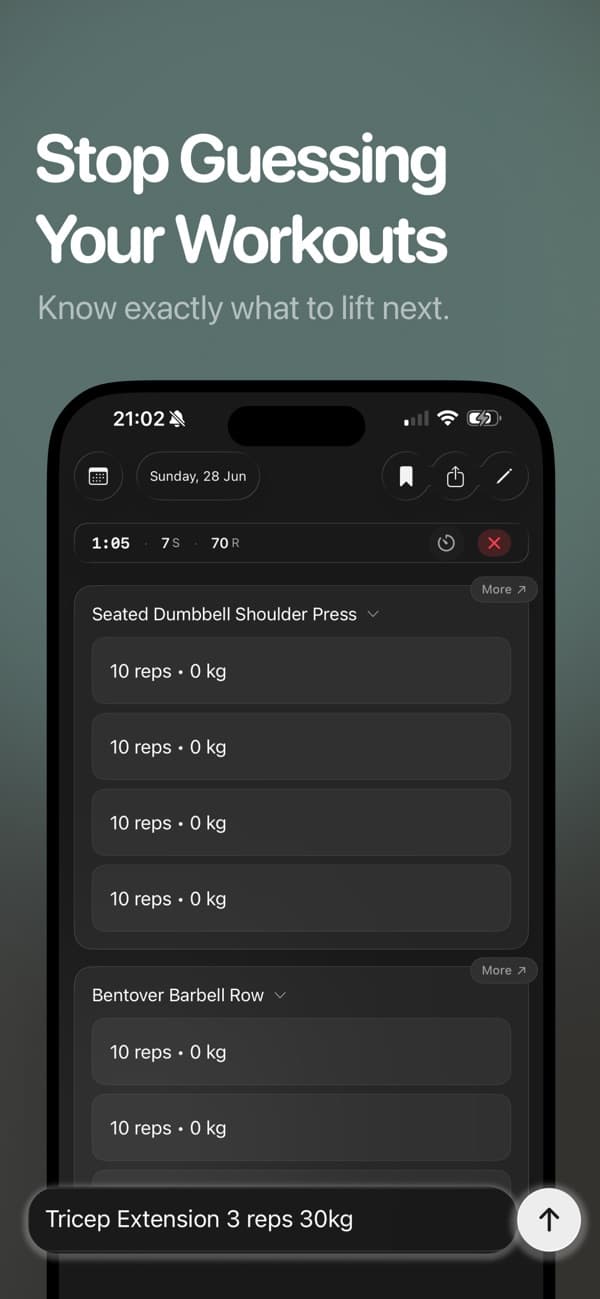

If you lose track of which sets already hit 12
RepZet lets you log every set by typing it like a message and suggests when to add reps or weight on each exercise. (I make RepZet.)
How hard each set should be
Double progression only works if the reps are honest. If you could have done five more reps, the top of the range means nothing. Helms and colleagues describe how to prescribe sets by reps in reserve, for example 3 sets of 10 stopping one or two reps short of failure (Helms et al., 2016). That is a good default here: finish each set feeling you had one or two clean reps left.
You don't need to go to failure on every set. The ACSM's 2026 review found that training to momentary failure did not consistently change results (Currier et al., 2026). It also notes that you can keep using the same relative load and raise the absolute weight as you get stronger, using perceived effort to guide you, which is what double progression does.
Count only reps with the same range of motion and tempo. If rep 12 needs a bounce or half a rep, it doesn't count yet.
When double progression stalls
If you have been stuck at the same reps for three sessions or more:
- Check the weight jump. If you dropped below the bottom of the range after adding weight, go back and use a smaller jump.
- Check recovery. Short sleep, a calorie deficit or a busy week can stall reps for a while. That's not a reason to change the program after one bad session.
- Check volume. If you only do one or two sets for that muscle per week, adding sets may help. See how many sets per week to build muscle.
- Change the range. Moving from 8–12 to 6–10 or 12–15 for a few weeks gives you a new target to build on.
Whatever you change, warm up with lighter sets before your working weight and stop a set if you feel sharp or unusual pain.
Pick one exercise, choose a range and write down today's reps. Next session, aim for one more.
Frequently asked questions
What is the difference between double progression and linear progression?
Linear progression adds weight every session while the reps stay fixed. Double progression adds reps first and weight second, which lets you keep progressing after weekly weight jumps stop working.
How much weight should I add in double progression?
The ACSM suggests increases of 2–10%, using the lower end for exercises with small muscles. In practice that usually means the smallest jump your gym allows, often 1 to 2.5 kg on barbell lifts.
What rep range is best for double progression?
Muscle growth is similar across a wide range of loads, so pick a range you can train hard in with good form. A range at least 3 to 4 reps wide, such as 6–10 for compound lifts or 10–15 for isolation exercises, leaves room for small weight jumps.
What if I can't reach the bottom of the range after adding weight?
The jump was too big. Go back to the previous weight for another session or two, or use a smaller increment such as fractional plates.
Sources
- American College of Sports Medicine (2009). Progression models in resistance training for healthy adults. Medicine & Science in Sports & Exercise 41(3):687–708.
- Plotkin D et al. (2022). Progressive overload without progressing load? The effects of load or repetition progression on muscular adaptations. PeerJ 10:e14142.
- Schoenfeld BJ et al. (2017). Strength and hypertrophy adaptations between low- vs. high-load resistance training: a systematic review and meta-analysis. Journal of Strength and Conditioning Research 31(12):3508–3523.
- Helms ER et al. (2016). Application of the repetitions in reserve-based rating of perceived exertion scale for resistance training. Strength and Conditioning Journal 38(4):42–49.
- Currier BS et al. (2026). ACSM Position Stand. Resistance training prescription for muscle function, hypertrophy, and physical performance in healthy adults: an overview of reviews. Medicine & Science in Sports & Exercise 58(4):851–872.
About the author
22, software developer and founder based in Madrid.
I'm Gabriel, I'm 22 and I live in Madrid. I write software, build my own products and I'm into maths, sport and fashion. Among other things I make three iPhone apps, Creatinely, LockTy and RepZet, and here I write about training, creatine and the small daily habits that add up.
This is general information, not medical advice. Talk to a professional about your own situation.
Keep reading

How to Calculate Your One Rep Max (Epley and Brzycki Formulas, With a % Table)
Estimate your one rep max from a set of 10 reps or fewer with the Epley or Brzycki formula. Worked examples, a percentage table and when to test a true max.

How Many Sets per Week to Build Muscle? (What the Studies Say per Muscle)
Most research supports about 10 to 20 hard sets per muscle per week to build muscle. How to count sets, split them across the week and know when to add more.

How to Progressive Overload Without Adding Weight (6 Methods With Examples)
You can progressive overload without adding weight by doing more reps, adding sets, slowing the lowering phase or using a fuller range of motion. How and when.