How to Focus: 8 Changes That Make Concentration Easier
 Gabriel SánchezPublished


To focus, make the decisions before you sit down: pick one task and its first step, put your phone in another room, work in short blocks with planned breaks, and get enough sleep the night before. Concentration depends more on your setup than on how hard you try, and each of those changes has research behind it.
Why it's so hard to focus
Most trouble focusing comes from three things you can change.
The phone is too close. In a set of experiments, people whose phone was in another room scored better on working memory and reasoning tests than people whose phone sat on the desk, face down and silent (Ward et al., 2017). You don't have to check it for it to take some of your attention.
You switch too often. When you leave a task unfinished and jump to another, part of your attention stays on the first one. Leroy called this attention residue, and people with more of it did worse on the next task (Leroy, 2009). Every quick look at messages starts a new switch.
You're tired. In a meta-analysis of 70 studies, a night of lost sleep hurt simple attention more than any other mental skill tested. Reasoning was barely affected, but lapses of attention went up a lot (Lim & Dinges, 2010).
8 ways to focus better
- Choose one task and write the first step. "Work on the report" is vague. "Write the intro paragraph" is something you can start in the next minute.
- Make an if-then plan. For example: "If it's 9:00 and I've made coffee, then I open the document before email." A meta-analysis of 94 tests found that plans in this format had a medium-to-large effect on reaching goals (Gollwitzer & Sheeran, 200638002-1)).
- Put the phone in another room. Not face down, not in your pocket. If you need it for two-factor codes, leave it in the hallway.
- Lock the apps you open out of habit. Social media, video and news apps during your work hours, so a quick check isn't an option.
- Work in blocks with planned breaks. In a study with 87 university students, those who took fixed breaks, either 6 minutes after every 24 of study (Pomodoro style) or 3 after every 12, felt less tired and distracted and more focused than those who chose their own breaks. They got the same work done in less time (Biwer et al., 2023).
- Finish or park before you switch. If you must stop halfway, write one line about where you left off and what comes next, then close that tab.
- Keep a distraction list. When a thought pops up ("reply to Sam", "buy milk"), write it on paper and go back to the task. Deal with the list at the break.
- Protect your sleep. Focus starts the night before. If you slept badly, schedule the hardest work for when you feel most awake and keep the blocks shorter.

Lock distractions while you work
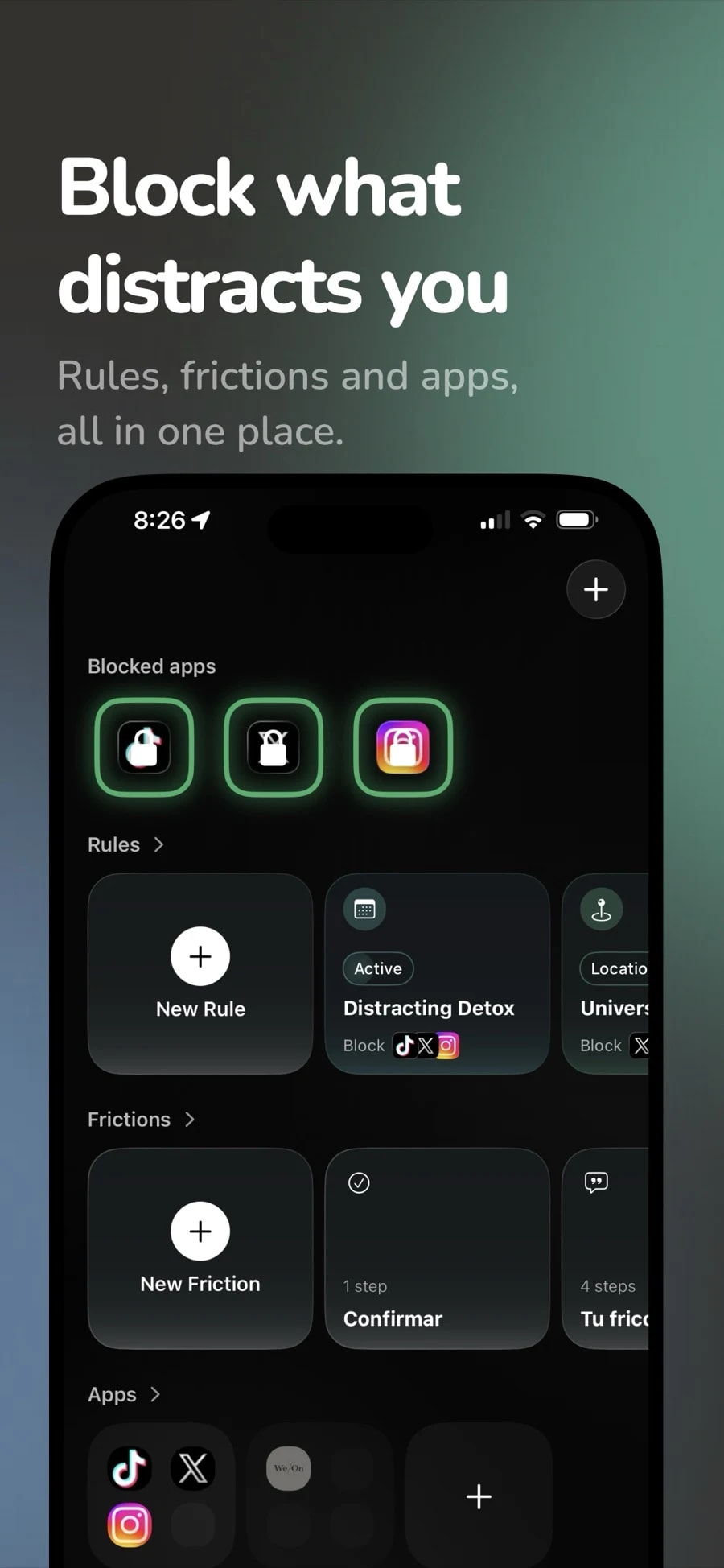
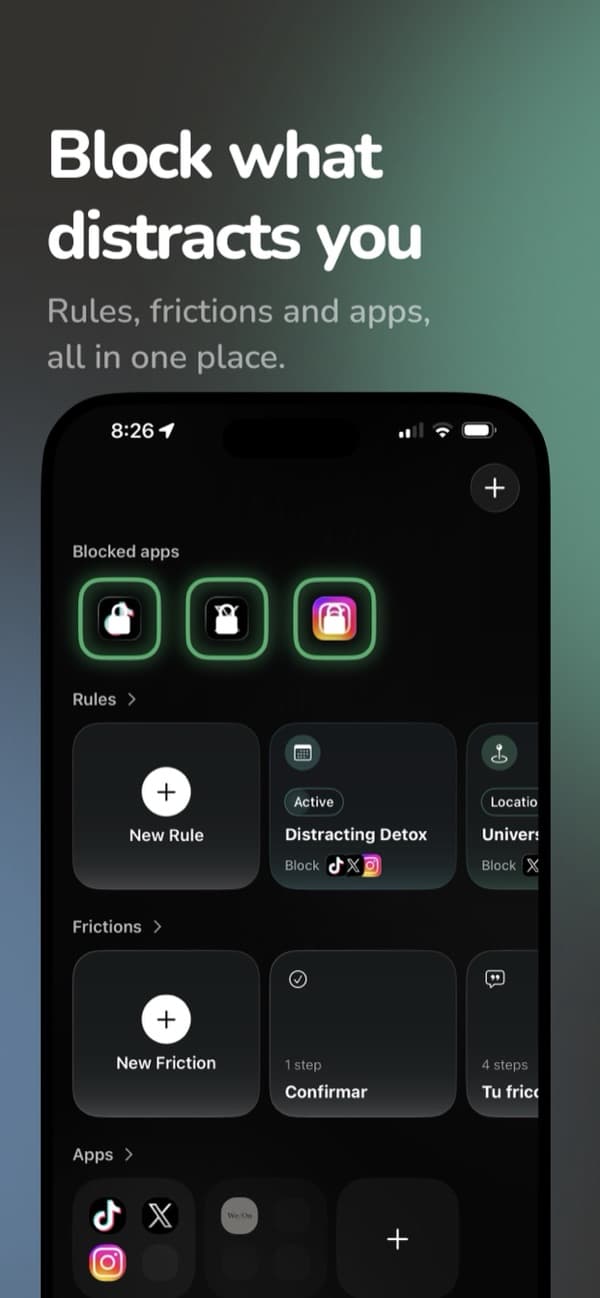
LockTy blocks the apps you pick on a schedule, when you arrive at the library or the office, or by mode, so the rule is set before temptation shows up. If you need an app for a minute, you can ask for a short break instead of turning everything off.
How to focus when studying
For studying, what you do during the block matters as much as the block itself. A large review of learning techniques rated practice testing (quizzing yourself, flashcards, past exams) and spreading study over several days as the most useful. Rereading and highlighting came out as low utility (Dunlosky et al., 2013).
Active methods also make it harder for your mind to drift. It's easy to reread a page while thinking about something else. It's much harder to answer a question from memory without paying attention.
An example focus session
This is an example, not a rule. Adjust the times to your day.
Time | What you do |
|---|---|
8:45 | Phone to another room. Distracting apps locked until 11:00. |
8:50 | Write the task, the first step and the if-then plan. |
9:00–9:24 | Block 1: one task only. |
9:24–9:30 | Break: stand up, water, no feed. |
9:30–10:30 | Two more blocks with the same breaks. |
10:30 | Longer break. Check messages and the distraction list. |
If 24 minutes feels too long at first, start with 12 minutes of work and 3 of rest, the shorter schedule from the same study.
Common mistakes
- Waiting to feel motivated. The if-then plan decides for you. Start with the first step even if you don't feel like it.
- Leaving the phone "just in case." It costs attention even when you don't touch it.
- Skipping breaks to push through. In the Biwer study, people who managed their own breaks studied longer at a stretch and felt more tired and distracted.
- Trying to fix everything at once. Start with the phone and the first step. Add the rest once those stick.
When it's more than distraction
If you can't concentrate in any setting, the problem has lasted months and it affects your work, studies or relationships, talk to a doctor or psychologist. Trouble focusing can come with ADHD, anxiety, low mood or sleep problems, and a professional can check for those.
For a longer reset, monk mode applies these rules for 30 to 90 days. How to stop phone addiction covers the phone setup in more detail, and the app blocker comparison shows which tools lock apps on iPhone. If you've heard about a dopamine detox, here's what it can and can't do.
Frequently asked questions
Why can't I focus?
The usual causes are a phone within reach, switching between tasks before finishing them, a vague task and too little sleep. Each one is fixable with a change to your setup. If you can't focus anywhere for months, talk to a doctor.
How can I focus better when studying?
Put the phone in another room, study in fixed blocks with short breaks and use active methods. Testing yourself and spreading study over several days work better than rereading or highlighting, according to a large review of study techniques.
Does the Pomodoro technique work?
In a 2023 study with 87 university students, those who took planned breaks, including 24 minutes of study and 6 of rest, felt less tired and distracted and more concentrated than students who chose their own breaks, and got the same work done in less time.
How do I stop getting distracted by my phone?
Leave it in another room while you work, turn off notifications and lock the apps you open out of habit during your work hours. In experiments, having your own phone on the desk, even face down and silent, lowered scores on working memory and reasoning tests.
How can I focus for longer?
Work in blocks and plan the breaks instead of pushing until you're exhausted. Sleep matters too: missing sleep hits simple attention harder than most other mental skills.
LockTy
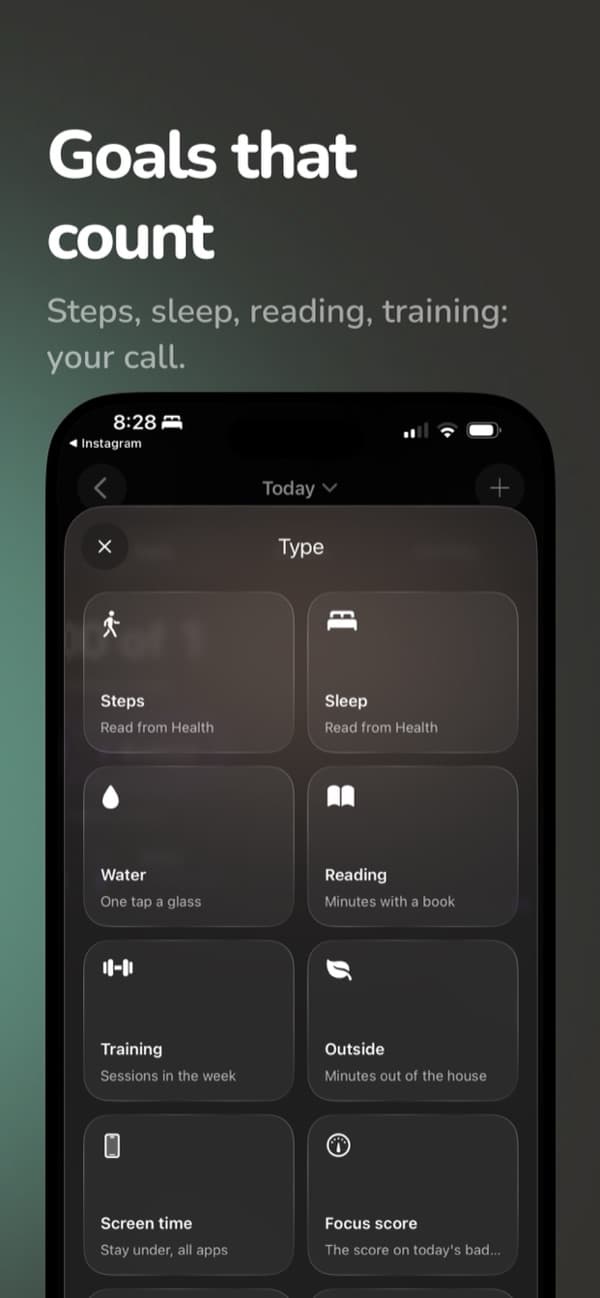
Lock the apps that distract you and unlock them by meeting your daily goals: steps, sleep, reading or training.
Sources
- Ward AF, Duke K, Gneezy A, Bos MW (2017). Brain drain: the mere presence of one's own smartphone reduces available cognitive capacity. Journal of the Association for Consumer Research 2(2):140–154.
- Leroy S (2009). Why is it so hard to do my work? The challenge of attention residue when switching between work tasks. Organizational Behavior and Human Decision Processes 109(2):168–181.
- Gollwitzer PM, Sheeran P (2006). Implementation intentions and goal achievement: a meta-analysis of effects and processes. Advances in Experimental Social Psychology 38:69–119.
- Biwer F, Wiradhany W, oude Egbrink MGA, de Bruin ABH (2023). Understanding effort regulation: comparing 'Pomodoro' breaks and self-regulated breaks. British Journal of Educational Psychology 93(S2):353–367.
- Lim J, Dinges DF (2010). A meta-analysis of the impact of short-term sleep deprivation on cognitive variables. Psychological Bulletin 136(3):375–389.
- Dunlosky J, Rawson KA, Marsh EJ, Nathan MJ, Willingham DT (2013). Improving students' learning with effective learning techniques. Psychological Science in the Public Interest 14(1):4–58.

About the author
22, software developer and founder based in Madrid.
I'm Gabriel, I'm 22 and I live in Madrid. I write software, build my own products and I'm into maths, sport and fashion. Among other things I make three iPhone apps, Creatinely, LockTy and RepZet, and here I write about training, creatine and the small daily habits that add up. I also build apps and software for B2B clients as an independent developer. If you want to work together, write to me.
This is general information, not medical advice. Talk to a professional about your own situation.
Keep reading
Pomodoro Technique: How It Works, Does It Help and How to Make It Stick
The Pomodoro Technique: work on one task for 25 minutes, take a short break and repeat four times before a longer one. Steps, what studies say and mistakes.
Morning Routine: A Simple Plan That Starts Without Your Phone
A good morning routine is short, happens at the same time daily and starts before your phone. A 10, 30 and 60 minute version, plus how to make it stick.

How to Stop Procrastinating: 10 Steps That Work When Willpower Doesn't
To stop procrastinating, make the first step tiny, decide in advance when and where you'll start, and keep your phone out of reach while you work.
What Is Monk Mode? A 30-Day Plan That Starts With Your Phone
Monk mode is a set period, often 30 to 90 days, to cut distractions and focus on one or two goals. Start with your phone and rules you decide in advance.
The Feynman Technique: 4 Steps to Learn Anything by Explaining It
The Feynman technique: explain a topic in plain words without notes, find where you get stuck, fix the gaps and simplify. The 4 steps, an example, the limits.

How to Set Daily Goals You Can Keep: 7 Steps and Examples
Set 3 to 5 daily goals you can measure, tie each to a time and place, and tick them off the same day. Here's how, with examples for steps, sleep and reading.