The Feynman Technique: 4 Steps to Learn Anything by Explaining It
 Gabriel SánchezPublished
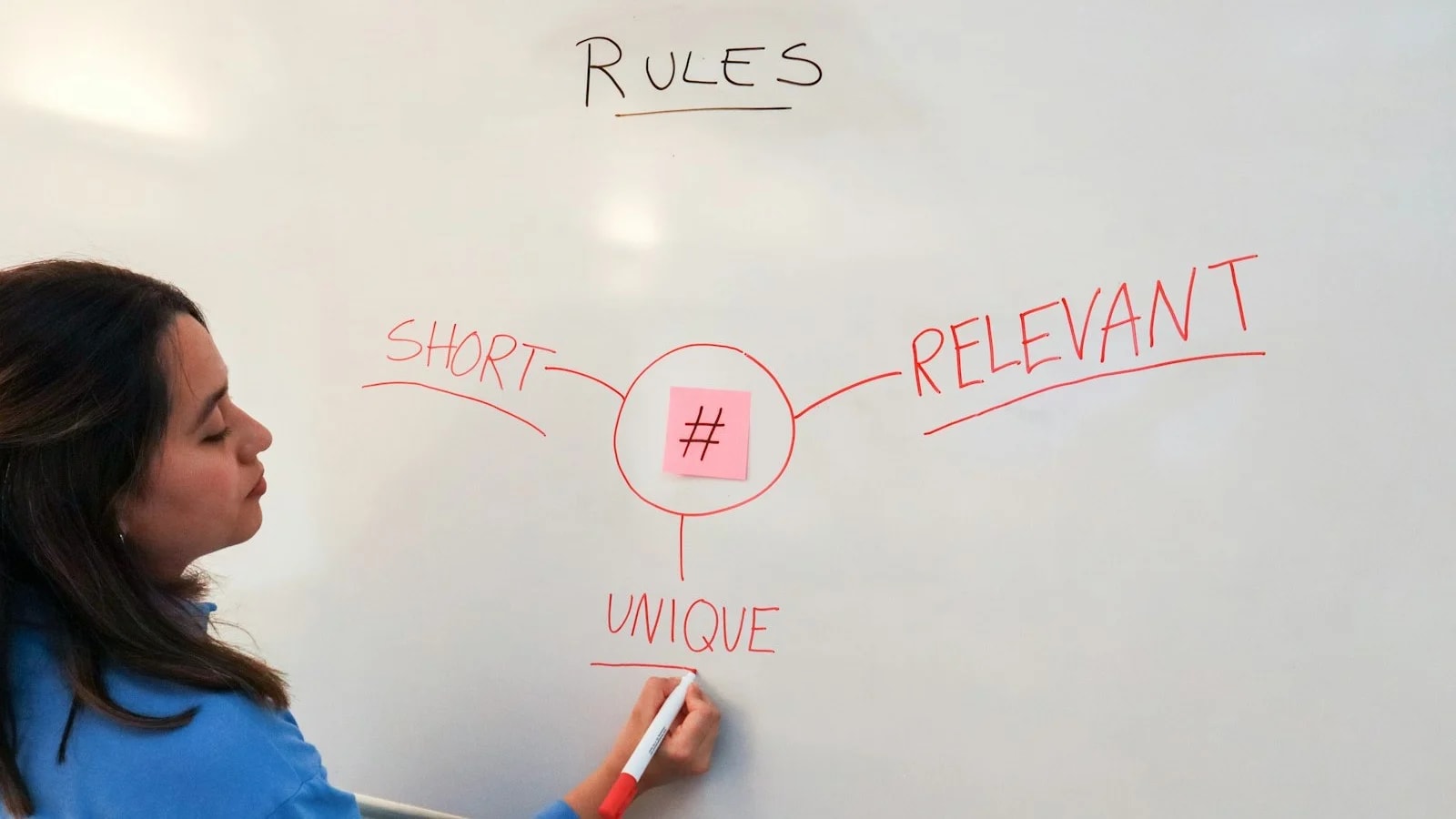

The Feynman technique is a way to learn something by explaining it in plain words, without your notes, as if you were teaching it to someone new. Wherever you get stuck or fall back on jargon is a gap in your understanding. You go back to the source, fix it and explain it again, simpler.
Where the name comes from
Richard Feynman was an American physicist who won the Nobel Prize in Physics in 1965 and was known for explaining hard ideas in everyday language. He never published a four-step method. The technique is a modern summary of his approach that carries his name.
The 4 steps
1. Pick a concept and write it at the top of a page
Be specific. "Biology" is too big. "How the heart moves blood around the body" is the right size for one page.
2. Explain it as if teaching someone new
Write or say the explanation without looking at your notes, for someone who has never studied the subject. Use short sentences and everyday words. If you need a technical term, define it.
3. Mark the gaps and go back to the source
Underline every spot where you got stuck, skipped a step, waved your hands or used a word you couldn't define. Those are your gaps. Go back to the textbook or your notes for those parts only, then close them again.
4. Simplify and add an example
Rewrite the explanation shorter and clearer. Add one concrete example or analogy. If you can explain it in a few sentences and answer "why?" after each one, you understand it.
A worked example
Example topic: why we have seasons.
- First attempt: "In summer, Earth is closer to the sun, so it's hotter."
- Gap found: if that were true, both hemispheres would have summer at the same time. They don't. The explanation breaks on the first "why?".
- Back to the source: the cause is the tilt of Earth's axis. The hemisphere tilted toward the sun gets more direct sunlight and longer days. Earth is in fact closest to the sun during the northern winter.
- Simpler version: "Earth spins on a tilted axis. For part of the year your half leans toward the sun, so sunlight hits more directly and days are longer. That's summer. Six months later your half leans away. That's winter."
The first version sounded fine until you tried to explain it. That's what the technique is for.
Why it works
You find out what you don't know
People rate their understanding of everyday devices like a zipper or a flush toilet as high, then rate it much lower after trying to write a step-by-step explanation. Researchers call this the illusion of explanatory depth (Rozenblit & Keil, 2002). Trying to explain is what broke the illusion in those studies.
Explaining to yourself helps understanding
In a classic study, eighth graders who were prompted to explain each line of a text about the circulatory system understood it better than students who read it twice (Chi et al., 1994). The sample was small, but a major review of study techniques later rated self-explanation as moderately useful (Dunlosky et al., 2013).
Preparing to teach changes how you study
Students told they would teach a passage recalled more of it, better organized, than students told they would take a test, even though nobody ended up teaching (Nestojko et al., 2014).
Doing it without notes is the key part
In one experiment, students who taught without notes did better on a test a week later than those who taught with notes. Students who only practiced recalling the material did about as well as the teachers without notes (Koh et al., 2018). The benefit seems to come from pulling the information out of memory.
Limits
- It takes time. One concept can take a full page and a couple of rounds. Save it for the ideas you don't understand, not every line of the syllabus.
- It isn't for memorizing. Vocabulary, dates and formulas stick better with flashcards and spaced review. Our guide on how to study for a test covers that part.
- You can explain something wrong with confidence. Always check your final version against the source.
- Simple isn't vague. "Explain it to a child" means everyday words, not leaving out the steps that matter.
Put it into a study session
A simple routine: learn a section, close the book, explain it on a blank page, check the gaps, then turn the explained version into three or four questions for your next quiz round. Repeat the explanation a few days later without notes. If it holds, move on.
Do it with the phone out of reach. In one set of experiments, people scored worse on memory and reasoning tasks with their phone on the desk than with it in another room (Ward et al., 2017), although a later replication didn't find the effect. Either way, an explanation half-written when a notification arrives is an explanation you'll restart. Our guide on how to stop phone addiction has the setup changes that help.

Study first, scroll later
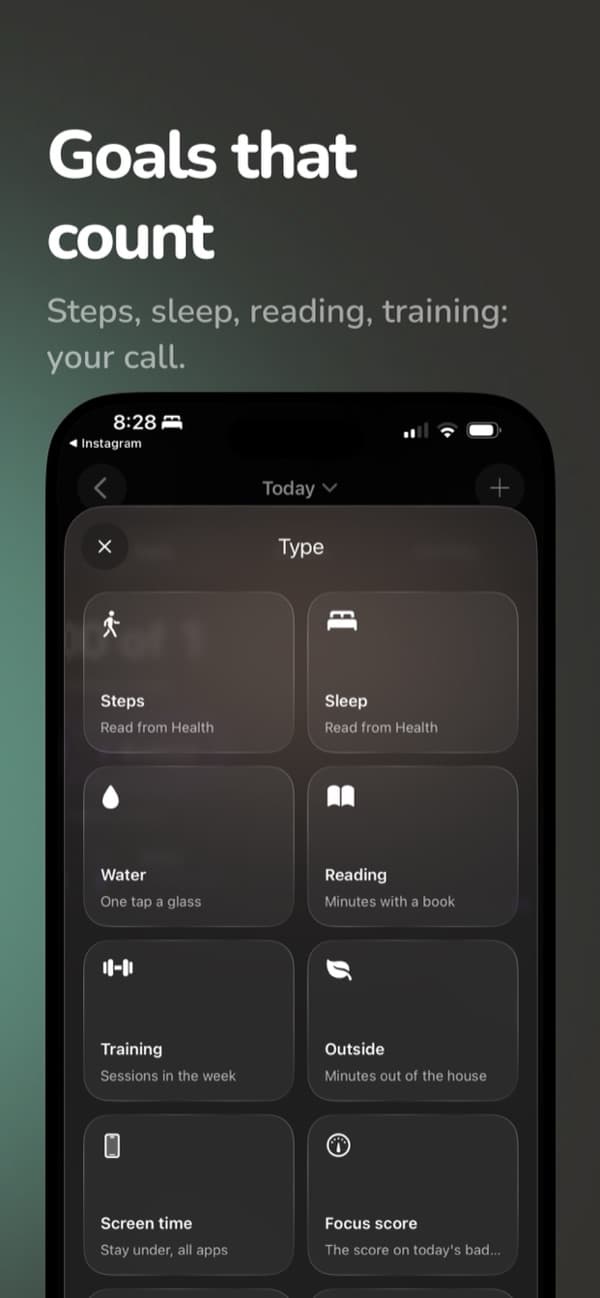
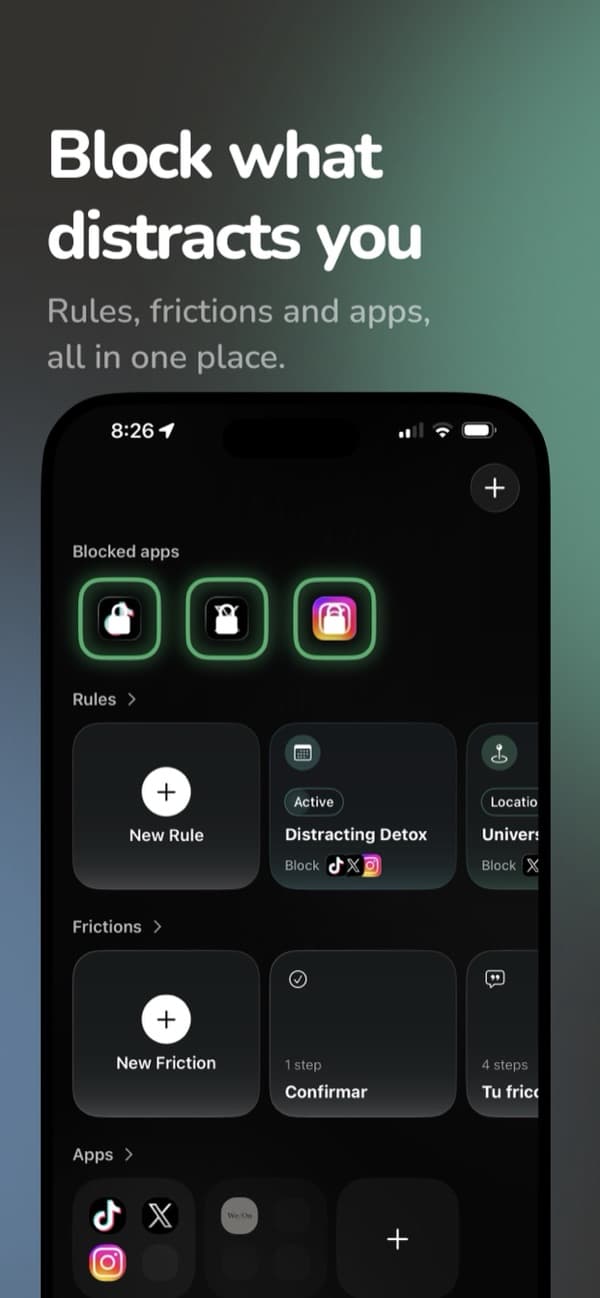
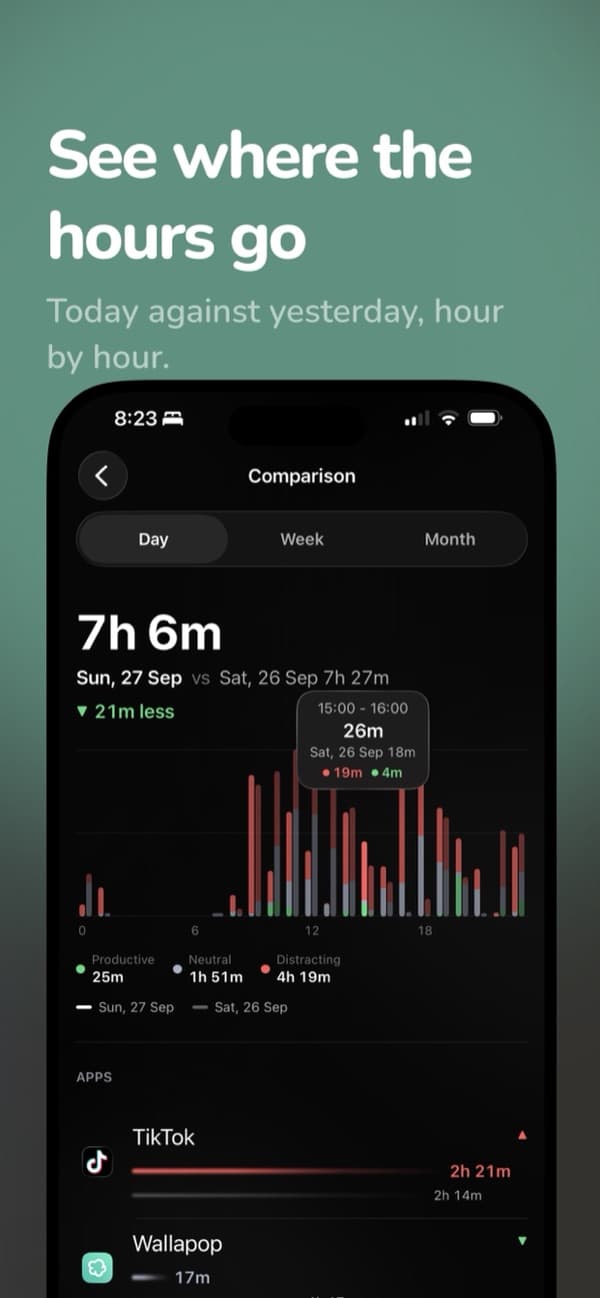
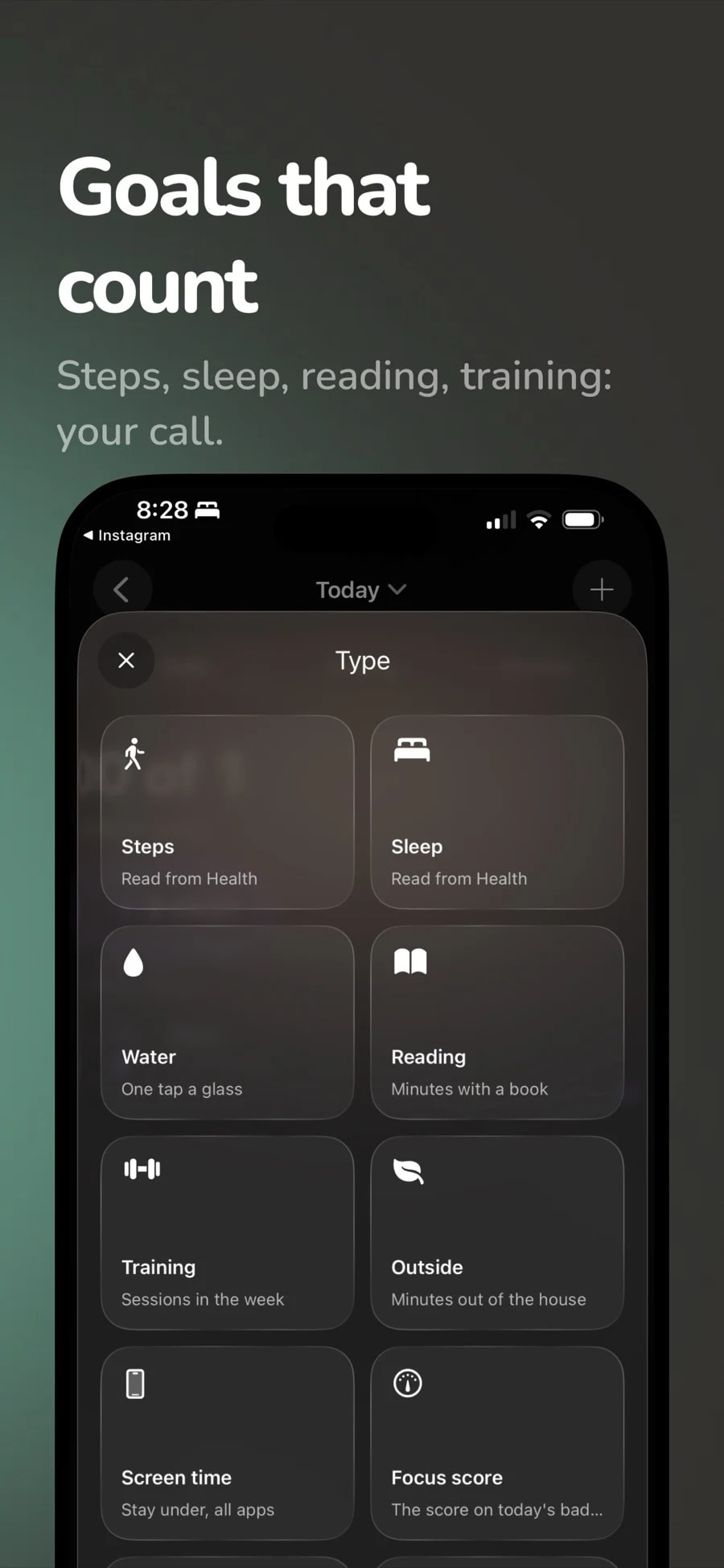
LockTy locks the apps you choose while you study and can keep them locked until you hit a daily goal, like time spent reading. It lives on your lock screen, so you see the goal before you reach for an app.
Frequently asked questions
What are the 4 steps of the Feynman technique?
1) Pick a concept and write its name at the top of a page. 2) Explain it in plain words as if teaching someone new to the subject. 3) Mark where you got stuck or used jargon and go back to the source. 4) Rewrite the explanation simpler, with an example or analogy.
Does the Feynman technique actually work?
There is no trial of the technique under that name, but its parts are well studied. Explaining material to yourself, preparing to teach it and teaching without notes all improved learning in experiments, and a major review rated self-explanation as moderately useful.
Did Richard Feynman invent the Feynman technique?
Not as a named method. Feynman was a Nobel-winning physicist known for explaining hard ideas in simple language, and the four steps are a modern summary of that approach that carries his name.
Can you use the Feynman technique for math?
Yes, for the ideas behind a method: why a formula works, when to use it and what each step does. You still need to solve practice problems, ideally mixing different types, to get fast and accurate.
Is the Feynman technique good for memorizing?
Not on its own. It is built for understanding. For lists, vocabulary, dates or formulas, quizzing yourself with flashcards spread over several days works better.
LockTy
Lock the apps that distract you and unlock them by meeting your daily goals: steps, sleep, reading or training.
Sources
- Rozenblit L, Keil F (2002). The misunderstood limits of folk science: an illusion of explanatory depth. Cognitive Science 26(5):521–562.
- Chi MTH, De Leeuw N, Chiu MH, LaVancher C (1994). Eliciting self-explanations improves understanding. Cognitive Science 18(3):439–477.
- Nestojko JF, Bui DC, Kornell N, Bjork EL (2014). Expecting to teach enhances learning and organization of knowledge in free recall of text passages. Memory & Cognition 42(7):1038–1048.
- Koh AWL, Lee SC, Lim SWH (2018). The learning benefits of teaching: a retrieval practice hypothesis. Applied Cognitive Psychology 32(3):401–410.
- Dunlosky J, Rawson KA, Marsh EJ, Nathan MJ, Willingham DT (2013). Improving students' learning with effective learning techniques: promising directions from cognitive and educational psychology. Psychological Science in the Public Interest 14(1):4–58.
- Ward AF, Duke K, Gneezy A, Bos MW (2017). Brain drain: the mere presence of one's own smartphone reduces available cognitive capacity. Journal of the Association for Consumer Research 2(2):140–154.

About the author
22, software developer and founder based in Madrid.
I'm Gabriel, I'm 22 and I live in Madrid. I write software, build my own products and I'm into maths, sport and fashion. Among other things I make three iPhone apps, Creatinely, LockTy and RepZet, and here I write about training, creatine and the small daily habits that add up. I also build apps and software for B2B clients as an independent developer. If you want to work together, write to me.
This is general information, not medical advice. Talk to a professional about your own situation.
Keep reading

Pomodoro Technique: How It Works, Does It Help and How to Make It Stick
The Pomodoro Technique: work on one task for 25 minutes, take a short break and repeat four times before a longer one. Steps, what studies say and mistakes.
Best App Blocker for iPhone in 2026: Screen Time, Opal, one sec, Jomo and LockTy Compared
Screen Time is free and enough if you rarely tap Ignore Limit. If you do, a blocker adds friction. What Opal, one sec, Jomo, AppBlock and LockTy do and cost.

How to Stop Procrastinating: 10 Steps That Work When Willpower Doesn't
To stop procrastinating, make the first step tiny, decide in advance when and where you'll start, and keep your phone out of reach while you work.
What Is Monk Mode? A 30-Day Plan That Starts With Your Phone
Monk mode is a set period, often 30 to 90 days, to cut distractions and focus on one or two goals. Start with your phone and rules you decide in advance.

Morning Routine: A Simple Plan That Starts Without Your Phone
A good morning routine is short, happens at the same time daily and starts before your phone. A 10, 30 and 60 minute version, plus how to make it stick.

Dopamine Detox: What It Gets Right and What It Gets Wrong
A dopamine detox can't lower or reset your dopamine. The useful part of the trend is cutting easy, high-reward habits at set times and getting used to boredom.