How to Study for a Test: The Techniques That Work, Ranked by Research
 Gabriel SánchezPublished

To study for a test, quiz yourself from memory and spread your study over several days. Those two habits, practice testing and spaced practice, have the strongest evidence of any common study technique. Rereading your notes and highlighting feel productive but rank near the bottom.
Study techniques ranked by the evidence
In 2013, five psychologists reviewed the research on ten techniques students use and rated each one by how well its benefits held up across ages, subjects and types of test (Dunlosky et al., 2013).
Technique | Rating | What it means |
|---|---|---|
Practice testing | High | Answering questions from memory: flashcards, past papers, end-of-chapter questions |
Distributed practice | High | Spreading study over several sessions instead of one block |
Elaborative interrogation | Moderate | Asking yourself "why is this true?" as you read |
Self-explanation | Moderate | Explaining how a step or idea connects to what you already know |
Interleaved practice | Moderate | Mixing different types of problems in one session |
Summarization | Low | Writing summaries of what you read |
Highlighting and underlining | Low | Marking key parts of the text |
Keyword mnemonic | Low | Linking a term to a vivid word or image |
Imagery for text | Low | Picturing what you read |
Rereading | Low | Going over the same material again |
Low doesn't mean useless. It means the benefits were small or showed up only with certain materials. The problem is that rereading and highlighting are what most students spend their time on.
Why rereading feels like it works
Rereading makes the material feel familiar, and familiar feels like learned. In one experiment, students either reread a passage or took recall tests on it. Five minutes later, the rereaders remembered more. Two days and one week later, the students who had tested themselves remembered much more, even though the rereaders felt more confident (Roediger & Karpicke, 2006).
That's the trap with cramming: it works for the next few minutes and fades before the test.
How to study for a test, step by step
- Find out what the test covers and its format. Multiple choice, problems and essays need different practice.
- Turn your material into questions. Write flashcards, use the questions at the end of each chapter or get past exams.
- Answer from memory before you look. Say or write the answer, then check it. Keep a pile of the questions you missed.
- Spread your sessions over days. In a study with more than 1,350 people, the best gap between first learning and review was about 20 to 40% of the time left until a test one week away, and a smaller share for tests months away (Cepeda et al., 2008). For a test in a week, that's a review roughly every two days.
- Mix problem types. For math, physics or chemistry, shuffle different kinds of problems instead of doing ten of the same in a row. Students who practiced mixed math problems scored far better on a test a week later than students who practiced one type at a time (Rohrer & Taylor, 2007).
- Explain the hard parts in plain words. If you can't explain an idea without your notes, you've found what to study next. The Feynman technique turns this into a routine.
- Do one timed practice test under exam conditions: no notes, a clock and your phone out of the room.
An example 7-day plan
Example for a test on day 8. Adjust it to your subjects and hours.
Day | What to do |
|---|---|
1 | Go through the material once. Write questions for each section and answer them the same day |
2 | Quiz yourself on day 1 questions. Learn the next part and write its questions |
3 | Day off from this subject |
4 | Quiz yourself on everything, mixed. Explain out loud the topics you missed |
5 | Day off from this subject, or a short round on your missed pile |
6 | Full practice test, timed, without notes |
7 | Only the questions you still get wrong |
8 | Test |
The days off are part of the plan. The spacing research compared the same sessions bunched together or spread apart, and spread apart won.
Keep your phone out of the room
In a set of experiments with nearly 800 people, those with their phone on the desk scored worse on memory and reasoning tasks than those who left it in another room, even when it was face down and silent (Ward et al., 2017). A later preregistered replication found no difference (Ruiz Pardo & Minda, 2022), so the effect of the phone just being there is uncertain.
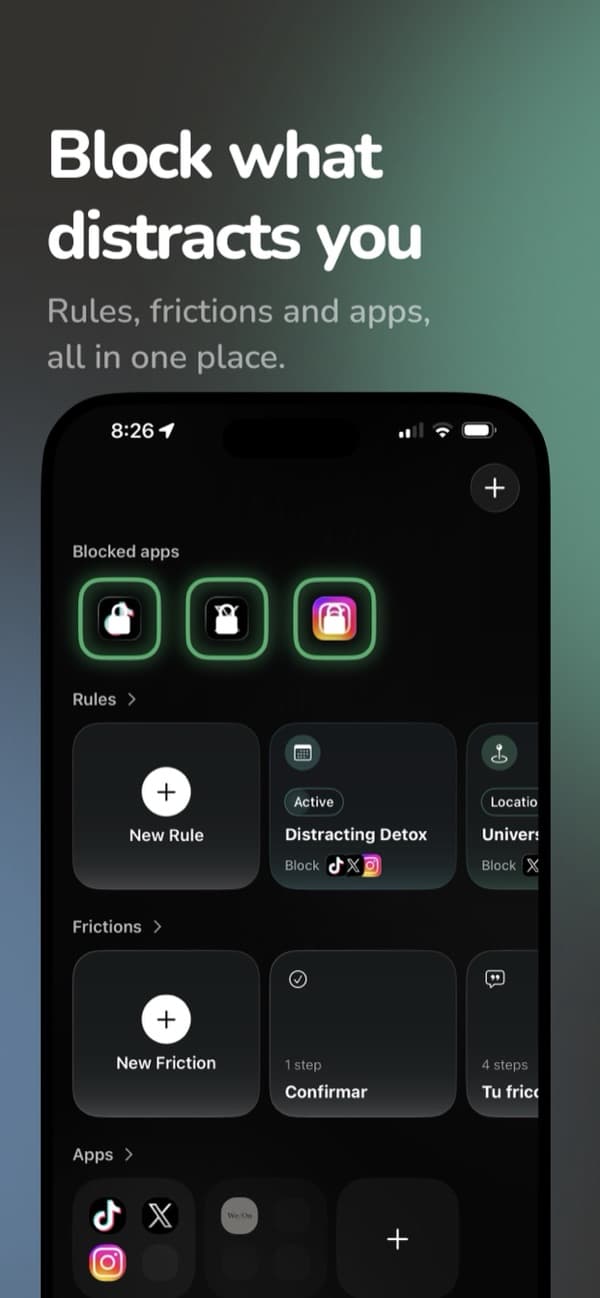
What isn't uncertain is the interruption. A notification in the middle of a quiz round breaks the session, and "just checking" often turns into twenty minutes. Put the phone somewhere you can't reach it, or lock the apps that pull you in for the length of the session. If that's a daily fight, our guide on how to stop phone addiction covers the setup changes that work.

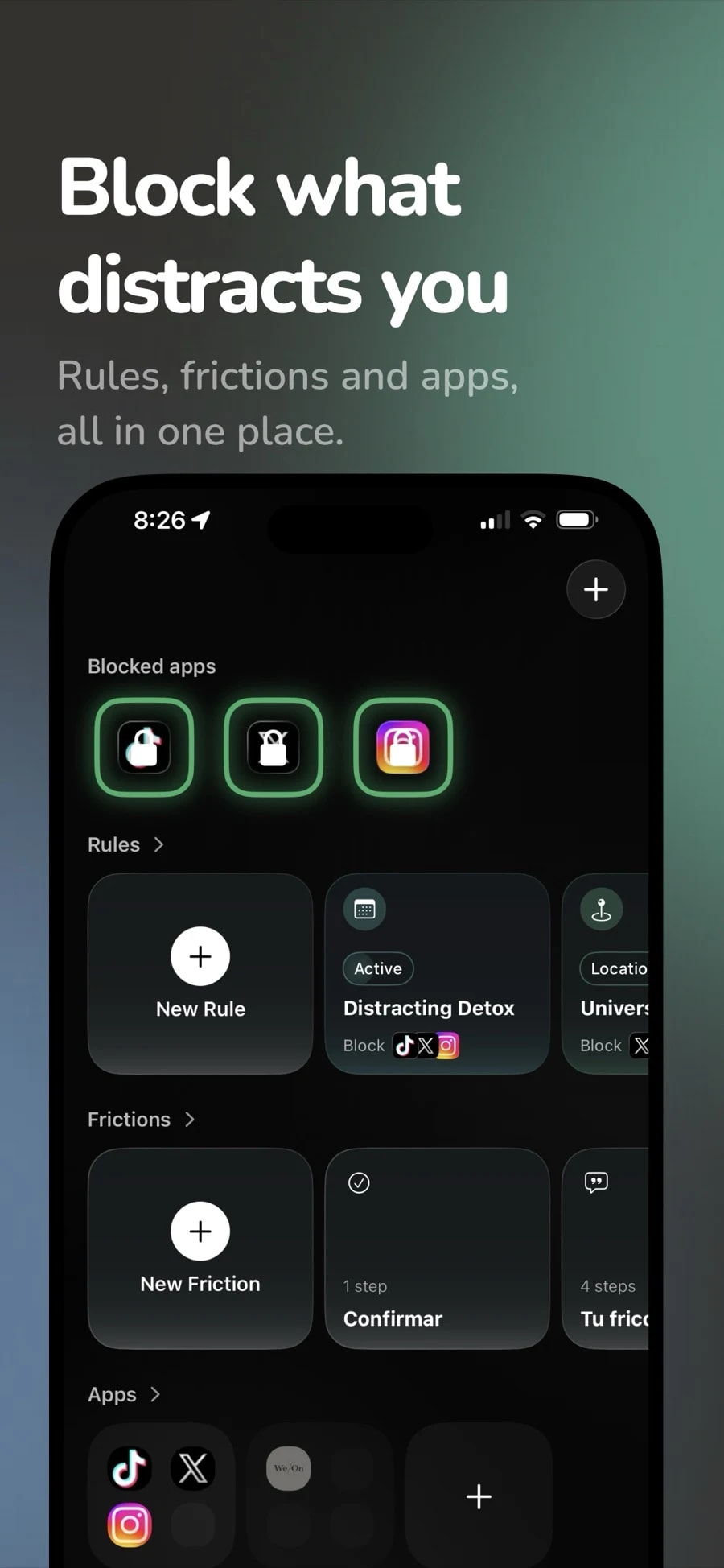
Lock distractions while you study
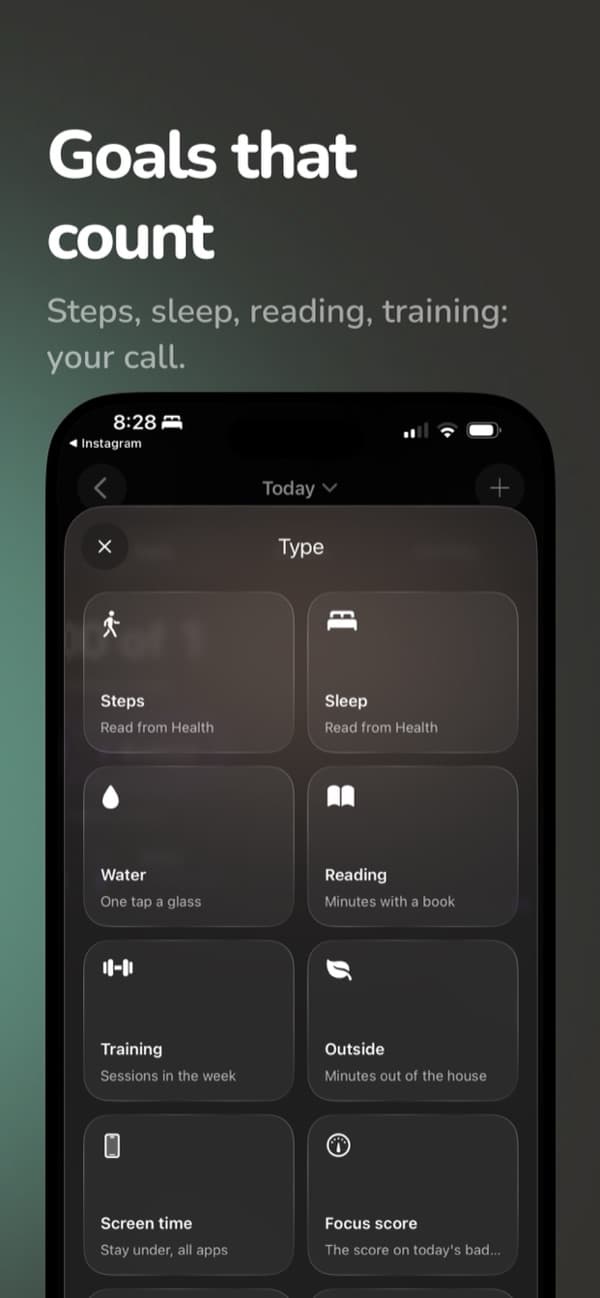
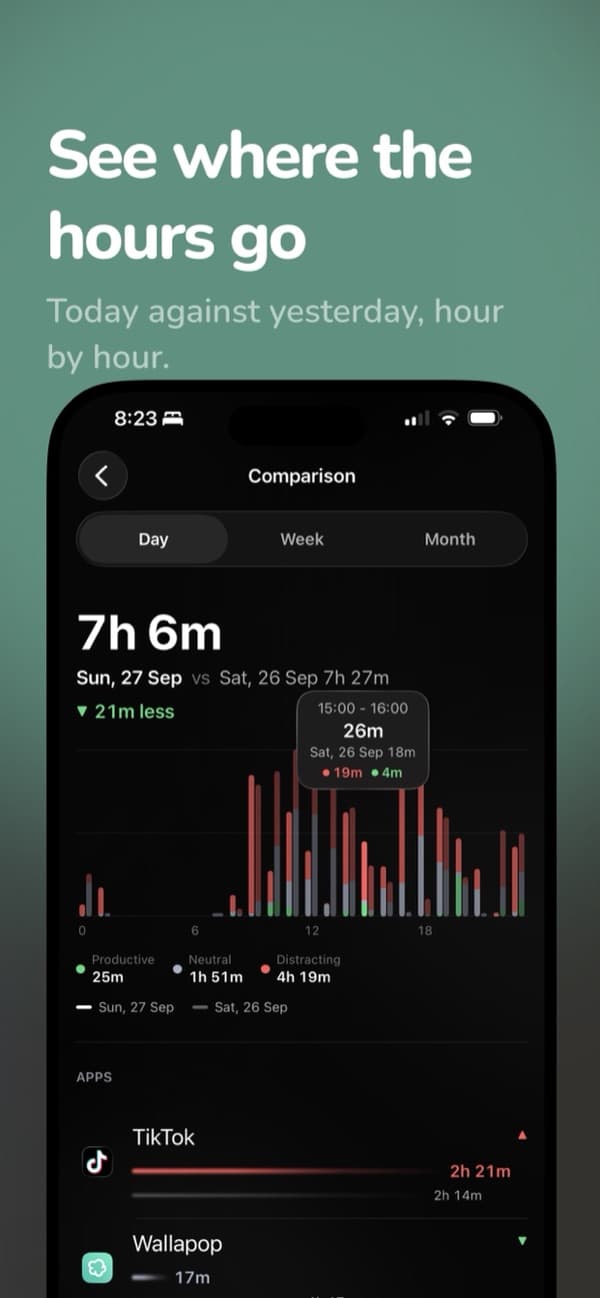
LockTy locks the apps you choose by schedule or when you arrive at the library. You can also set daily goals, like time reading, that unlock your apps once you meet them.
Common mistakes
- Rereading until the notes look familiar. Familiar isn't the same as being able to recall it under pressure.
- Highlighting whole pages. If everything is marked, nothing stands out. Turn the key points into questions instead.
- Only quizzing what you already know. Keep the missed cards in play until you get them right on a later day.
- One long session the night before. It helps for the next morning at best. Several shorter sessions hold up better.
- Studying with the phone on the desk. Move it before you sit down, not after the first interruption.
If you're still struggling
If you study this way and still can't keep up, talk to your teacher or school's learning support. Problems with attention, reading or test anxiety are easier to deal with once someone looks at them directly.
Frequently asked questions
What is the best way to study for a test?
Test yourself from memory and spread your sessions over several days. A large review of ten study techniques rated practice testing and distributed practice as the two with the strongest evidence, while rereading and highlighting were rated low.
How many days before a test should I start studying?
Early enough to fit several sessions on different days. In a study with more than 1,350 people, the best gap between first learning and review was about 20 to 40% of the time left until a test one week away, which works out to roughly two days.
Is cramming the night before a test effective?
It helps for a few minutes or hours, then fades fast. In one experiment, rereading beat self-testing on a test five minutes later, but self-testing gave much better recall two days and one week later.
Does highlighting help you study?
Not much on its own. A review of the evidence rated highlighting and underlining as low utility. It can help you find key points, but you still need to quiz yourself on them.
Should I keep my phone nearby when I study?
It is safer to keep it in another room. One set of experiments found worse scores on memory and reasoning tasks with the phone on the desk, although a later replication did not find the effect. Out of reach, it also cannot interrupt you.
How do I study for a test when I don't understand the topic?
Try explaining the topic in plain words without your notes, as if teaching someone. The parts where you get stuck show you exactly what to go back and learn. This is the idea behind the Feynman technique.
LockTy
Lock the apps that distract you and unlock them by meeting your daily goals: steps, sleep, reading or training.
Sources
- Dunlosky J, Rawson KA, Marsh EJ, Nathan MJ, Willingham DT (2013). Improving students' learning with effective learning techniques: promising directions from cognitive and educational psychology. Psychological Science in the Public Interest 14(1):4–58.
- Roediger HL, Karpicke JD (2006). Test-enhanced learning: taking memory tests improves long-term retention. Psychological Science 17(3):249–255.
- Cepeda NJ, Vul E, Rohrer D, Wixted JT, Pashler H (2008). Spacing effects in learning: a temporal ridgeline of optimal retention. Psychological Science 19(11):1095–1102.
- Rohrer D, Taylor K (2007). The shuffling of mathematics problems improves learning. Instructional Science 35(6):481–498.
- Ward AF, Duke K, Gneezy A, Bos MW (2017). Brain drain: the mere presence of one's own smartphone reduces available cognitive capacity. Journal of the Association for Consumer Research 2(2):140–154.
- Ruiz Pardo AC, Minda JP (2022). Reexamining the "brain drain" effect: a replication of Ward et al. (2017). Acta Psychologica 230:103717.

About the author
22, software developer and founder based in Madrid.
I'm Gabriel, I'm 22 and I live in Madrid. I write software, build my own products and I'm into maths, sport and fashion. Among other things I make three iPhone apps, Creatinely, LockTy and RepZet, and here I write about training, creatine and the small daily habits that add up. I also build apps and software for B2B clients as an independent developer. If you want to work together, write to me.
This is general information, not medical advice. Talk to a professional about your own situation.
Keep reading

How to Focus: 8 Changes That Make Concentration Easier
To focus, decide the task before you sit down, put your phone in another room, work in short blocks with planned breaks and protect your sleep.
The Feynman Technique: 4 Steps to Learn Anything by Explaining It
The Feynman technique: explain a topic in plain words without notes, find where you get stuck, fix the gaps and simplify. The 4 steps, an example, the limits.

Pomodoro Technique: How It Works, Does It Help and How to Make It Stick
The Pomodoro Technique: work on one task for 25 minutes, take a short break and repeat four times before a longer one. Steps, what studies say and mistakes.
Best App Blocker for iPhone in 2026: Screen Time, Opal, one sec, Jomo and LockTy Compared
Screen Time is free and enough if you rarely tap Ignore Limit. If you do, a blocker adds friction. What Opal, one sec, Jomo, AppBlock and LockTy do and cost.

How to Stop Procrastinating: 10 Steps That Work When Willpower Doesn't
To stop procrastinating, make the first step tiny, decide in advance when and where you'll start, and keep your phone out of reach while you work.
What Is Monk Mode? A 30-Day Plan That Starts With Your Phone
Monk mode is a set period, often 30 to 90 days, to cut distractions and focus on one or two goals. Start with your phone and rules you decide in advance.