Skinny Fat: What It Is and Whether to Cut, Bulk or Recomp
 Gabriel SánchezPublished

If you are skinny fat and new to lifting, you usually don't have to choose between cutting and bulking. Lift with progressive overload, eat enough protein and keep calories at maintenance or slightly below. That approach is called body recomposition: you lose fat and gain muscle at the same time while your weight barely changes. Cut first if your body fat is clearly high; lean bulk later, once you are trained and lean enough that size is the goal.
What skinny fat means
Skinny fat is gym slang, not a diagnosis. It describes someone whose weight is normal, who looks slim in clothes, but who has little visible muscle and a soft midsection without them. The problem is the proportion of muscle to fat, not the number on the scale.
That is why the usual advice feels like a trap. Diet hard and you end up smaller but still soft. Eat a lot and you add fat to the place you already dislike. Recomposition is the third option, and for most people in this situation it is the first one to try.
Cut, bulk or recomp: a decision table
You need two things to decide: a rough idea of your body fat and how long you have been training properly. For body fat, the body fat calculator estimates it from a few tape measurements and places you in the bands of the American Council on Exercise (ACE) chart: "fitness" is 14 to 17% for men and 21 to 24% for women, "average" is 18 to 24% and 25 to 31%, and the top band starts at 25% for men and 32% for women.
For training age, ask yourself one question: do you still add weight or reps to your main lifts most weeks? If yes, you are still a beginner for this purpose, even if you have had a gym card for years.
Your situation | Start with | Calories |
|---|---|---|
Beginner (or back after a long break), body fat in the "fitness" or "average" band | Recomp | Maintenance or a small deficit |
Any training age, body fat in the top band | Cut while lifting | A moderate deficit |
Trained (progress now slow), body fat in the "fitness" band or leaner, want more size | Lean bulk | Small surplus, about 0.25 to 0.5% of body weight gained per week |
Trained, body fat high in the "average" band | Short cut, then lean bulk, or a slow recomp | Small deficit first |
This table is a starting point we use, not a rule from a single study. Tape-measure estimates can be off by a few points, so if you sit on a boundary, pick the gentler option and watch what happens over a couple of months.
Why recomposition suits most skinny fat beginners
Body recomposition means reducing body fat while keeping or increasing lean mass, often with no change in total weight. A 2024 editorial in Frontiers in Nutrition notes that it has been shown in untrained, trained and highly trained people of different ages (Bonilla et al., 2024).
A review in the Strength and Conditioning Journal makes the same point for lifters. Recomposition is often assumed to happen only in untrained or overweight people, but the authors found a substantial body of research showing it in resistance-trained people too, with progressive resistance training and evidence-based nutrition as the two main drivers (Barakat et al., 2020).
What matters is the size of the deficit. A 2022 meta-analysis found that people lifting in an energy deficit gained less lean mass than people lifting without one, while strength gains were similar. In its model, a deficit of around 500 kcal a day was enough to stop lean mass gains (Murphy & Koehler, 2022). So a recomp means eating at maintenance or a little under it, not crash dieting.
How to recomp: the three pieces
1. Lift with progressive overload
Muscle is the half of the problem that dieting can't fix. The ACSM's 2026 position stand describes progressive overload as raising the stimulus on the muscle over time, through load, volume, frequency or exercise choice, even if only slightly (Currier et al., 2026). In practice: write down your sets, and when you hit the top of your rep range, add weight. The progressive overload guide covers the ways to do it.
The same position stand found that muscle growth was enhanced at 10 or more sets per muscle group per week, and that training to failure did not consistently change outcomes. The sets per week guide shows how to count them.
2. Eat enough protein
The ISSN position stand on protein recommends 1.4 to 2.0 g per kg of body weight a day for most people who exercise, in doses of about 20 to 40 g spread every 3 to 4 hours. During a calorie deficit it says 2.3 to 3.1 g/kg a day may be needed to keep as much lean mass as possible (Jäger et al., 2017).
Example with made-up numbers: at 70 kg, 1.4 to 2.0 g/kg is 98 to 140 g a day, or four meals of 25 to 35 g. The protein calculator does this for your weight.
3. Keep calories at maintenance or slightly below
Estimate your maintenance with the TDEE calculator, then split it into protein, carbs and fat with the macro calculator. If you want a little faster fat loss, eat slightly under maintenance, keeping the deficit well below the 500 kcal a day mentioned above.
Example with made-up numbers: a 70 kg man whose estimated maintenance is 2,500 kcal would eat between about 2,300 and 2,500 kcal, with 100 to 140 g of protein.
When to cut instead
If your estimate lands in the top body fat band, losing fat first makes sense. Keep lifting the whole time and keep protein high, since that is what protects muscle in a deficit. The calorie deficit guide explains how to size the deficit and why loss slows over time. Once you are in the "average" band, switch to a recomp or a lean bulk.
When to lean bulk instead
A lean bulk makes sense once you are trained and lean, and the goal is more size. A review of off-season nutrition for bodybuilders recommends that novice and intermediate lifters eat about 10 to 20% above maintenance, aiming to gain about 0.25 to 0.5% of body weight a week, with protein at 1.6 to 2.2 g/kg a day. Advanced lifters should be more conservative with both (Iraki et al., 2019).
Example with made-up numbers: at 70 kg, 0.25 to 0.5% a week is about 0.18 to 0.35 kg. If you gain much faster than that, the extra is more likely to be fat.
Common mistakes
- Dieting hard to "see abs first". With little muscle to start with, you end up lighter and still soft, and a big deficit makes muscle harder to build.
- A dirty bulk. In the studies reviewed by Iraki and colleagues, eating more led to noticeably more fat gain, and fat is the part you want less of.
- Cardio instead of lifting. Cardio has its own benefits, but it won't build the muscle that changes how you look.
- Switching plans every few weeks. Changes in body composition are slow. Give one plan a few months before you judge it.
- Watching only the scale. In a recomp, the scale is the least useful number.
How to tell if it's working
Because your weight may barely move, you need other signals. Use at least two of these:
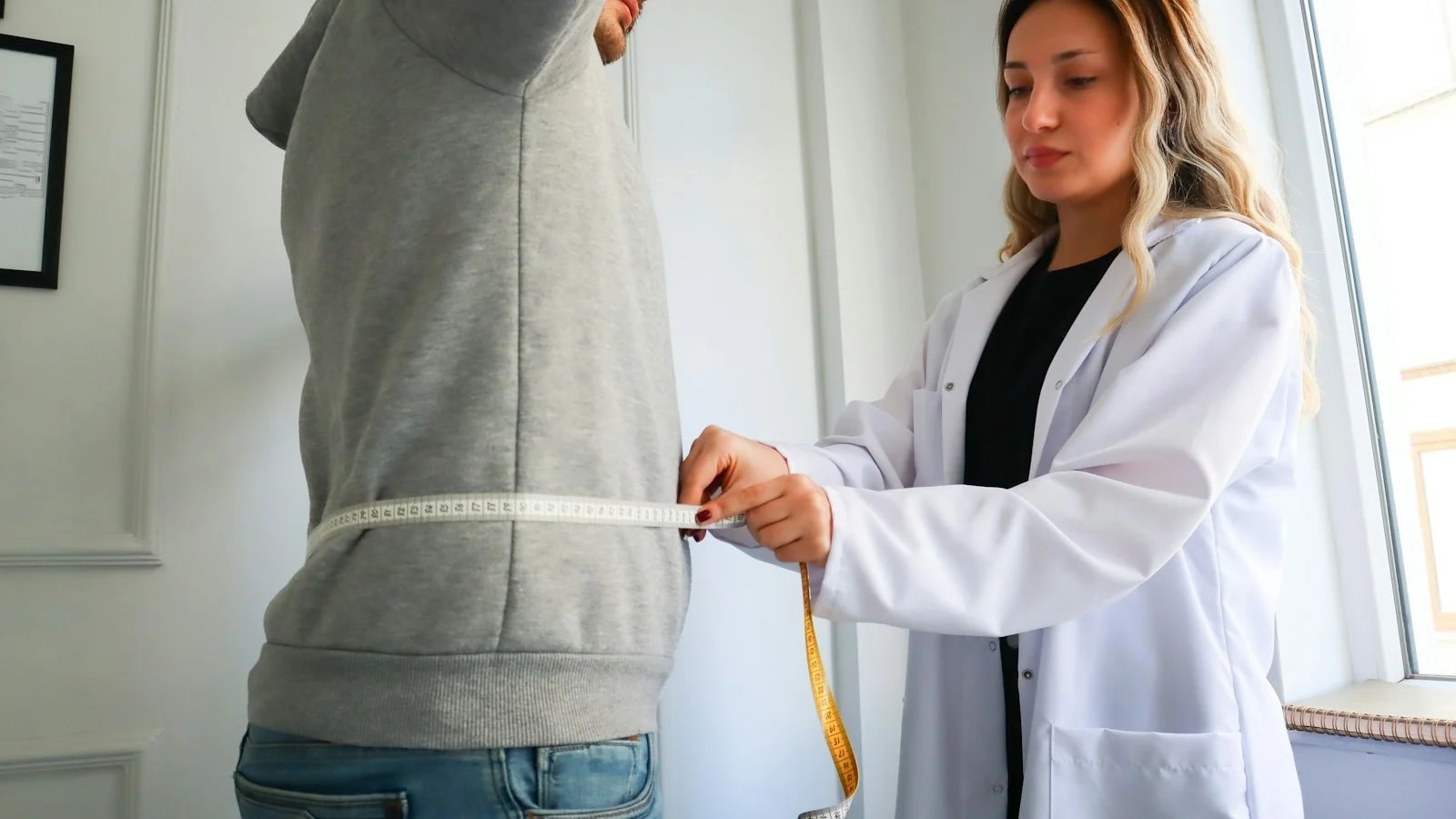
- Waist: measure at the navel, in the morning before eating, relaxed, every week or two. Use the same tape and the same spot each time.
- Photos: same light, same poses, same time of day, once a month. Compare them side by side, not from memory.
- Strength: weight or reps going up on your main lifts is a good sign, especially with a stable or shrinking waist.
- Body fat estimate: retake it every few weeks with the same method and compare trends.
The Barakat review also notes that body composition methods have their own limitations, so one reading is never the full story (Barakat et al., 2020). Look at the direction over several weeks.
Waist | Lifts | What it probably means |
|---|---|---|
Down or stable | Going up | The recomp is working |
Going up fast | Going up | Surplus is bigger than you need |
Stable | Stalled | Check protein, sleep and whether you are adding weight or reps |
Going down | Going down | Deficit is probably too big |
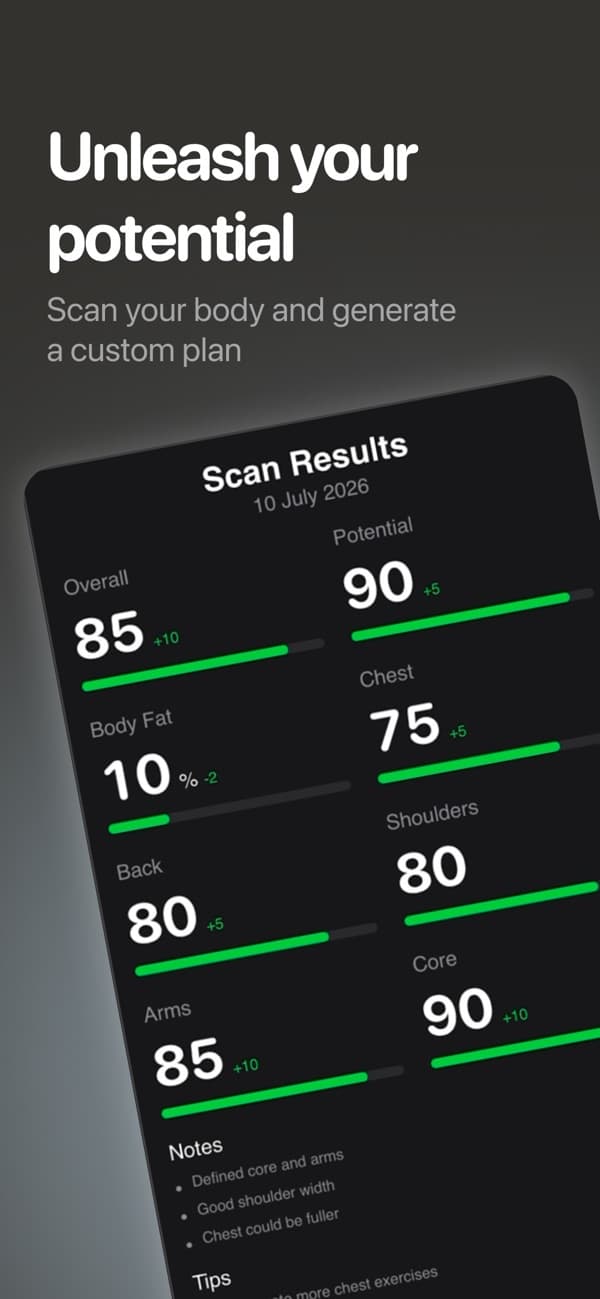
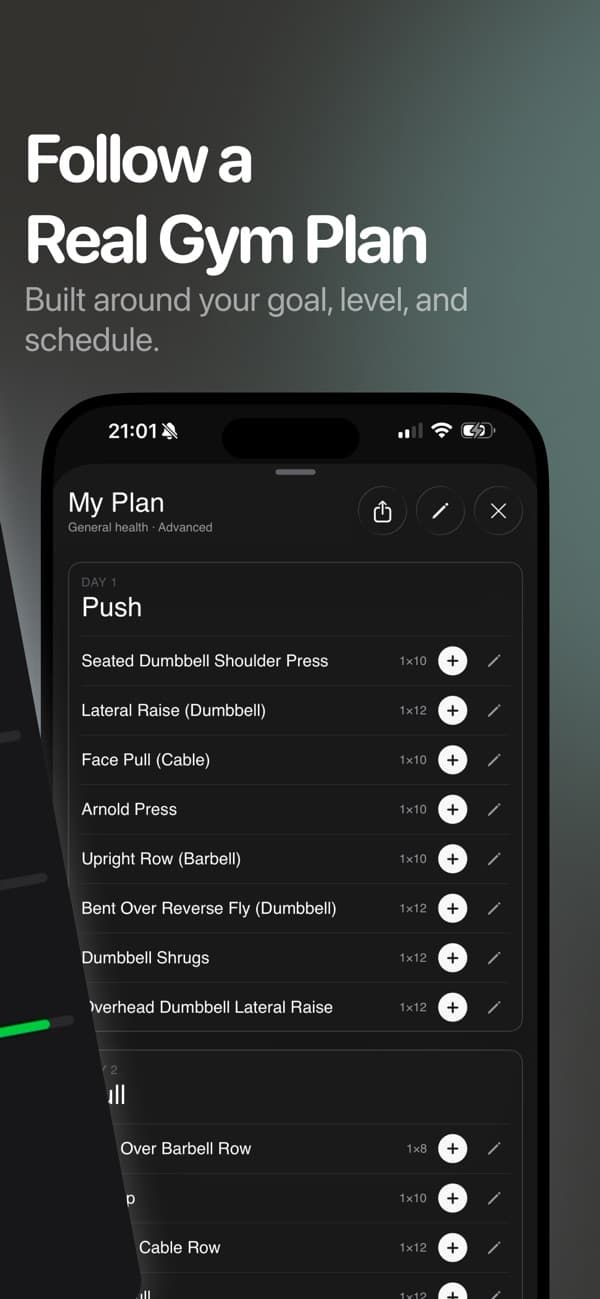
Photos and a tape measure tell you that something changed, but not which muscles are holding you back. A body scan can show which muscle groups lag behind, so your extra sets go where they make the most difference.
Frequently asked questions
Should I cut or bulk if I'm skinny fat?
If you are new to lifting and your body fat is not high, usually neither. Lift with progressive overload, eat enough protein and eat at maintenance or slightly below. Cut first if your body fat is clearly high, and lean bulk once you are trained, leaner and want more size.
Can you lose fat and build muscle at the same time?
Yes. A 2024 editorial in Frontiers in Nutrition notes that body recomposition has been shown in untrained, trained and highly trained people. It is easier when the calorie deficit is small: a 2022 meta-analysis found that a deficit of around 500 kcal a day was enough to stop lean mass gains in its model.
How much protein should I eat if I'm skinny fat?
The ISSN position stand recommends 1.4 to 2.0 g of protein per kg of body weight a day for most people who exercise, spread over meals of about 20 to 40 g. During a calorie deficit, it says 2.3 to 3.1 g/kg a day may be needed to keep as much lean mass as possible.
What body fat percentage is skinny fat?
There is no official number. Skinny fat describes a low ratio of muscle to fat at a normal weight, not a single percentage. A tape-measure estimate from a body fat calculator tells you which band you are in, which helps you decide whether to recomp, cut or bulk.
Why isn't the scale moving when I recomp?
That is expected. Recomposition means losing fat while keeping or adding muscle, often with little change in total body weight. Track your waist, photos and the weights you lift instead.
Will cardio fix skinny fat?
Cardio on its own does not build much muscle, and a lack of muscle is half the problem. Keep any cardio you enjoy, but make resistance training with progressive overload the core of the plan.

RepZet
Take a quick test and scan your body to get a 100% personalized routine built around your weak points.
Sources
- Barakat C, Pearson J, Escalante G, Campbell B, De Souza EO (2020). Body recomposition: can trained individuals build muscle and lose fat at the same time? Strength and Conditioning Journal 42(5):7–21.
- Bonilla DA, Petro JL, Cannataro R, Kreider RB, Stout JR (2024). Editorial: New insights and advances in body recomposition. Frontiers in Nutrition 11:1467406.
- Jäger R et al. (2017). International Society of Sports Nutrition position stand: protein and exercise. Journal of the International Society of Sports Nutrition 14:20.
- Currier BS et al. (2026). ACSM Position Stand. Resistance training prescription for muscle function, hypertrophy, and physical performance in healthy adults: an overview of reviews. Medicine & Science in Sports & Exercise 58(4):851–872.
- Murphy C, Koehler K (2022). Energy deficiency impairs resistance training gains in lean mass but not strength: a meta-analysis and meta-regression. Scandinavian Journal of Medicine & Science in Sports 32(1):125–137.
- Iraki J, Fitschen P, Espinar S, Helms E (2019). Nutrition recommendations for bodybuilders in the off-season: a narrative review. Sports 7(7):154.

About the author
22, software developer and founder based in Madrid.
I'm Gabriel, I'm 22 and I live in Madrid. I write software, build my own products and I'm into maths, sport and fashion. Among other things I make three iPhone apps, Creatinely, LockTy and RepZet, and here I write about training, creatine and the small daily habits that add up. I also build apps and software for B2B clients as an independent developer. If you want to work together, write to me.
This is general information, not medical advice. Talk to a professional about your own situation.
Keep reading

Maintenance Calories: How to Find Yours and Check It With Your Scale
Maintenance calories keep your weight stable. Estimate them with a formula, then eat that amount for 2 to 3 weeks and let your weekly weight average correct it.

75 Hard Challenge: The Official Rules, 75 Soft and the Risks
75 Hard means two 45-minute workouts, a diet with no alcohol or cheat meals, a gallon of water, 10 pages and a photo daily for 75 days. Rules, 75 Soft, risks.

Arnold Split: The Full 6-Day Program, Who It Suits and a 4-Day Version
The Arnold split trains chest and back, shoulders and arms, then legs, twice a week. The full 6-day program, who it suits, a 4- and 5-day version and PPL.
Double Progression Explained: When to Add Weight and How Much
Double progression: keep the weight, add reps until every set hits the top of your range, then add a little weight and start again. Rep ranges, jumps, examples.

How to Calculate Your One Rep Max (Epley and Brzycki Formulas, With a % Table)
Estimate your one rep max from a set of 10 reps or fewer with the Epley or Brzycki formula. Worked examples, a percentage table and when to test a true max.

How Many Sets per Week to Build Muscle? (What the Studies Say per Muscle)
Most research supports about 10 to 20 hard sets per muscle per week to build muscle. How to count sets, split them across the week and know when to add more.