Best Workout Tracker App in 2026: 7 Apps and a Notebook Compared
 Gabriel SánchezPublished
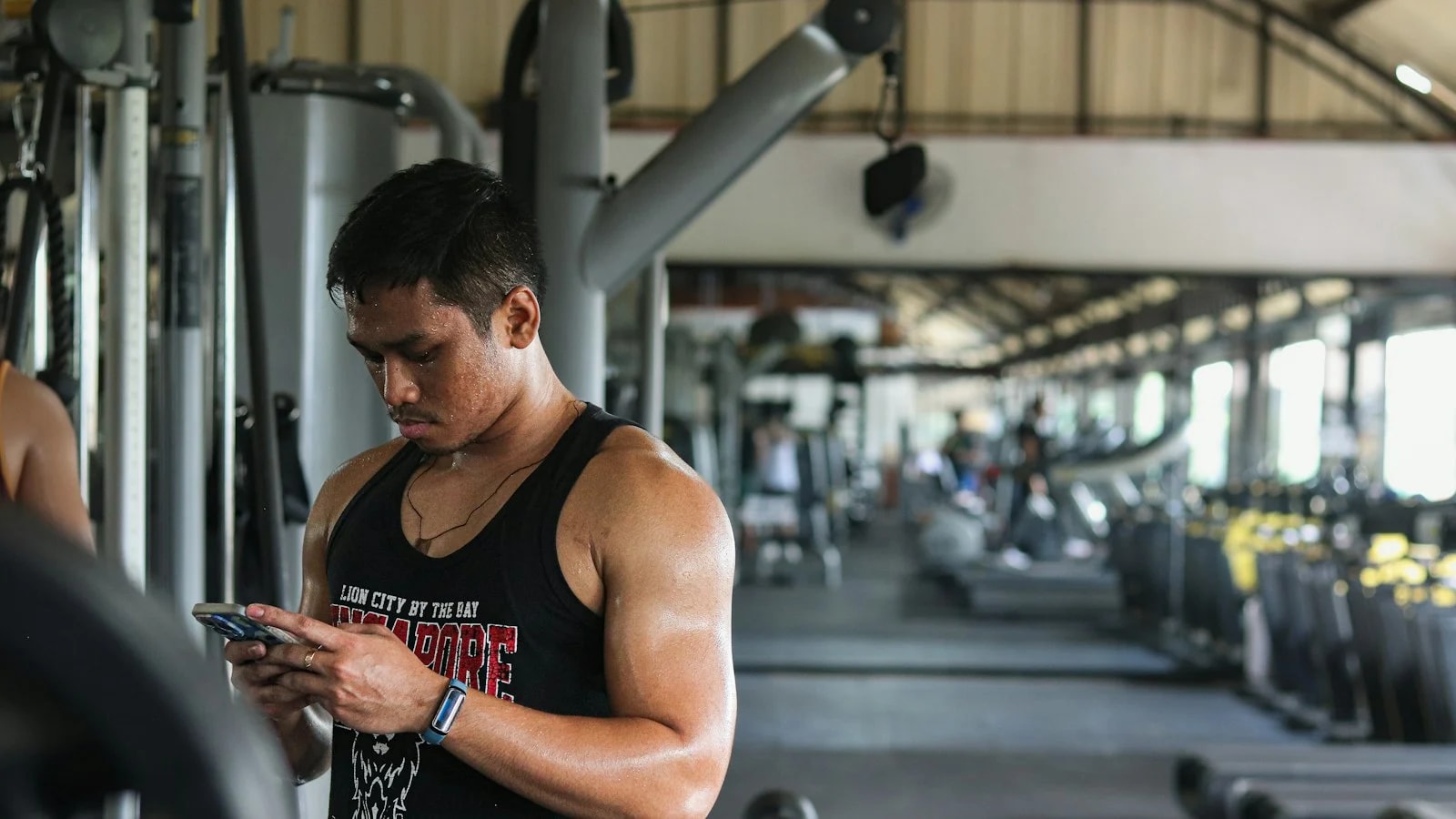

The best workout tracker app depends on what you want it to do. If you only want to log your sets and watch the numbers go up, Hevy and Strong are the safe picks: both are free to download and run on iPhone, Android and Apple Watch. If you want the app to decide what you lift each day, look at Fitbod or JEFIT. If you want a ready-made program from a known coach, Boostcamp or StrengthLog. RepZet fits if you want a routine built from a body scan around your weak points and would rather type your sets than tap through fields.
How this comparison was made
Everything below comes from each app's official website and US App Store page, checked on October 17, 2026: the features each developer lists, what the free version includes when the listing says so, and the supported devices. I didn't time each app with a stopwatch, so the "How you log" column describes how you enter a set, not a measured speed.
Prices, ratings and download counts are left out. Prices change by country, and some of these apps give different user numbers on their website and on their App Store page. All seven are free to download, and most sell a subscription that unlocks more.
The apps side by side
How you log | Routines and plans | Progress tracking | Body and weak-point analysis | Platforms | |
|---|---|---|---|---|---|
Hevy | Tap through sets, rest timer per exercise | Your own routines, copy friends' routines | 1RM, volume, best weight, records | Muscle group graphs, measurements with Pro | iOS, Android, Apple Watch, Wear OS, web |
Strong | Tap through sets, warm-up and plate calculators | Your own routines (3 on the free version) | 1RM and volume graphs, records | Body measurements, muscle heat map | iOS, Android, Apple Watch |
Fitbod | The app builds the session, you log inside it | AI-generated workouts from your equipment, history and recovery | Workout history | Muscle recovery | iOS, Android, Apple Watch |
JEFIT | Tap through sets | Built-in programs and an AI "Adaptive Plan" | 1RM, volume, weekly sets per muscle | Muscle map, recovery chart, body measurements | iOS, Android, Apple Watch |
StrengthLog | Tap through sets, RPE and RIR with Premium | Free programs, full catalog with Premium | Records and volume, advanced stats with Premium | Body measurements, muscles-worked map | iOS, Android, Apple Watch |
Boostcamp | Tap through sets with RPE, RIR and estimated 1RM | Coach and community programs, AI coach, auto-progression | Volume, records, estimated 1RM | Muscle group engagement, per-muscle heatmap with Pro | iOS, Android |
RepZet | Type the set like a text message | Routine from a quick test and a body scan, today's workout | Last session and what to beat next | Body scan, rank per muscle, weak points | iPhone |
Notebook or spreadsheet | Write it down | Whatever you plan | You do the math | None | Paper or any device |
Hevy
Hevy is a log first and a social app second. You build routines, tap through sets, mark warm-up, drop and failure sets, and get a rest timer for each exercise. The graphs cover volume, best weight, total reps and estimated one-rep max. You can follow friends, see their workouts and copy their routines, or keep your profile private.
It runs on more devices than anything else here: iPhone, Android, Apple Watch, Wear OS and a web version for planning routines on a computer. According to its App Store listing, Hevy Pro adds unlimited routines, full graph history, unlimited custom exercises and advanced measurements.
Best for: lifters who already know what they want to do and want a quick, free log, especially if their friends use it too.
Strong
Strong keeps things minimal. Its App Store listing says it is built around progressive barbell programs such as Starting Strength or StrongLifts 5x5 and adapts to any routine. You get set tags, supersets, a rest timer, warm-up and plate calculators, 1RM and volume graphs, a body measurements tracker and CSV export. The Apple Watch app logs workouts with or without the iPhone nearby.
The free version saves unlimited workouts but only 3 custom routines. Strong Pro removes that limit.
Best for: people running one simple barbell program who don't want a feed or extras, and who like being able to export their data.
Fitbod
Fitbod works the other way round. Instead of you writing the plan, the app builds each session from your equipment, training history and recovery, and you log what you do inside it. It has over 1,000 exercises with videos, and the listing says it learns from the changes you make to its suggestions. It needs a monthly or yearly subscription once the free trial ends.
Best for: people who don't want to plan and are happy to let an algorithm choose the exercises each day. Less useful if you want to run the same fixed program for months.
JEFIT
JEFIT tries to cover everything. Its library has more than 1,400 exercises, and besides logging your own workouts you can download built-in programs or follow its AI "Adaptive Plan", which the listing says adapts every week and suggests the weight and reps for your next session. Its stats go deep: weekly sets per muscle, movement balance, a muscle map, a recovery chart, and body weight, body fat and measurements. Some features need the paid Elite membership.
Best for: lifters who want programs, next-session suggestions and detailed stats in the same app.
StrengthLog
StrengthLog is made by a Swedish company that also runs a large strength training site. Its free version is generous: unlimited workouts, no ads, a library of 500+ exercises, a rest timer, a plate calculator, records, goals and a set of free programs. Premium adds the full program catalog, advanced statistics, and RPE and reps in reserve logging with estimated 1RM.
Best for: people who want a free, ad-free log with solid programs, and who may pay later for effort logging and deeper stats.
Boostcamp
Boostcamp began by putting popular Reddit programs into an app. Today it has a large library of community programs plus more than 130 plans from coaches such as Eric Helms, Greg Nuckols and Cody Lefever (GZCL), and the library is free. You log RPE, reps in reserve and estimated 1RM, auto-progression sets your next weights, and an AI coach builds a multi-week plan from a short questionnaire. Its FAQ says there is no Apple Watch or Wear OS app.
Best for: lifters who want to run a named program like 5/3/1, GZCLP or PHUL without copying it into a spreadsheet.
RepZet
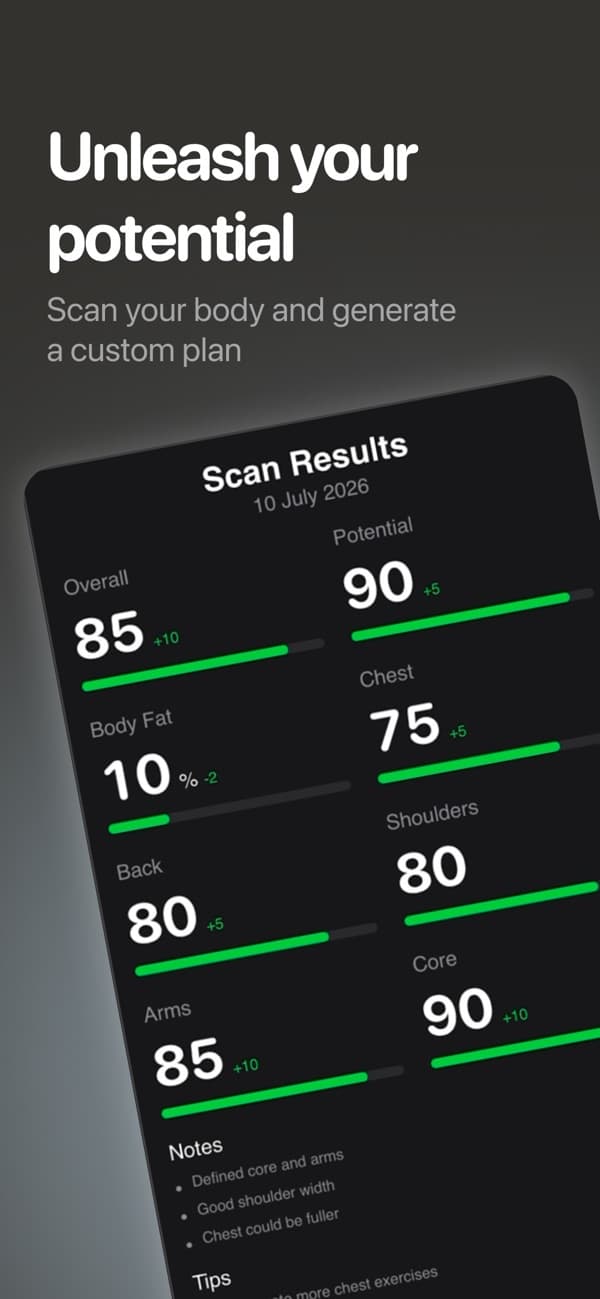
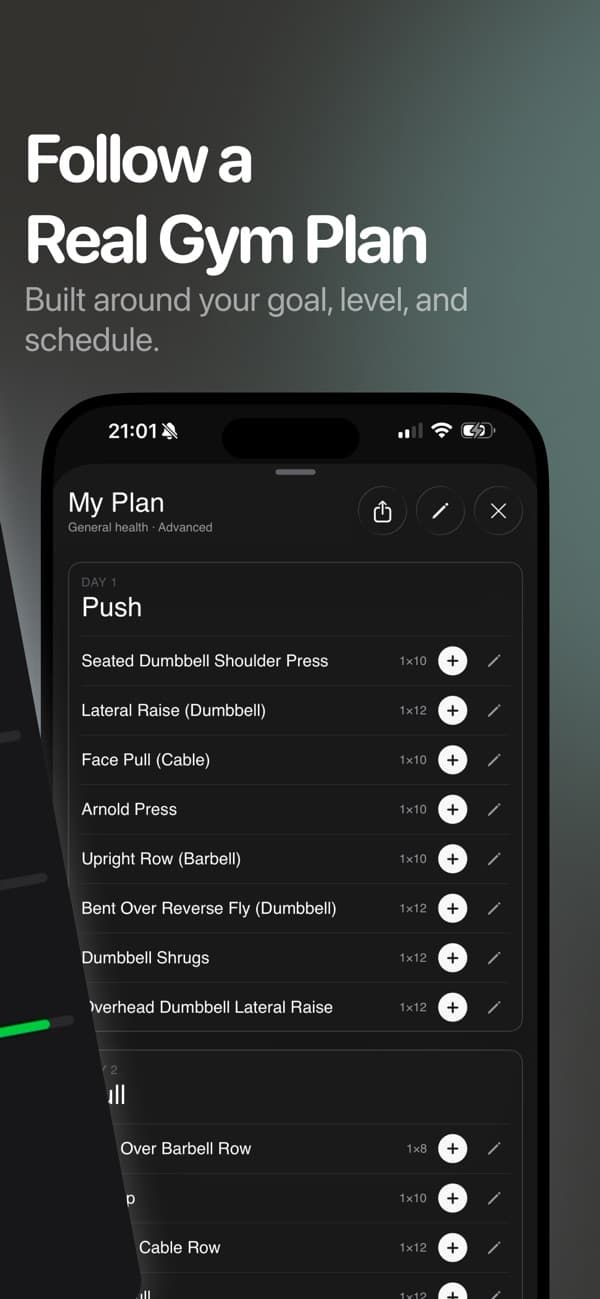
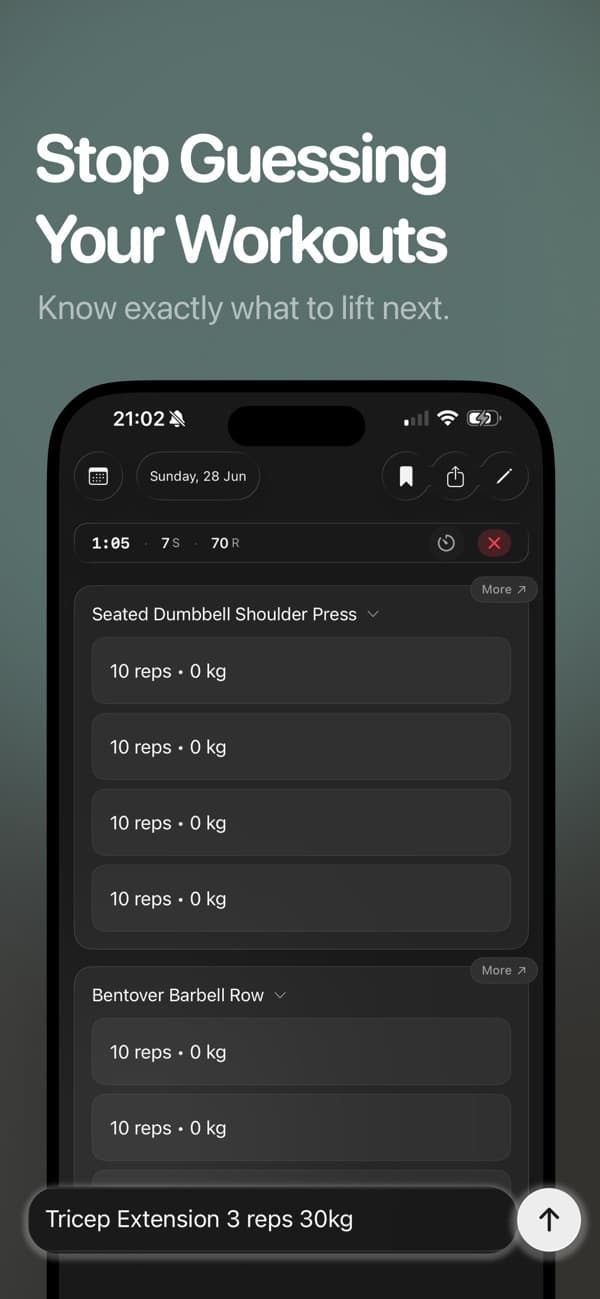
RepZet starts from your body instead of a program library. You take a quick test and a body scan, and it builds a 100% personalized routine around your weak points. You get a rank for each muscle, and every day it shows you today's workout. To log, you type the set the way you'd text it to a friend, for example "bench 60 kg 3x10", instead of filling in fields. It shows what you did last session and suggests what to beat next, so progressive overload doesn't depend on you remembering the numbers. There's also a chat where you can ask about technique or what to do today.
Full disclosure: I'm the developer of RepZet, and this blog is mine as well, so weigh this section with that in mind. What counts against it: it's iPhone only, with no Android, Apple Watch or web version. If you want to run a named program like 5/3/1, Boostcamp or StrengthLog suit you better.
Best for: iPhone users who don't know which muscles to prioritize and want the plan and the log in one place.
A notebook or a spreadsheet
Paper still works. It costs nothing, has no subscription or battery, and you can write whatever you like. The cost is the math: to find last week's numbers you flip back through pages, and you work out estimated maxes and weekly sets yourself. A spreadsheet solves part of that if you're willing to build the formulas.
Best for: people who enjoy writing things down and only track a handful of lifts.
What to log, whatever you use
The tool matters less than writing down the same things every session. For each exercise:
- The weight.
- The number of sets.
- The reps in each set.
- How hard it was, as RPE or reps in reserve (RIR). On the RIR-based scale, RPE 10 means you had no reps left, RPE 9 means one more was possible and RPE 8 means two (Helms et al., 2016).
Effort is the number people skip, and it's the one that tells you whether last week's 8 reps were easy or a grind. Here is what two sessions might look like (the numbers are an example):
Day | Exercise | Weight | Reps per set | RPE per set |
|---|---|---|---|---|
Monday | Bench press | 60 kg | 8, 8, 7 | 8, 8.5, 9 |
Thursday | Bench press | 60 kg | 9, 8, 8 | 8, 8.5, 9 |
Those numbers are what progression runs on. The ACSM suggests adding 2–10% to the load once you can do one or two reps more than your target on two sessions in a row (ACSM, 2009). Double progression turns that into a simple rule, and what is progressive overload covers the other ways to progress.
With a log like the one above you can estimate your max with the one-rep max calculator, set the next session's target with the progressive overload calculator and check your volume per muscle with the weekly sets calculator.
How to choose
- Do you already have a program? If you do, you mainly need a quick log: Hevy, Strong or StrengthLog. If you want to pick one from a library, Boostcamp or StrengthLog. If you don't want to plan at all, Fitbod, JEFIT or RepZet.
- Which phone and watch do you use? Android rules out RepZet. Logging from an Apple Watch rules out Boostcamp and RepZet. Hevy's website lists both an Apple Watch and a Wear OS app; for the others, check the Play Store listing if you wear a Wear OS watch.
- How much do you want to pay? Fitbod needs a subscription after the trial, and Strong's free version stops at 3 routines. StrengthLog and Boostcamp list unlimited logging and free programs.
Then use it for two weeks with the same lifts. If you stop logging after a few sessions, the app doesn't suit you, however good its feature list looks.

Want a log that also plans your next set?
Discover the routine that fits your body with a simple scan.
Frequently asked questions
What is the best app to track workouts?
It depends on what you need. For a fast log of a program you already have, Hevy and Strong are the usual picks. If you want the app to plan your sessions, look at Fitbod or JEFIT. To follow a coach's program, Boostcamp or StrengthLog. RepZet builds a routine around your weak points from a body scan and runs on iPhone only.
Is Hevy or Strong better?
Both log sets quickly and show 1RM and volume graphs. Hevy adds a social feed, a Wear OS app and a web version. Strong is more minimal and its free version is limited to 3 custom routines. If you train alone with one barbell program, Strong is enough; if you want to see and copy friends' workouts, Hevy.
Is there a completely free workout tracker app?
StrengthLog's free version includes unlimited workout logging, free programs and no ads, and Boostcamp's program library is free. A paper notebook is free too. Most other apps are free to download and sell a subscription for extra features.
Is it better to track workouts on paper or in an app?
Both work if you write down the same numbers every session. Paper is free and flexible, but you have to find last week's numbers and do the math yourself. An app shows your last session at a glance and calculates estimated 1RM and volume for you.
What should I track in a workout log?
For each exercise: the weight, the number of sets, the reps in each set and how hard it felt, as RPE or reps in reserve. Those numbers are enough to know when to add reps or weight.
Which workout tracker apps work on Android?
As of October 2026, Hevy, Strong, Fitbod, JEFIT, StrengthLog and Boostcamp all have Android apps. RepZet is iPhone only.
RepZet
Take a quick test and scan your body to get a 100% personalized routine built around your weak points.
Sources
- Hevy - Workout Tracker Gym Log (App Store, id1458862350)
- Strong Workout Tracker Gym Log (App Store, id464254577)
- Fitbod: Gym & Fitness Planner (App Store, id1041517543)
- JEFIT Workout Plan Gym Tracker (App Store, id449810000)
- StrengthLog – Workout Tracker (App Store, id1434229662)
- Boostcamp: Workout Tracker (App Store, id1529354455)
- RepZet – AI Gym Tracker (App Store, id6769857532)
- Helms ER et al. (2016). Application of the repetitions in reserve-based rating of perceived exertion scale for resistance training. Strength and Conditioning Journal 38(4):42–49.
- American College of Sports Medicine (2009). Progression models in resistance training for healthy adults. Medicine & Science in Sports & Exercise 41(3):687–708.

About the author
22, software developer and founder based in Madrid.
I'm Gabriel, I'm 22 and I live in Madrid. I write software, build my own products and I'm into maths, sport and fashion. Among other things I make three iPhone apps, Creatinely, LockTy and RepZet, and here I write about training, creatine and the small daily habits that add up. I also build apps and software for B2B clients as an independent developer. If you want to work together, write to me.
This is general information, not medical advice. Talk to a professional about your own situation.
Keep reading
Double Progression Explained: When to Add Weight and How Much
Double progression: keep the weight, add reps until every set hits the top of your range, then add a little weight and start again. Rep ranges, jumps, examples.

How to Progressive Overload Without Adding Weight (6 Methods With Examples)
You can progressive overload without adding weight by doing more reps, adding sets, slowing the lowering phase or using a fuller range of motion. How and when.
What Is Progressive Overload? Definition, Methods and Real Examples
Progressive overload means asking a bit more of your muscles over time: more weight, reps or sets. What it is, the ways to apply it and examples you can copy.
Skinny Fat: What It Is and Whether to Cut, Bulk or Recomp
Skinny fat means a normal weight with little muscle. Most beginners should recomp: lift, eat enough protein, stay near maintenance. When to cut or bulk instead.
Maintenance Calories: How to Find Yours and Check It With Your Scale
Maintenance calories keep your weight stable. Estimate them with a formula, then eat that amount for 2 to 3 weeks and let your weekly weight average correct it.

75 Hard Challenge: The Official Rules, 75 Soft and the Risks
75 Hard means two 45-minute workouts, a diet with no alcohol or cheat meals, a gallon of water, 10 pages and a photo daily for 75 days. Rules, 75 Soft, risks.