Best Chest Exercises for Upper, Middle and Lower Chest
 Gabriel SánchezPublished
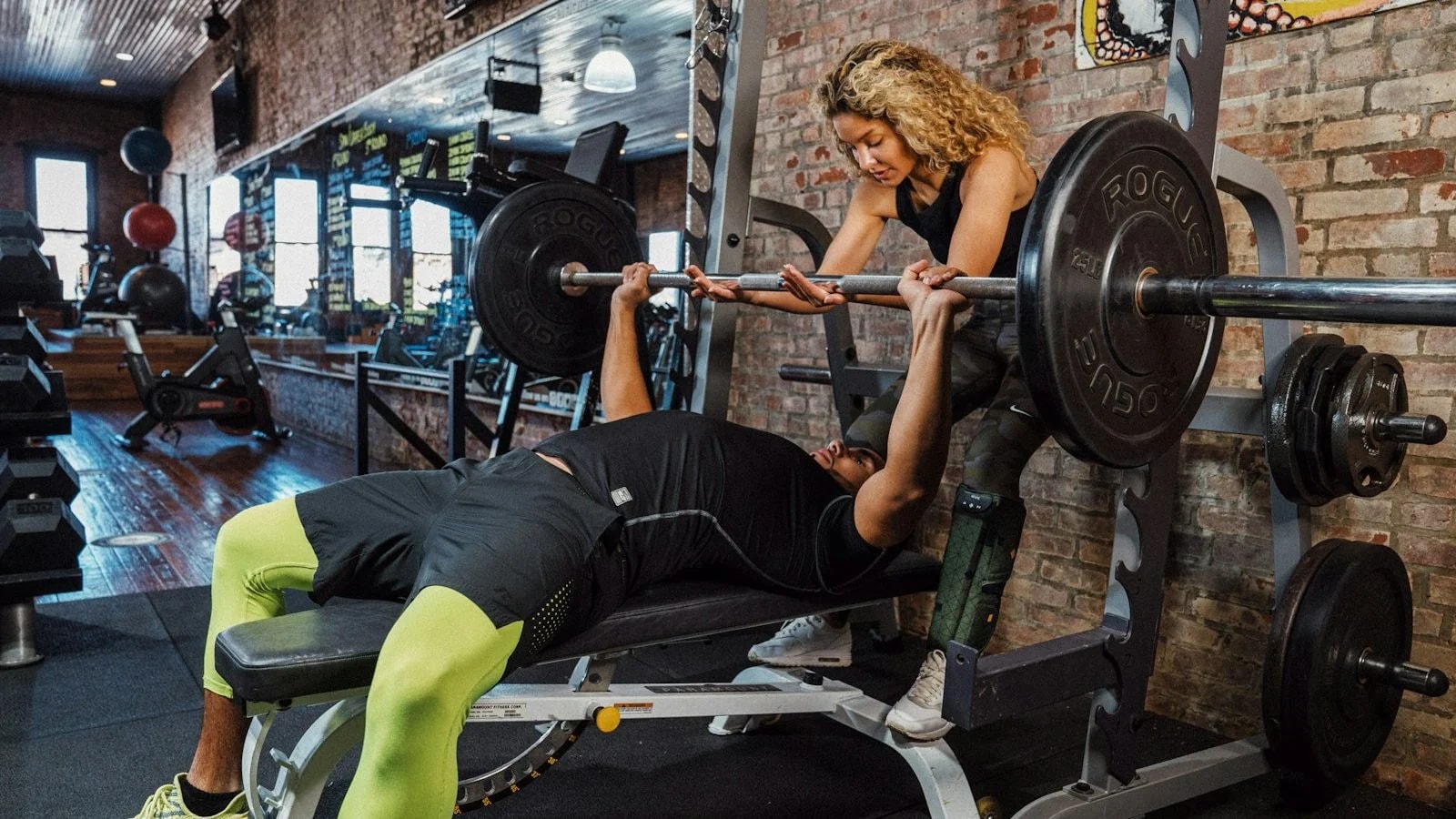

The best chest exercises are the flat bench press for the middle and lower chest, an incline press at about 30 degrees for the upper chest, and dips or cable flyes to add volume. In a study of five bench angles, upper chest activity peaked at 30 degrees, and the middle and lower chest were most active on a flat bench (Rodríguez-Ridao et al., 2020). Build your week around those presses, then add a fly.
Which part of the chest each exercise trains
The pectoralis major is one fan-shaped muscle with fibers that run in different directions. The upper (clavicular) fibers attach to the collarbone and pull the arm up and across. The middle and lower (sternal) fibers attach to the breastbone and ribs and pull the arm across and down. You can't isolate one region completely, but the angle you press at changes which fibers do more of the work.
Rodríguez-Ridao and colleagues measured 30 trained adults pressing at 0, 15, 30, 45 and 60 degrees. The upper chest peaked at 30 degrees. The middle and lower chest were highest at 0 degrees, a flat bench. Above 45 degrees the front of the shoulder took over and chest performance dropped (Rodríguez-Ridao et al., 2020).
Training studies point the same way. In 8 weeks of training with equal sets, untrained men who did the incline bench press gained more thickness in the upper chest than those who did the flat bench or a mix of both (Chaves et al., 2020).
The best chest exercises
1. Barbell bench press
- Lie on a flat bench with your eyes under the bar and your feet flat on the floor.
- Grip the bar a little wider than shoulder-width, pull your shoulder blades back and down, and keep a small arch in your upper back.
- Lower the bar under control to your mid or lower chest, with your elbows tucked partway toward your sides.
- Press up and slightly back until your arms are straight.
Use a spotter or safety arms when you go close to failure. Work in the 5 to 10 rep range. The one-rep max calculator turns a recent set into a target weight for any rep range.
2. Incline press at 30 degrees
This is the core of any upper chest workout. Set an adjustable bench to about 30 degrees (often the second or third notch) and press a barbell or dumbbells exactly as you would on the flat bench, lowering to your upper chest. If you feel it mostly in the front of your shoulders, lower the bench a notch. Use 6 to 12 reps.
3. Dumbbell bench press
Dumbbells let each arm move on its own and let your hands come lower than a barbell would, which gives the chest a deeper stretch. Lower until your elbows are just below the bench, then press the dumbbells up and slightly together. Use 8 to 12 reps. It is a good swap for anyone whose shoulders don't like the barbell.
4. Dips
Lean your torso forward and let your elbows travel out a little to shift the dip toward the chest. Lower until your upper arms are about parallel to the floor, then press up. Dips press down and forward, so they load the lower chest along with the triceps. Use an assisted machine or band if you can't do 6 clean reps, and stop if the front of your shoulder hurts.
5. Cable fly
- Set both pulleys at shoulder height (or high for a lower chest focus, low for an upper chest focus).
- Step forward with a slight bend in your elbows and arms open wide.
- Bring your hands together in an arc in front of your chest, then let them open until you feel a stretch.
Keep the elbow angle fixed so the movement stays at the shoulder. Flyes don't need heavy weight. Use 10 to 15 reps. A pec deck machine does the same job. In the Campos study, the dumbbell fly and the bench press loaded the front deltoid to a similar degree, about 19% and 21% of maximum, so flyes are not much easier on the shoulders than presses (Campos et al., 2020).
6. Push-up
Hands slightly wider than your shoulders, body straight from head to heels, lower until your chest nearly touches the floor. Push-ups build the chest as long as the sets are hard. A review of loading research concluded that muscle can grow across a wide spectrum of loads (Schoenfeld et al., 2021), so the number of reps matters less than ending close to failure. Raise your feet or add a pause when they get easy.
Upper chest workout
Do this once a week on its own or as the first half of a push day. All numbers are examples to adjust to your level.
Exercise | Sets × reps | Rest |
|---|---|---|
Incline barbell press (30°) | 3 × 6–8 | 2–3 min |
Incline dumbbell press (30°) | 3 × 8–12 | 2 min |
Low-to-high cable fly | 3 × 12–15 | 90 s |
Lower chest workout
Exercise | Sets × reps | Rest |
|---|---|---|
Flat barbell bench press | 3 × 5–8 | 2–3 min |
Dips (leaning forward) | 3 × 8–12 | 2 min |
High-to-low cable fly | 3 × 12–15 | 90 s |
A decline bench also works the lower chest, but because the flat bench press already gives those fibers their highest activity, you don't need one.
How many sets and reps for chest
A meta-analysis of 15 studies found a dose-response between weekly sets and muscle growth, with 10 or more sets per muscle per week giving the best results (Schoenfeld et al., 2017). The 2026 ACSM position stand reached the same conclusion from 137 systematic reviews, and also found that training to momentary failure did not consistently change outcomes (Currier et al., 2026).
In practice:
- Start around 10 hard chest sets per week. Combining the two workouts above in one week gives 18.
- Keep heavy presses in the 5 to 10 rep range and flyes in the 10 to 15 range.
- End most sets one or two reps before failure.
- Add weight or reps each week where you can. The progressive overload calculator lays out the next few weeks for you.
Common mistakes
- Setting the incline too steep. At 45 degrees and above, the shoulders take over. Use about 30.
- Bouncing the bar off the chest. It shortens the hardest part of the lift and can hurt your ribs.
- Flaring the elbows straight out to the sides. Tuck them a little to spare the shoulders.
- Skipping the warm-up before heavy benching. A few lighter sets are enough, and the warm-up sets calculator works them out from your top set.
- Doing the same weight and reps for months. Track your sets so you know when to add load, as explained in what is progressive overload.
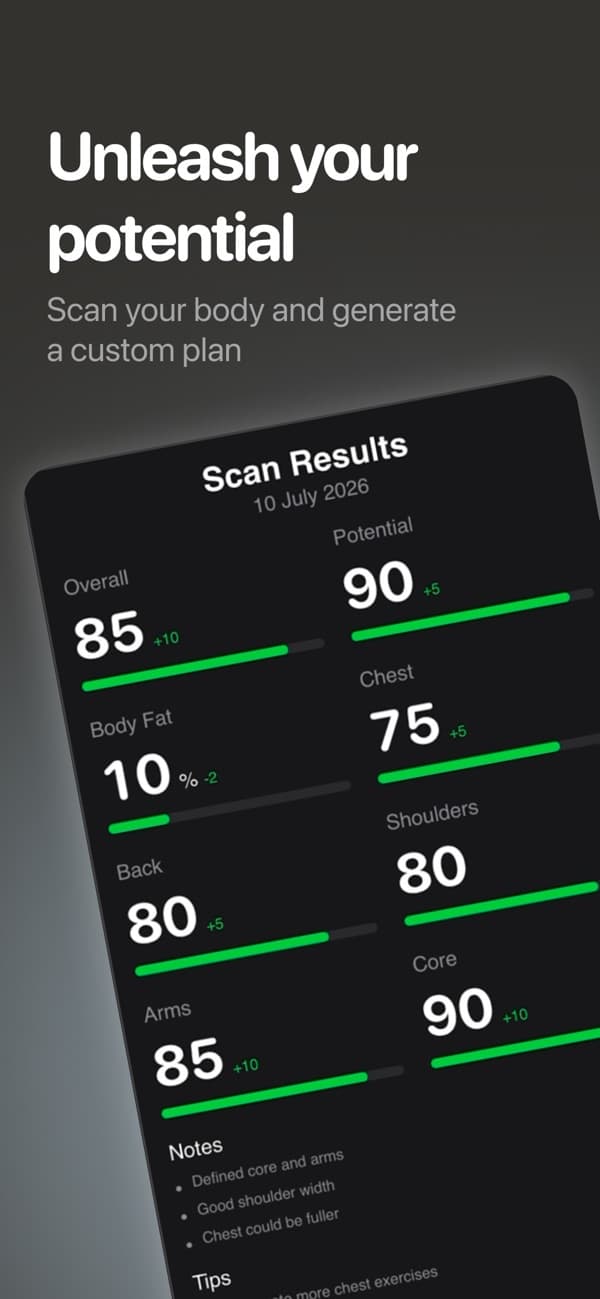
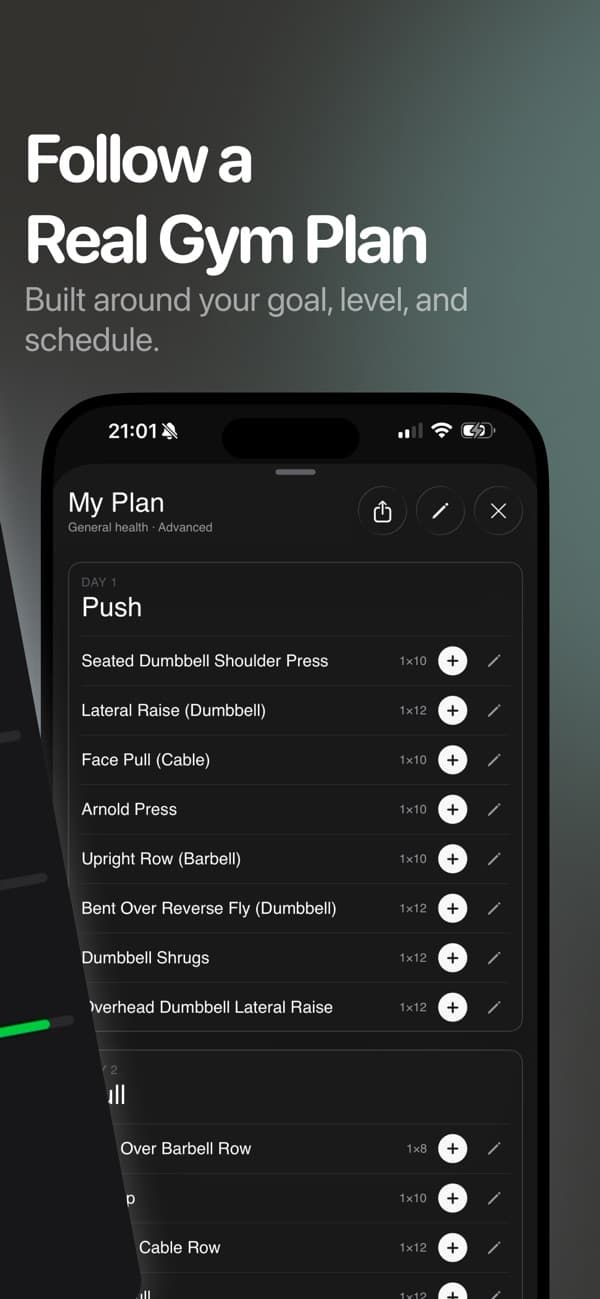
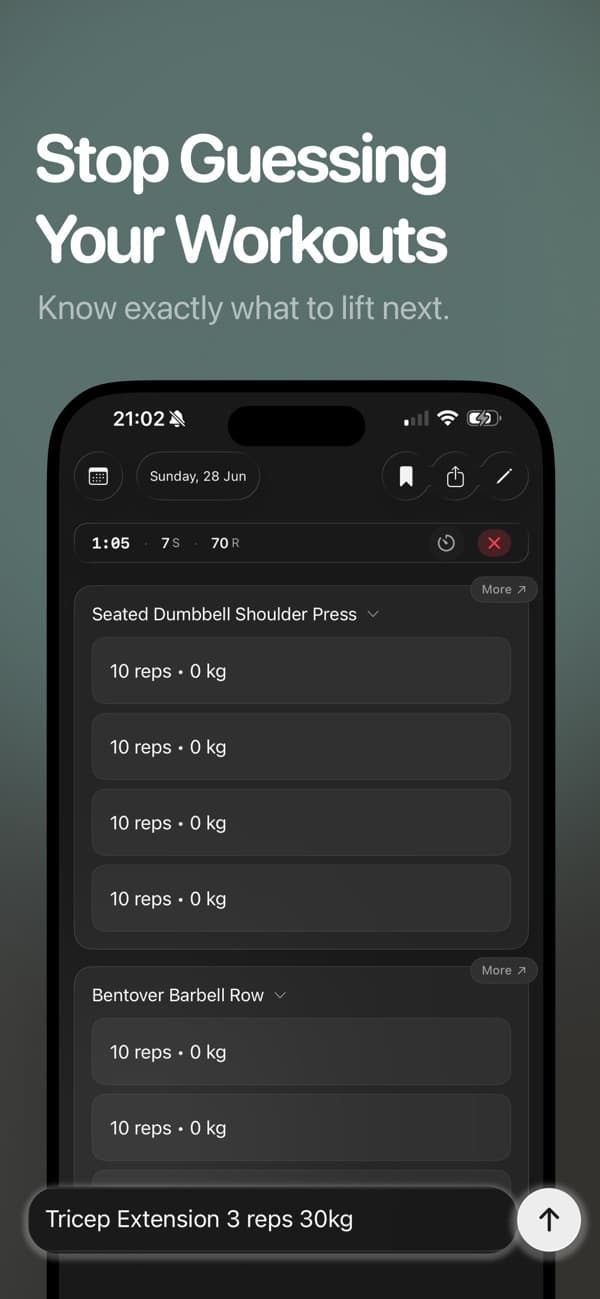

Want a chest that finally grows?
Discover the chest exercises that fit your body best with a simple scan.
If shoulder pain shows up during pressing and doesn't fade within a few days, lower the load and get it checked by a physical therapist before you push through it. For a full session that pairs these lifts with arm work, see the chest and tricep workout.
Frequently asked questions
What is the best exercise for the chest?
The flat bench press, with a barbell or dumbbells, is the best single choice because it trains the middle and lower chest hard and is easy to progress. Adding an incline press covers the upper chest.
What is the best incline for an upper chest workout?
About 30 degrees. In a study of 30 trained adults, upper chest activity peaked at a 30-degree bench, while inclines above 45 degrees shifted the work toward the front of the shoulders.
How do you target the lower chest?
The flat bench press already gives the lower chest high activity, and dips and high-to-low cable flyes add work in the same direction. A steep decline bench isn't required.
How many sets should I do for chest?
Start with about 10 hard sets per week, split over one or two sessions. Research links more weekly sets with more growth, up to around 20 for most people.
Are push-ups enough to build a chest?
They can be, as long as each set ends close to failure. Muscle growth has been reported across a wide range of loads, so once they get easy, make them harder by raising your feet, adding a pause or wearing a weighted vest.
RepZet
Take a quick test and scan your body to get a 100% personalized routine built around your weak points.
Sources
- Rodríguez-Ridao D et al. (2020). Effect of five bench inclinations on the electromyographic activity of the pectoralis major, anterior deltoid, and triceps brachii during the bench press exercise. International Journal of Environmental Research and Public Health 17(19):7339.
- Chaves SFN et al. (2020). Effects of horizontal and incline bench press on neuromuscular adaptations in untrained young men. International Journal of Exercise Science 13(6):859–872.
- Campos YAC et al. (2020). Different shoulder exercises affect the activation of deltoid portions in resistance-trained individuals. Journal of Human Kinetics 75:5–14.
- Schoenfeld BJ, Grgic J, Van Every DW, Plotkin DL (2021). Loading recommendations for muscle strength, hypertrophy, and local endurance: a re-examination of the repetition continuum. Sports 9(2):32.
- Schoenfeld BJ, Ogborn D, Krieger JW (2017). Dose-response relationship between weekly resistance training volume and increases in muscle mass: a systematic review and meta-analysis. Journal of Sports Sciences 35(11):1073–1082.
- Currier BS et al. (2026). ACSM Position Stand. Resistance training prescription for muscle function, hypertrophy, and physical performance in healthy adults: an overview of reviews. Medicine & Science in Sports & Exercise 58(4):851–872.

About the author
22, software developer and founder based in Madrid.
I'm Gabriel, I'm 22 and I live in Madrid. I write software, build my own products and I'm into maths, sport and fashion. Among other things I make three iPhone apps, Creatinely, LockTy and RepZet, and here I write about training, creatine and the small daily habits that add up. I also build apps and software for B2B clients as an independent developer. If you want to work together, write to me.
This is general information, not medical advice. Talk to a professional about your own situation.
Keep reading
Best Tricep Exercises: 6 Moves, Sets and a Sample Workout
The best tricep exercises are overhead extensions, pushdowns, dips and close-grip presses. How to do each one, how many sets to do and a sample tricep workout.

How to Calculate Your One Rep Max (Epley and Brzycki Formulas, With a % Table)
Estimate your one rep max from a set of 10 reps or fewer with the Epley or Brzycki formula. Worked examples, a percentage table and when to test a true max.

Basal Metabolic Rate (BMR): What It Is and How to Calculate It
Basal metabolic rate is the energy you burn at complete rest, about two-thirds of your daily total. The formulas, a worked example and what changes it.

Calorie Deficit to Lose Weight: How Big Should It Be?
A deficit that loses about 0.5 to 1% of your body weight a week works for most people. How to size it, a worked example, the minimum intake and why loss slows.
Best Workout Tracker App in 2026: 7 Apps and a Notebook Compared
Hevy, Strong, Fitbod, JEFIT, StrengthLog, Boostcamp and RepZet compared on logging, plans, progress and platforms, plus who each one suits. October 2026.
Skinny Fat: What It Is and Whether to Cut, Bulk or Recomp
Skinny fat means a normal weight with little muscle. Most beginners should recomp: lift, eat enough protein, stay near maintenance. When to cut or bulk instead.