Calorie Deficit to Lose Weight: How Big Should It Be?
 Gabriel SánchezPublished


To lose weight at a pace you can keep up, set a calorie deficit that takes off about 0.5 to 1% of your body weight per week. For most adults that means eating roughly 300 to 500 calories a day below maintenance, and not going under about 1,200 calories a day for women or 1,500 for men without medical supervision. The calorie deficit calculator turns your weight and chosen pace into a daily number.
How to size your deficit
You need two numbers: your maintenance calories and the pace you want.
- Find your maintenance. Estimate it with the TDEE calculator, then ideally confirm it with two or three weeks of weighing (the method is in maintenance calories).
- Pick a pace. Choose a weekly loss as a percentage of your body weight. A review of nutrition for natural bodybuilders recommends setting intake so that body weight drops by about 0.5 to 1% a week (Helms, Aragon & Fitschen, 2014). The CDC puts it in pounds: people who lose about 1 to 2 pounds a week are more likely to keep the weight off (CDC).
- Convert it to calories. One kilo of body weight is roughly 7,700 kcal (3,500 kcal per pound). Daily deficit = weekly loss in kg × 7,700 ÷ 7.
Harvard Health uses the same rule: a deficit of 500 calories a day for about a pound a week (Harvard Health).
A worked example
Made-up numbers: a woman who weighs 75 kg (165 lb) with a maintenance of 2,200 kcal a day.
Pace per week | Loss per week | Daily deficit | Daily calories |
|---|---|---|---|
0.25% | 0.19 kg (0.4 lb) | about 210 kcal | about 1,990 kcal |
0.5% | 0.38 kg (0.8 lb) | about 410 kcal | about 1,790 kcal |
0.75% | 0.56 kg (1.2 lb) | about 620 kcal | about 1,580 kcal |
1% | 0.75 kg (1.7 lb) | about 830 kcal | about 1,380 kcal |
For her, 0.5% a week is a sensible start. At 1% she is getting close to the 1,200 floor, and in a few months, as her maintenance drops, she would cross it. A heavier person has more room: at 110 kg, the same 0.5% is 0.55 kg a week and a deficit of about 600 kcal.
Why bigger isn't better
A larger deficit loses weight faster on paper, but there are costs.
In a study with 24 elite athletes who all lifted four times a week, one group dieted to lose 0.7% of body weight a week and the other 1.4%. Both lost about 5.5% of their weight. The slower group, eating about 19% less than usual, gained 2.1% lean body mass. The faster group, eating about 30% less, saw no change in lean mass (Garthe et al., 2011). These were athletes, so the exact numbers won't carry over to everyone, but the direction matches what the bodybuilding review recommends.
Bigger deficits are also harder to keep. Hunger, tiredness and worse workouts make it more likely you drop the plan after three weeks. A moderate deficit that lasts four months does more than an aggressive one that lasts four weeks.
There is also a floor. Harvard Health advises not going below 1,200 calories a day for women or 1,500 for men except under a health professional's supervision. If your numbers land below that, choose a slower pace or move more instead of eating less.
Why weight loss slows down
The 3,500-calories-per-pound rule assumes every pound you lose is the same mix of fat and lean tissue. A modelling paper showed it roughly fits people with more than 30 kg of body fat and overstates the energy per kilo for leaner people, who lose a larger share of lean tissue (Hall, 2008).
Your maintenance also drops as you lose weight, so the same intake gives a smaller deficit each month. In another model, the half time of weight change after a change in intake was about a year (Hall et al., 201160812-X)). That's why the straight line in any calculator is a best case. A plateau after two or three months usually means the deficit has shrunk, not that your body has stopped responding.
What to do:
- Recalculate maintenance every 4 to 5 kg lost and set a new target.
- Compare weekly averages, not daily weigh-ins. Water and salt can hide a week of fat loss.
- Before cutting food again, check your logging and your daily steps. Small gaps add up.
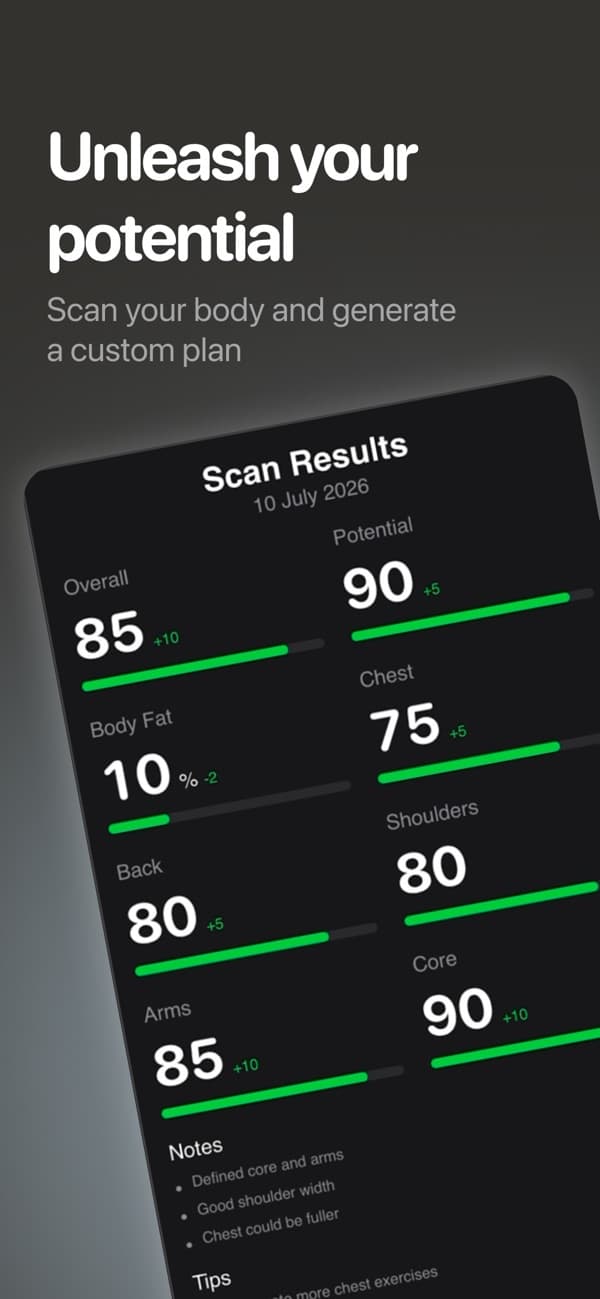
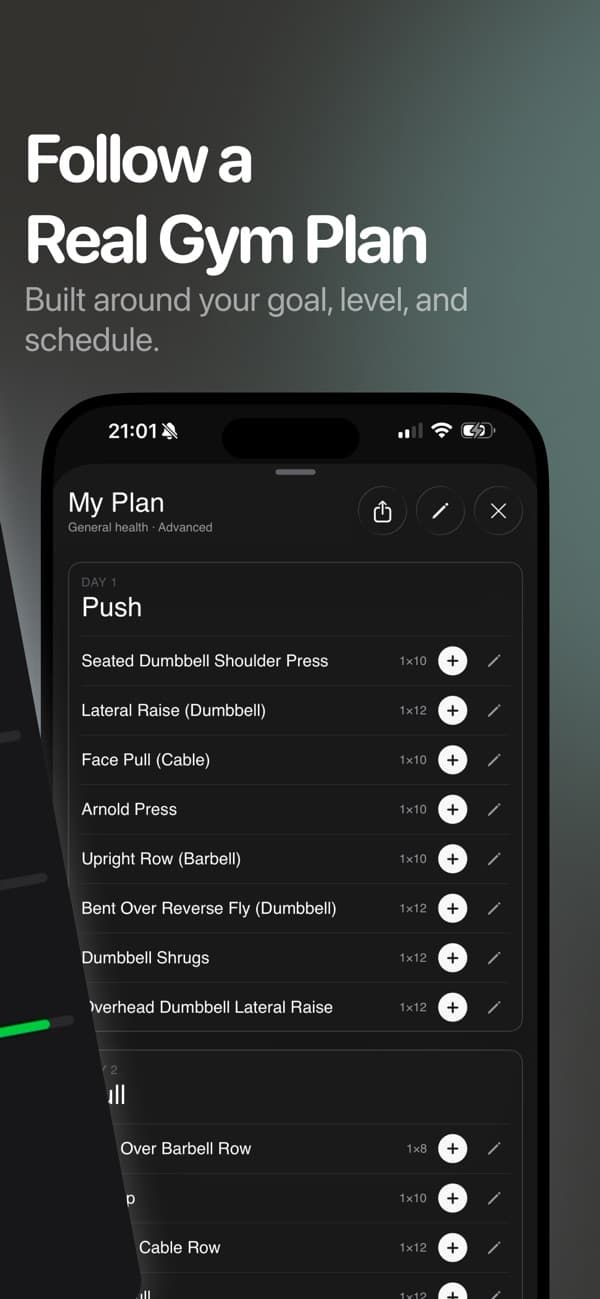

Want to lose fat and keep your muscle?
Get a fat loss routine that fits your body with a simple scan.
Protect your muscle while you diet
Two habits make most of the difference:
- Keep lifting. Strength training gives your body a reason to keep muscle while you eat less. See strength training for weight loss for how to set it up.
- Eat enough protein. Protein needs go up in a deficit. The protein calculator gives a target for dieting, and high protein foods for muscle building lists what to eat to reach it.
Don't expect a deficit to build much muscle at the same time. A 2022 meta-analysis of resistance training trials found that people training in an energy deficit gained less lean mass than people training without one, while their strength gains were similar. In its pooled model, a deficit of around 500 kcal a day was enough to stop lean mass gains, and the authors advise people who want to keep muscle while losing weight to stay below that (Murphy & Koehler, 2022). For the 75 kg woman in the example above, that points to the 0.5% pace rather than 0.75% or 1%. For many people, holding on to muscle during a diet is a fair goal, and adding it comes later.
Your strength in the gym is a useful check. If your main lifts hold steady or improve, the deficit is probably fine. If they drop week after week, slow the pace.
Diet breaks: does stopping help?
A diet break means eating at maintenance for a week or two before going back into a deficit. The best-known trial is the MATADOR study. Men with obesity were split into two groups. One dieted continuously for 16 weeks. The other did the same 16 weeks of dieting in two-week blocks, with two weeks at maintenance between each block, so the plan took 30 weeks. Intake during the diet blocks was 67% of maintenance in both groups (Byrne et al., 2018).
Per protocol, at the end | Continuous | With breaks |
|---|---|---|
Weight lost | 9.1 kg | 14.1 kg |
Fat lost | 8.0 kg | 12.3 kg |
Fat-free mass lost | 1.2 kg | 1.8 kg (not significantly different) |
During the maintenance blocks, weight barely moved, so the breaks didn't undo the progress. The trial has clear limits: 47 men with obesity started the diet, 36 finished it as planned, no women took part, the deficit was large, and the version with breaks took almost twice as long. Treat breaks as an option for a long diet that is wearing you down, not as a trick that speeds things up.
Signs your deficit is too big
- You are hungry most of the day and thinking about food constantly.
- Your sleep, mood or energy has dropped noticeably.
- Your lifts keep going down.
- You lose more than about 1% of your body weight per week after the first couple of weeks.
If several of these apply, add 100 to 200 kcal back and see how the next two weeks go.
Who should get help first
This article is general information, not medical advice. If you are pregnant or breastfeeding, under 18, have diabetes or another medical condition, take medication that affects appetite or blood sugar, or have had an eating disorder, don't start a diet without a doctor or a registered dietitian.
Frequently asked questions
How big should my calorie deficit be to lose weight?
Aim for a pace of about 0.5 to 1% of your body weight per week. For a 75 kg person, 0.5% a week is roughly 410 kcal a day below maintenance. Many people land around 300 to 500 kcal a day.
Is a 500 calorie deficit good?
For many adults it is a reasonable size. Harvard Health links a 500-calorie daily deficit to losing about a pound a week. For a small person it may be on the large side, so compare it with your body weight and keep intake above the usual minimums.
How much weight can I lose in a month in a calorie deficit?
At the CDC's suggested pace of 1 to 2 pounds a week, that is about 4 to 8 pounds a month. The first week often shows more because of water, and later weeks usually show less as your maintenance drops.
Why am I not losing weight in a calorie deficit?
Usually the deficit is smaller than you think: maintenance was overestimated, logging misses some food, or your maintenance dropped as you got lighter. Water can also hide fat loss for a week or two. Look at weekly averages over at least three weeks before changing anything.
Can you build muscle in a calorie deficit?
It gets harder. A 2022 meta-analysis found that lifting in an energy deficit led to smaller gains in lean mass than lifting without one, while strength gains were similar, and a deficit of about 500 kcal a day was enough to prevent lean mass gains in its model.
Do diet breaks help you lose weight?
One trial in 47 men with obesity found more fat loss when two-week diet blocks alternated with two weeks at maintenance than with continuous dieting. The intermittent plan took 30 weeks instead of 16, and the trial included only men with obesity.
What is the lowest number of calories I should eat?
A common guideline is not to go below about 1,200 kcal a day for women or 1,500 for men unless a health professional is supervising.
RepZet
Take a quick test and scan your body to get a 100% personalized routine built around your weak points.
Sources
- Helms ER, Aragon AA, Fitschen PJ (2014). Evidence-based recommendations for natural bodybuilding contest preparation: nutrition and supplementation. Journal of the International Society of Sports Nutrition 11:20.
- Garthe I, Raastad T, Refsnes PE, Koivisto A, Sundgot-Borgen J (2011). Effect of two different weight-loss rates on body composition and strength and power-related performance in elite athletes. International Journal of Sport Nutrition and Exercise Metabolism 21(2):97–104.
- Hall KD (2008). What is the required energy deficit per unit weight loss? International Journal of Obesity 32(3):573–576.
- Hall KD et al. (2011). Quantification of the effect of energy imbalance on bodyweight. The Lancet 378(9793):826–837.
- Murphy C, Koehler K (2022). Energy deficiency impairs resistance training gains in lean mass but not strength: a meta-analysis and meta-regression. Scandinavian Journal of Medicine & Science in Sports 32(1):125–137.
- Byrne NM, Sainsbury A, King NA, Hills AP, Wood RE (2018). Intermittent energy restriction improves weight loss efficiency in obese men: the MATADOR study. International Journal of Obesity 42(1):129–138.
- Centers for Disease Control and Prevention. Steps for Losing Weight.
- Harvard Health Publishing. Calorie counting made easy.

About the author
22, software developer and founder based in Madrid.
I'm Gabriel, I'm 22 and I live in Madrid. I write software, build my own products and I'm into maths, sport and fashion. Among other things I make three iPhone apps, Creatinely, LockTy and RepZet, and here I write about training, creatine and the small daily habits that add up. I also build apps and software for B2B clients as an independent developer. If you want to work together, write to me.
This is general information, not medical advice. Talk to a professional about your own situation.
Keep reading

Best Tricep Exercises: 6 Moves, Sets and a Sample Workout
The best tricep exercises are overhead extensions, pushdowns, dips and close-grip presses. How to do each one, how many sets to do and a sample tricep workout.

Best Workout Tracker App in 2026: 7 Apps and a Notebook Compared
Hevy, Strong, Fitbod, JEFIT, StrengthLog, Boostcamp and RepZet compared on logging, plans, progress and platforms, plus who each one suits. October 2026.

Skinny Fat: What It Is and Whether to Cut, Bulk or Recomp
Skinny fat means a normal weight with little muscle. Most beginners should recomp: lift, eat enough protein, stay near maintenance. When to cut or bulk instead.

Maintenance Calories: How to Find Yours and Check It With Your Scale
Maintenance calories keep your weight stable. Estimate them with a formula, then eat that amount for 2 to 3 weeks and let your weekly weight average correct it.

75 Hard Challenge: The Official Rules, 75 Soft and the Risks
75 Hard means two 45-minute workouts, a diet with no alcohol or cheat meals, a gallon of water, 10 pages and a photo daily for 75 days. Rules, 75 Soft, risks.

Arnold Split: The Full 6-Day Program, Who It Suits and a 4-Day Version
The Arnold split trains chest and back, shoulders and arms, then legs, twice a week. The full 6-day program, who it suits, a 4- and 5-day version and PPL.